View Charts
Top 10 Most Valuable Lincoln Cents by Auction Record
 0
0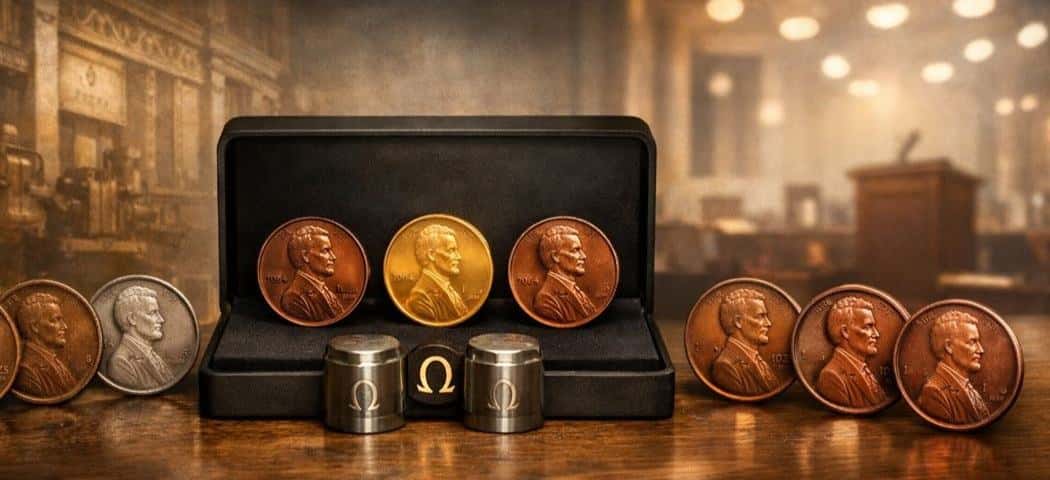
How “Most Valuable” Is Defined in Lincoln Cent Collecting
When collectors ask about the most valuable Lincoln cents, the answer depends entirely on how value is measured. Some lists focus on circulation rarity, others on key dates or famous errors. This article takes a different—and more objective—approach by ranking Lincoln cent issues strictly by confirmed auction record sale prices.
By using auction results as the sole metric, this list reflects what collectors have actually paid at the highest levels of the market, regardless of whether the coin was a single circulation issue, a mint error, or a modern numismatic set.
The Top 10 Most Valuable Lincoln Cents Ever Sold
1. 1943 Bronze Lincoln Cent
-
Estimated mintage: Approximately 20–25 examples known across all mints
-
Highest auction sale: Over $1,000,000
-
Why it leads the list: Accidentally struck on bronze planchets during World War II, when cents were supposed to be steel
-
Why it matters: This is the most famous Lincoln cent error ever discovered and the most valuable single Lincoln cent sold at auction
The 1943 bronze cent remains the undisputed pinnacle of Lincoln cent rarity, combining historical context, extreme scarcity, and decades of collector demand.
2. 2025 Omega Penny Set (Record Sale Example)
-
Mintage: 232 sets total
-
Highest auction sale: ~$800,000 (Set #232)
-
Why it ranks here: Final Lincoln cents ever issued, ultra-low mintage, Omega privy symbolism, and the inclusion of the first-ever gold Lincoln cent
Each Omega Penny set contains three coins: a 2025 Lincoln Cent with Omega privy, a 2025-D Lincoln Cent with Omega privy, and a 2025 24-karat gold Lincoln Cent—the first gold cent ever issued by the United States Mint—produced specifically to commemorate the conclusion of the U.S. one-cent coin.
This record-setting result places the Omega Penny among the most valuable Lincoln-cent–related numismatic offerings ever sold. In addition to the highest-priced example, Set #1 realized approximately $200,000, while Set #212 achieved roughly $180,000 at auction, demonstrating consistent six-figure demand across the series.
Limited to only 232 sets and issued to mark the end of the United States one-cent coin after 232 years of continuous production, the Omega Pennies are widely regarded as a modern numismatic rarity. Unlike classic circulation errors, their value is rooted in extreme scarcity, historical finality, and documented provenance rather than survival from circulation.
3. 1944 Steel Lincoln Cent
-
Estimated mintage: Approximately 25–30 examples known
-
Highest auction sale: ~$500,000
-
Why it’s valuable: Struck on leftover steel planchets after bronze composition resumed
-
Why collectors pursue it: Fewer examples exist than many realize, and high-grade specimens are exceptionally rare
The 1944 steel cent is one of the rarest transitional errors in U.S. coinage and commands extraordinary prices when authenticated.
4. 1969-S Doubled Die Obverse Lincoln Cent
-
Estimated mintage: Fewer than 50 confirmed examples
-
Highest auction sale: ~$150,000
-
Why it stands out: Dramatic doubling visible on date and lettering
-
Why it’s important: One of the strongest doubled dies ever produced for the Lincoln cent series
This coin combines visual impact with rarity, making it a cornerstone of advanced Lincoln cent collections.
5. 1909-S VDB Lincoln Cent (High Grade)
-
Mintage: 484,000
-
Highest auction sale: ~$140,000
-
Why it’s famous: First-year issue bearing Victor D. Brenner’s initials and low San Francisco mintage
-
Why it remains relevant: A foundational key date with consistent long-term demand
The 1909-S VDB remains the most widely recognized classic Lincoln cent rarity.
6. 1955 Doubled Die Obverse Lincoln Cent
-
Estimated mintage: Approximately 20,000–24,000 struck
-
Highest auction sale: ~$125,000
-
Why it’s iconic: Bold, naked-eye doubling that made it famous even outside numismatics
-
Why it holds value: Strong collector demand across generations
The 1955 DDO cent is often the first major error collectors learn to recognize.
7. 1922 “No D” Lincoln Cent (Strong Reverse)
-
Estimated mintage: Exact number unknown; only a small fraction of 1922-D cents qualify as true “No D”
-
Highest auction sale: ~$90,000
-
Why it’s unique: Denver-minted cent missing its mintmark due to die wear
-
Why it matters: Only one legitimate variety is recognized
Its unusual origin and strict variety standards keep it firmly in the top tier.
8. 1914-D Lincoln Cent (High Grade)
-
Mintage: 1,193,000
-
Highest auction sale: ~$85,000–$100,000
-
Why it’s scarce: Low mintage and heavy circulation
-
Why collectors chase it: Extremely rare in Mint State Red condition
The 1914-D is one of the most challenging regular-issue Lincoln cents to acquire in top condition.
9. 1972 Doubled Die Obverse Lincoln Cent
-
Estimated mintage: Approximately 20,000 examples
-
Highest auction sale: ~$20,000+
-
Why it qualifies: Strong doubling and legitimate rarity
-
Why it’s respected: A major doubled die with long-standing collector recognition
It bridges the gap between classic and modern Lincoln cent errors.
10. 1931-S Lincoln Cent (Finest Known Examples)
-
Mintage: 866,000
-
Highest auction sale: ~$18,000–$20,000
-
Why it closes the list: Lowest-mintage regular-issue cent after 1909-S VDB
-
Why it’s still important: Difficult to find in top-grade condition despite being saved at the time
While many 1931-S Lincoln cents were saved at the time of issue, the coin remains elusive in top Mint State condition, securing its place among the most valuable regular-issue Lincoln cents at auction.
What This List Reveals About Lincoln Cent Value
This ranking highlights how auction record value often reflects more than age or circulation alone. Factors such as symbolism, historical timing, error severity, and market psychology all play a role.
The inclusion of the Omega Penny alongside classic rarities demonstrates how modern numismatic issues—when paired with extreme scarcity and historical significance—can compete directly with legendary circulation coins at the highest levels of the market.
Why Lincoln Cent Value Is Ultimately Proven at Auction
Lincoln cents have been collected for more than a century, and their highest auction results illustrate how collector priorities continue to evolve. While legendary errors like the 1943 bronze cent still command the top position, modern milestones such as the Omega Penny have firmly established themselves within auction history.
As new records emerge and the numismatic market adapts, auction results remain the most objective measure of value—capturing not only rarity and condition, but also historical importance and sustained demand over time.
Related reading you may find interesting:
The 1943 Lincoln Wheat Penny: Steel Cent and Copper Wartime Mystery