View Charts
The 1933 Gold Recall – History, Impact, and Market Effects
 0
0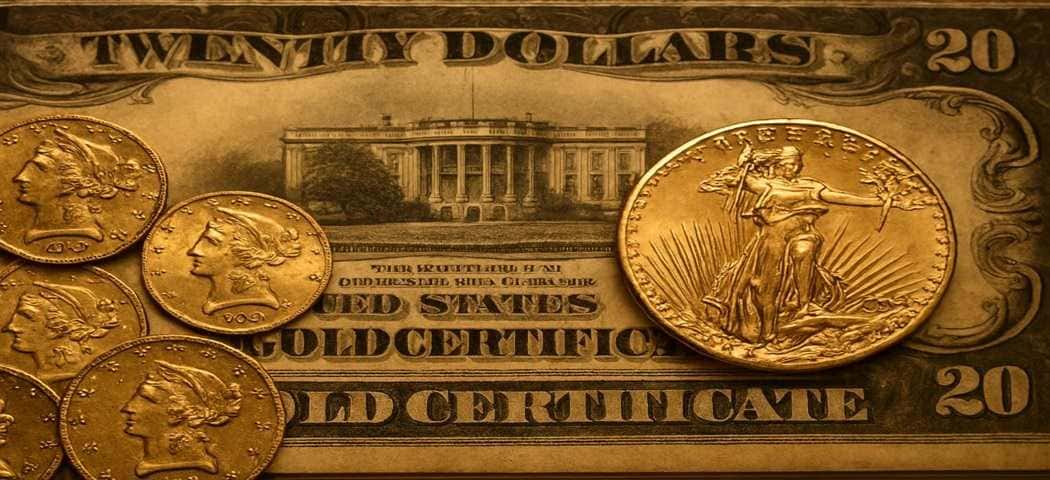
What Was the 1933 Gold Recall?
The 92nd anniversary of the 1933 Gold Recall, formally known as Executive Order 6102, is here. Issued by President Franklin D. Roosevelt on April 5, 1933, this unprecedented act reshaped gold ownership laws in the United States. During the economic devastation of the Great Depression, this order effectively outlawed private gold ownership, requiring Americans to surrender gold coins, bullion, and certificates to the government.
The goal was clear: Stabilize the collapsing economy by seizing privately held gold, boosting the money supply, and asserting greater control over the nation’s monetary policy. The anniversary of this gold confiscation order serves as a stark reminder of how quickly financial markets and ownership rights can be altered by government intervention.
Why Was the 1933 Gold Recall Implemented?
The United States was struggling with massive unemployment, widespread bank failures, and severe economic deflation during the Great Depression. As confidence in the banking system crumbled, many Americans chose to hoard gold as a trusted store of value.
President Franklin D. Roosevelt believed that allowing private gold hoarding was undermining economic recovery. His administration saw the recall of gold as a necessary measure to:
-
Expand the Money Supply: Under the gold standard, the amount of currency in circulation was directly tied to the nation’s gold reserves. By seizing privately held gold, the government could expand the money supply, facilitating spending and economic growth.
-
Prevent Hoarding: By forcing citizens to surrender their gold, the government aimed to reduce private stockpiling of wealth outside of official monetary systems.
-
Support the Banking System: Increasing the nation’s gold reserves provided the Federal Reserve with greater flexibility to address the financial crisis.
The Provisions of Executive Order 6102
The 1933 Gold Recall required nearly all U.S. citizens to relinquish their gold holdings to the government. Key elements of the order included:
-
Mandatory Surrender: Citizens were required to exchange their gold coins, gold bullion, and gold certificates at the Federal Reserve for paper currency at a fixed rate of $20.67 per ounce.
-
Exemptions: Certain gold holdings were exempt, including jewelry, gold used in industrial applications, and rare collectible coins.
-
Penalties for Non-Compliance: Failure to comply could result in fines of up to $10,000 (equivalent to over $200,000 today) or imprisonment for up to 10 years.
Although compliance was mandatory, some individuals chose to hide their gold rather than forfeit it to the government.
Impact on the Gold Market & Prices
The market impact of the 1933 Gold Recall was immediate and far-reaching:
-
Gold Ownership Criminalized: Private ownership of gold for investment purposes was essentially made illegal, concentrating most gold holdings in the hands of the U.S. government.
-
Artificially Low Price: The government purchased gold at a rate of $20.67 per ounce, far below the market value.
-
Massive Dollar Devaluation: By 1934, the official price of gold was raised to $35.00 per ounce, resulting in a staggering 69% devaluation of the U.S. dollar.
-
Increased Global Demand: As the U.S. government effectively confiscated privately held gold, other countries responded by accumulating gold reserves, boosting global demand.
The government’s actions resulted in a massive transfer of wealth from private citizens to federal control.
Comparing Market Impact Then & Now
Nearly a century later, the 1933 Gold Recall still resonates with investors. Economic uncertainty, inflation, and government intervention remain constant concerns. Comparing then and now reveals striking parallels:
-
Gold as a Safe-Haven Asset: In both 1933 and today, gold serves as a reliable store of value during periods of economic instability.
-
Government Control & Regulation: Just as the gold recall was aimed at protecting the economy, some fear that government regulation of cryptocurrencies and other assets could be the modern-day equivalent.
-
Heightened Demand: The memory of the 1933 Gold Recall drives many investors to purchase physical gold and silver as a hedge against potential government overreach.
Could something similar happen today? While outright confiscation of gold is considered unlikely, increased regulation of digital assets and gold-backed cryptocurrencies remains a possibility.
Repeal & Modern Relevance
The 1933 Gold Recall remained in effect until 1974, when President Gerald Ford signed legislation once again allowing Americans to own gold bullion. This repeal marked a turning point, enabling gold’s resurgence as an investment asset.
Today, with gold prices surging beyond $3,100 an ounce amid economic uncertainty and persistent inflation, many investors remain cautious about potential government intervention. The unprecedented price climb underscores gold’s enduring appeal as a safe-haven asset, particularly during periods of economic turmoil and high inflation. This spike in value has intensified concerns that government policies could once again target privately held gold or heavily regulate alternative assets like gold-backed cryptocurrencies.
The Appeal of Pre-1933 Gold Coins
Adding to the allure of gold in modern markets is the appreciation for Pre-1933 Gold coins. As historical artifacts that survived the government’s gold recall, these coins have become increasingly popular among collectors and investors alike. Their exemption from Executive Order 6102 has made them particularly desirable, as many believe they could be protected from future confiscation efforts. Additionally, their semi-numismatic status often leads to higher premiums and strong value retention during economic downturns.
With the current gold price surge, interest in Pre-1933 Gold coins continues to grow, as investors seek assets that combine historical significance, scarcity, and long-term appreciation potential.
The 92nd anniversary of Executive Order 6102 serves as a powerful reminder of how quickly financial markets can be reshaped by government policy and economic turbulence. Investors are more vigilant than ever, seeking to diversify their portfolios with tangible assets that offer security and resilience against market volatility.
Preparing for Market Volatility
The 92nd anniversary of the 1933 Gold Recall prompts an important question: Could another government intervention be on the horizon? While outright confiscation of gold seems unlikely, tighter regulations on digital assets, gold-backed cryptocurrencies, or other precious metals are possible.
At Bullion Exchanges, we provide investors with the tools and information they need to make sound investment decisions. Whether you’re purchasing gold, silver, platinum, or palladium, we offer a wide range of high-quality precious metals to help secure your financial future. Stay informed, stay prepared, and make wise investment choices.
Another article that may interest you:
Pre-1933 Gold Coins: Why These Rare Collectibles Remain So Desirable