View Charts
Silver vs. Platinum: Which Metal Leads the Industrial Future?
 2
2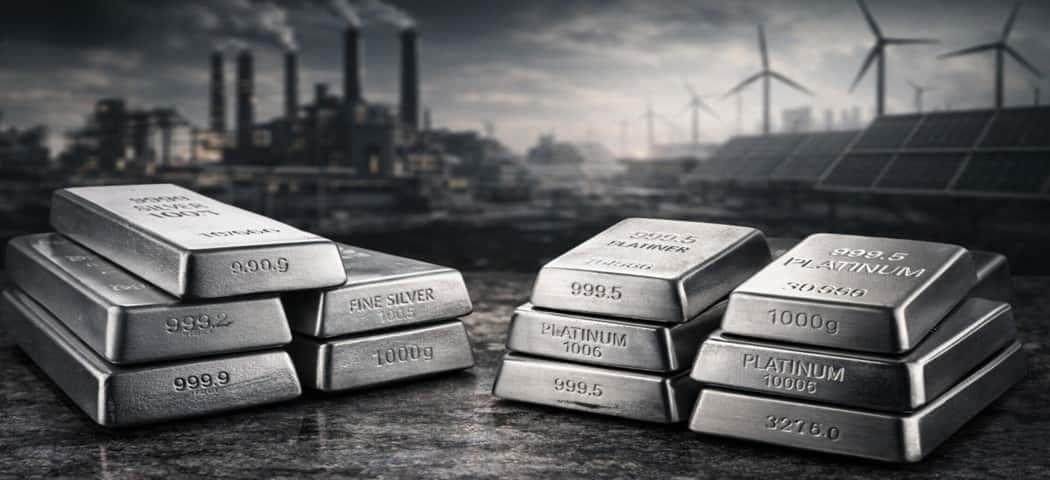
The Industrial Precious Metals Breakout of 2025
The precious metals landscape in 2025 has been defined by a powerful shift beyond gold. While gold continues to serve as the cornerstone safe-haven asset, silver and platinum have emerged as the standout industrial metals of the year, each delivering extraordinary gains driven by structural demand, supply constraints, and global economic transformation.
As industries accelerate investment in electrification, clean energy, and advanced manufacturing, the debate has sharpened: silver vs. platinum—which metal is best positioned to lead the modern industrial race?
2025 Performance Review: Silver and Platinum by the Numbers
Silver’s Historic 2025 Rally
Silver began 2025 trading near $29 per ounce. As industrial demand surged and investor interest intensified, the price of silver climbed above $71 per ounce by late December.
-
January 1, 2025: ~$29/oz
-
Current price: ~$71+/oz
-
2025 gain: ~145%
This move represents one of silver’s strongest annual performances in decades, reaffirming its dual role as both a precious metal and a critical industrial input.
Platinum’s Powerful Repricing
Platinum entered 2025 trading around $950 per ounce, weighed down by years of underinvestment and subdued sentiment. That dynamic changed dramatically as supply risks and industrial demand converged, pushing the platinum price to approximately $2,275 per ounce, its highest level in over 17 years.
-
January 1, 2025: ~$950/oz
-
Current price: ~$2,275/oz
-
2025 gain: ~140%
Platinum’s rebound confirms that the rally in precious metals is not limited to investment demand alone.
What’s Driving These Price Surges?
Despite serving different markets, silver and platinum share several core drivers behind their 2025 rallies.
Industrial Demand Is Accelerating Globally
Governments and corporations are investing aggressively in:
-
Renewable energy infrastructure
-
Electric vehicles and charging networks
-
Advanced electronics and data centers
-
Clean hydrogen and energy storage technologies
Both metals are essential inputs in these sectors, making demand growth structural rather than cyclical.
Supply Growth Cannot Keep Pace
Neither silver nor platinum can rapidly increase production:
-
Silver is largely mined as a byproduct of copper, lead, and zinc, limiting supply responsiveness.
-
Platinum production is geographically concentrated, with South Africa dominating global output and facing rising costs and operational risks.
This imbalance between demand and supply has amplified price pressure across both metals.
Silver’s Industrial Advantage
Silver is often described as the most industrially versatile precious metal due to its unmatched electrical and thermal conductivity.
Key Industrial Uses of Silver
-
Solar panels and photovoltaic cells
-
Electric vehicles and charging systems
-
Electronics, semiconductors, and AI infrastructure
-
Medical devices and antimicrobial applications
-
Emerging battery and energy storage technologies
As the global push toward electrification accelerates, silver demand is expected to remain structurally strong.
Silver Supply Challenges
Silver markets continue to face:
-
Declining ore grades
-
Limited new mine development
-
Rising competition between industrial users and investors
These factors suggest ongoing tightness in physical silver availability, particularly during periods of heightened investment demand.
Platinum’s Strategic Industrial Role
Platinum’s importance is more specialized, but equally critical.
Key Industrial Uses of Platinum
-
Automotive catalytic converters
-
Hydrogen fuel cells and electrolyzers
-
Petroleum refining
-
Chemical and pharmaceutical manufacturing
Platinum plays a central role in hydrogen-based energy systems, positioning it as a cornerstone metal for future clean-energy infrastructure.
Platinum Supply Constraints
Platinum supply remains vulnerable due to:
-
Geographic concentration of production
-
Rising labor and energy costs
-
Limited new project development
These constraints make platinum particularly sensitive to demand growth and supply disruptions.
Silver vs. Platinum: Which Metal Has the Edge?
Rather than a clear winner, silver and platinum benefit from different sides of the same industrial transformation:
-
Silver excels through broad, high-volume applications across multiple industries.
-
Platinum benefits from high-value, specialized uses critical to emissions control and clean energy.
Both metals are increasingly viewed as strategic resources, not optional commodities.
What Investors Should Watch Next
For precious metals investors evaluating silver and platinum, several indicators deserve close attention:
-
Industrial demand growth in renewable energy and hydrogen
-
Supply disruptions or production constraints
-
Government infrastructure and clean-energy policy
-
Relative valuation versus gold
Diversification across both metals may offer exposure to complementary industrial trends rather than forcing a binary choice.
Preparing for the Next Phase of the Metals Cycle
The powerful 2025 rallies in silver and platinum reflect a broader shift toward hard assets with real-world utility. As industrial demand continues to accelerate and supply growth remains constrained, current price trends suggest these metals could enter 2026 with elevated structural support, rather than reverting to pre-rally levels.
While short-term volatility is always possible after historic moves, sustained investment in renewable energy, electrification, hydrogen technology, and advanced manufacturing points to continued underlying demand heading into 2026. For investors, the key question may not be whether prices pull back, but whether any consolidation represents a pause within a longer-term repricing cycle.
Understanding the industrial foundations behind silver and platinum is no longer optional—it is essential for navigating the next phase of the precious metals market.
Two Metals, One Industrial Future
The silver vs. platinum debate ultimately highlights convergence rather than competition. Both metals are being repriced as indispensable industrial resources at a time when global demand is rising faster than supply can respond.
For precious metals investors, the message is increasingly clear: industrial precious metals are no longer niche assets. Silver and platinum are emerging as pillars of the modern economy, and 2025 may be remembered as the year that shift became undeniable—setting the stage for how these metals are viewed well beyond the current cycle.
Related reading you may find interesting:
Gold vs Silver vs Platinum vs Palladium: Which Metal Performs Best in Crisis?
2 Comments