View Charts
Silver Reaches $100: What This Historic Breakout Means
 0
0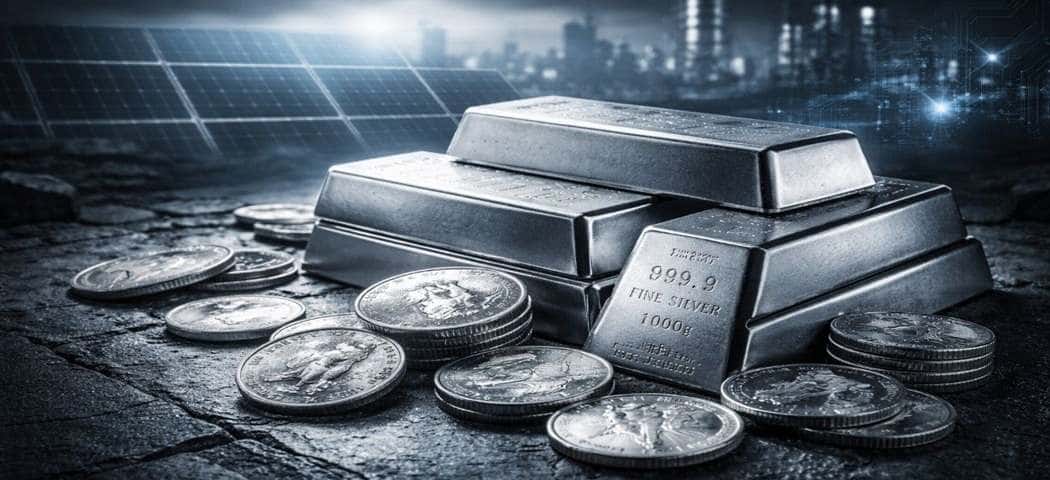
A Milestone Moment for Silver
Silver has officially reached the $100-per-ounce threshold, marking one of the most significant moments in modern precious metals history. Long discussed by analysts and debated by investors, the $100 silver price is no longer theoretical—it is a confirmed market reality. This milestone reshapes how silver is viewed, traded, and positioned within portfolios worldwide. Understanding why silver surged to $100, what drove the move, and what may follow is now essential for investors navigating today’s rapidly changing financial landscape.
Why Silver Hit $100 Now
Silver’s move to $100 did not occur in isolation. It was the result of multiple forces converging simultaneously, creating sustained upward pressure on the silver spot price.
Persistent inflation, elevated government debt levels, and declining confidence in fiat currencies have pushed investors toward tangible assets. At the same time, silver’s role as a critical industrial metal has intensified demand far beyond traditional investment channels. Unlike gold, silver is consumed in large quantities by solar energy, electronics, medical technology, and electric vehicle manufacturing, permanently removing supply from the market.
This dual demand—monetary and industrial—created a tightening environment that steadily drove prices higher until the $100 level was decisively breached.
A Look Back: Silver’s Historic Highs in Context
Silver’s previous nominal all-time high occurred on January 18, 1980, when prices briefly reached $49.45 per ounce. While that number has long been cited in headlines, it fails to account for inflation. Adjusted for today’s purchasing power, silver’s 1980 peak would equate to well over $200 per ounce.
From that perspective, silver reaching $100 represents a partial repricing rather than an extreme outlier. The current breakout reflects decades of currency debasement, rising production costs, and structural supply challenges finally being absorbed into the price of silver.
The Gold-to-Silver Ratio Signals a Structural Shift
One of the clearest indicators supporting silver’s move to $100 has been the gold-to-silver ratio. Historically, extreme ratios have preceded major silver bull markets. As gold prices surged first, capital eventually rotated into silver, compressing the ratio and accelerating silver’s advance.
As the ratio normalized, silver began outperforming gold on a percentage basis, reinforcing its reputation as a higher-volatility companion metal. This shift confirmed that silver’s rally was not speculative noise but part of a broader realignment within the precious metals market.
How Silver Reaching $100 Impacts Other Metals
Silver’s breakout has not occurred in isolation. Gold, platinum, and palladium have all responded to the same macroeconomic forces driving silver higher.
Gold continues to function as the primary monetary hedge, while silver’s move highlights increasing investor willingness to seek leverage within hard assets. Platinum and palladium, though more specialized, have also benefited from renewed interest in tangible commodities tied to supply constraints and industrial necessity.
Together, these movements suggest a broader repricing of real assets rather than a single-metal anomaly.
Could Silver Go Higher From Here?
With silver reaching $100, the question naturally shifts from “if” to “what next.” While sharp corrections are always possible after major milestones, history shows that breakouts of this magnitude often represent new long-term price regimes rather than terminal peaks.
If inflation remains elevated, industrial demand continues expanding, and investment flows persist, silver prices could remain structurally higher than previous cycles. What was once considered an extreme scenario is now a reference point.
How Investors Can Prepare in a $100 Silver Market
Silver reaching $100 fundamentally changes portfolio considerations. Investors must now account for higher volatility, larger dollar swings, and increased premiums on physical products.
Diversification across precious metals, careful position sizing, and a long-term perspective become increasingly important. Physical silver continues to appeal as a hedge against inflation and currency risk, while its industrial relevance adds an additional layer of structural support.
Silver’s $100 Breakout Redefines the Market
Silver reaching $100 per ounce is more than a headline—it is a confirmation that the precious metals market has entered a new phase. Driven by inflation, supply constraints, industrial demand, and shifting investor behavior, silver’s breakout reflects deeper changes within the global financial system.
For investors, this moment underscores the importance of understanding not just price movements, but the forces behind them. Silver has crossed a historic threshold, and its role in portfolios may never look the same again.
Related reading you may find interesting:
Gold Breaks $5,000: A New Era for Precious Metals Begins
Silver Breaks $100: What One Ounce of Silver Really Buys Today