View Charts
Silver Breaks $100: What One Ounce of Silver Really Buys Today
 0
0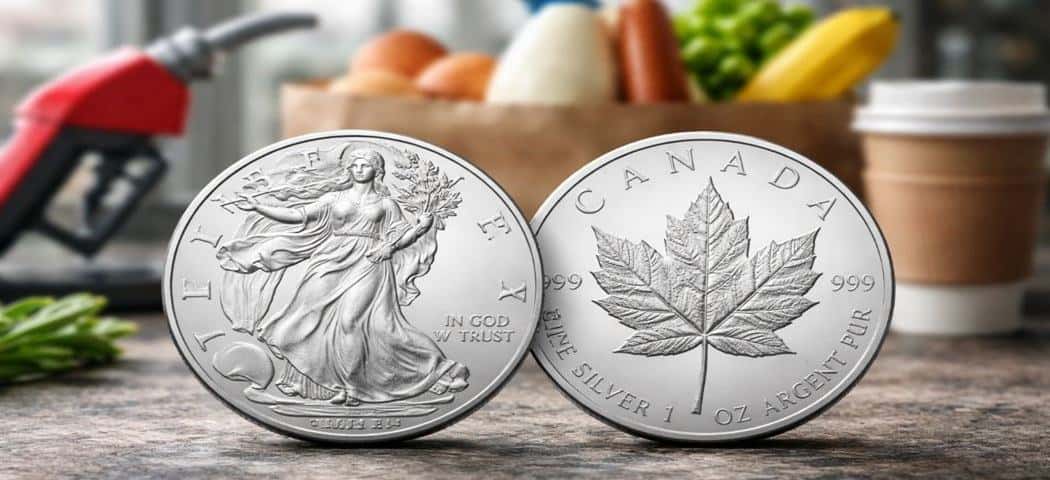
Why $100 Silver Hits Differently
Silver crossing the $100-per-ounce mark on January 23, 2026 is more than a market headline—it’s a moment that reframes how people think about money, value, and purchasing power. While investors monitor the silver spot price on trading screens, everyday consumers experience inflation through higher costs for food, fuel, services, and essentials. Comparing what one ounce of silver buys in today’s economy helps translate market moves into real-world context. At $100 silver, the discussion shifts from speculation to tangible value.
Silver at $100 and the Reality of Purchasing Power
Unlike fiat currency, silver has served as a store of value for centuries. When prices rise across the economy, higher silver prices often reflect declining currency purchasing power rather than excess valuation of the metal itself. Examining what $100 can realistically buy today highlights why silver’s move matters—not only to investors, but to anyone navigating persistent inflation and rising living costs.
What One Ounce of Silver Buys in Services & Subscriptions
At current levels, one ounce of silver represents meaningful everyday expenses that many households budget for monthly:
-
4–6 months of Netflix (Standard or Ad-Free tiers)
-
6–8 months of Spotify Premium
-
2–3 months of a basic mobile phone plan
-
1–1.5 months of home internet service
-
A year of basic cloud storage or software subscriptions
These comparisons illustrate how recurring digital services—once viewed as inexpensive—now absorb a noticeable portion of household income, while silver retains intrinsic value.
Food, Energy, and Household Essentials
Silver’s purchasing power becomes even clearer when compared to everyday necessities:
-
15–20 dozen eggs, depending on regional pricing
-
20–25 gallons of gasoline, based on recent national averages
-
22–28 gallons of milk, enough to supply a household for weeks
-
10–15 café coffees from national chains or local shops
-
A modest dinner for two at a casual restaurant
Rather than overstating grocery coverage, these comparisons reflect common, recurring household costs that many consumers feel most acutely during inflationary periods.
Consumer Goods at the $100 Silver Level
One ounce of silver today is roughly equivalent in cost to:
-
A pair of mid-range athletic shoes
-
A basic household appliance such as a microwave, vacuum, or air fryer
-
Two video games (excluding new-release premiums)
-
A winter jacket or seasonal outerwear
-
Entry-level headphones or wearable tech
Most of these items depreciate quickly, while physical silver remains a durable asset.
Real-World Services and Labor
Silver at $100 also aligns closely with skilled and unavoidable expenses:
-
One standard car oil change
-
One month of a gym membership
-
A single night at a budget hotel
-
A basic medical copay or prescription
-
One hour of skilled trade labor (electrician, mechanic, plumber)
These comparisons highlight how quickly cash is spent—and how rarely it retains value after the transaction is complete.
Why Silver Holds Up When Prices Rise
Silver occupies a unique position as both a monetary metal and an industrial commodity. While the silver spot price reflects inflation expectations, currency confidence, and investor demand, physical silver also benefits from growing industrial use in energy, electronics, and medical technologies. When silver reaches $100 per ounce, it often signals broader economic pressure rather than speculative excess.
Silver vs. Cash: A Long-Term Perspective
The same $100 spent on services today is gone tomorrow. One ounce of silver, by contrast, remains a tangible asset that has historically adjusted with inflation over time. This is why many investors view silver not as a purchase, but as preserved purchasing power—stored in a form that does not rely on financial intermediaries or policy decisions.
What $100 Silver Looks Like in Physical Form
For many investors, $100 silver becomes most meaningful when viewed as a physical asset rather than a price on a screen. One ounce of silver is commonly held in the form of widely recognized bullion coins such as the American Silver Eagle or the Canadian Silver Maple Leaf.
Both coins contain one full troy ounce of .999 fine silver and are globally recognized for their purity, authenticity, and liquidity. Unlike cash balances or digital subscriptions, a physical silver coin represents condensed purchasing power—durable, portable, and independent of financial systems.
When silver trades above $100 per ounce, holding a single silver coin can represent the equivalent of weeks’ worth of fuel, food, subscriptions, or services—preserved in a form that can be held, stored, or exchanged over time.
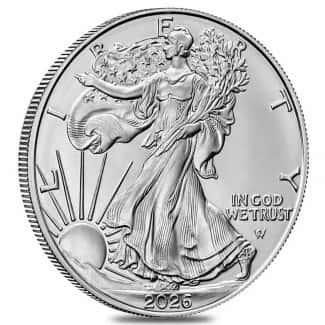
2026 1 oz Silver American Eagle $1 Coin
What $100 Silver Really Means
Silver breaking $100 per ounce is not about luxury—it’s about reality. From subscriptions and fuel to labor and food, one ounce of silver now aligns with essential, everyday costs. For investors and savers alike, this milestone reinforces silver’s enduring role as a hedge against inflation and a store of real-world value. In an era where prices rise faster than wages, silver continues to translate money into something tangible—and lasting.