View Charts
Silver Breaks $60: What Investors Need to Know Now
 0
0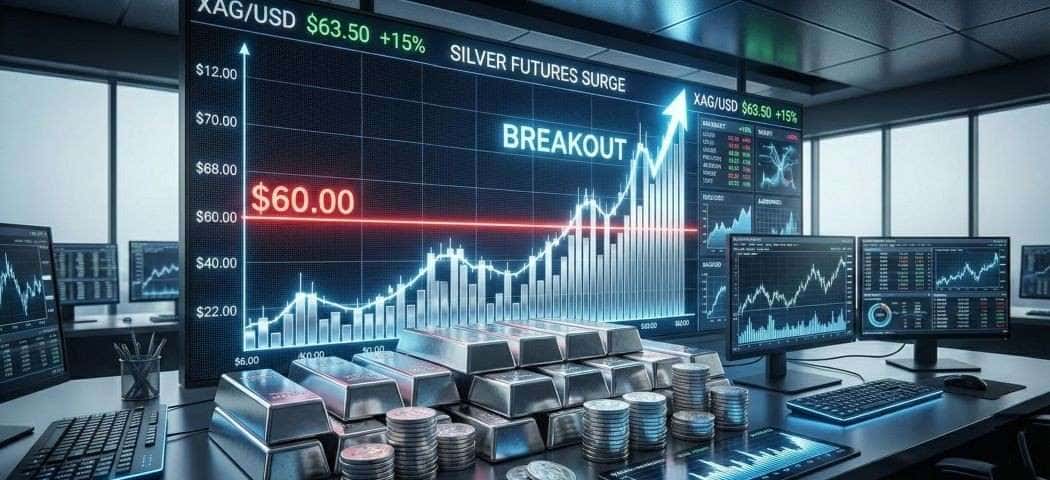
A Historic Moment in the Silver Market
Silver has officially surged past the $60 per-ounce mark, a milestone that many analysts have predicted for years—but few expected would arrive this quickly. This breakout places silver at one of its highest nominal levels in modern history and signals a powerful shift in investor sentiment, industrial demand, and global economic conditions.
For precious-metals investors, the question now becomes: Why is silver rising so aggressively, and what should investors do next? Understanding the forces behind this rally is essential for navigating the opportunities—and the risks—of a fast-moving market.
Why Is Silver Breaking Above $60? Key Drivers Behind the Rally
The surge in silver prices is not the result of one factor, but a convergence of powerful economic, industrial, and geopolitical forces. Together, they are pushing silver into a new price environment that may define the next chapter of the metals market.
1. Explosive Industrial Demand—Especially in Solar and Technology
Silver remains one of the most important industrial metals, especially in:
-
Solar photovoltaic cells
-
Electric vehicles
-
Semiconductors
-
High-precision electronics
As global clean-energy initiatives accelerate, silver is experiencing unprecedented consumption. Solar panel manufacturing alone has overtaken investment demand in some regions, tightening supply at a time when inventories are already strained.
2. Declining Mine Supply and Structural Deficits
For the past several years, the silver market has experienced annual supply deficits—meaning consumption is outpacing production.
Key pressures include:
-
Lower ore grades
-
Fewer large-scale discoveries
-
Rising extraction costs
-
Increased geopolitical restrictions on mining regions
A supply deficit in a high-demand market tends to produce one outcome: higher silver prices.
3. Inflation and Safe-Haven Buying
As inflation pressures persist globally, investors continue rotating into tangible stores of value, including gold and silver. While gold often leads as the primary safe-haven asset, silver has surged as the more affordable entry point with higher upside volatility.
When inflation expectations rise, silver often outperforms gold on a percentage basis—precisely what we’re seeing now.
4. Renewed Investment Flows Into Physical Silver
Silver ETFs, bullion dealers, and wholesale distributors have reported elevated buying levels. Physical demand—particularly for silver bars and silver coins—has contributed significantly to tightening supply.
Investors appear to be positioning for long-term structural price strength, not short speculative bursts.
5. Geopolitical Uncertainty Boosting Precious Metals
Ongoing global tensions have increased risk aversion in equity and bond markets. Historically, silver benefits during periods of geopolitical stress due to its dual identity as both an industrial metal and a monetary metal.
What Does Silver Above $60 Mean for Investors?
Crossing the $60 threshold isn’t just symbolic—it reshapes expectations for the entire precious-metals market.
1. A New Psychological Price Level Has Formed
Just as gold’s break above $4,000 reset long-term expectations, silver above $60 signals that old resistance zones no longer apply. Market sentiment has fundamentally shifted.
2. Increased Volatility Ahead
Sharp rallies often bring rapid pullbacks. Investors should expect:
-
Wider daily trading ranges
-
More aggressive buying and selling activity
-
Sensitivity to economic news and Federal Reserve commentary
Volatility is not a sign of weakness—it’s a sign of a dynamic, evolving market.
3. Higher Premiums on Physical Silver Products
As demand intensifies:
-
Silver coins (like American Silver Eagles and Canadian Maple Leafs)
…may carry higher premiums over spot due to tighter supply pipelines and disruptions in wholesale distribution.
4. A Potential Revaluation of Silver’s Role in Portfolios
Investors who previously viewed silver as a secondary asset may now reconsider its potential for:
-
Inflation hedging
-
Wealth preservation
-
Long-term appreciation
-
Industrial-driven growth exposure
Silver’s unique blend of utility and monetary significance positions it differently from gold.
What Should Investors Do Now?
While every portfolio is unique, here are strategic considerations for investors seeking guidance in today’s fast-moving silver environment.
1. Avoid Emotional Buying—Focus on Strategy
Chasing parabolic price movement can lead to poor entry points. Instead:
-
Identify your long-term objectives
-
Decide whether you aim to accumulate, diversify, or hedge
-
Use scaling strategies to avoid buying at interim peaks
2. Prioritize Physical Silver for Tangible Ownership
At Bullion Exchanges, we recommend considering:
-
1 oz and 10 oz silver bars
-
Sovereign silver coins (Eagles, Maples, Philharmonics)
-
Pre-1965 90% silver coins
-
Larger cast bars for bulk accumulation
Physical silver offers direct exposure without counterparty risk.
3. Diversify Within Silver Types
Balancing across different silver formats can mitigate premiums, liquidity issues, and market fluctuations.
4. Stay Informed on Federal Reserve Actions
Interest-rate decisions, inflation forecasts, and economic outlooks will heavily influence metals performance. Silver thrives when real yields fall and inflation expectations rise—conditions currently in play.
5. Use Market Pullbacks as Accumulation Opportunities
Even in strong bull markets, silver rarely moves straight up. Dips often present compelling entry points for long-term positions.
The Bottom Line: Silver’s Breakout Is More Than a Price Story
Silver surging past $60 is not a fleeting headline—it’s a reflection of significant structural forces reshaping the global economy. Industrial demand is soaring, mining supply is tightening, and investors are increasingly turning to tangible assets for stability and growth.
For those seeking to protect wealth, diversify portfolios, or participate in the next phase of the precious-metals market, silver remains a compelling opportunity.
Bullion Exchanges is proud to offer an extensive selection of competitively priced silver coins, bars, and rounds to help investors navigate this historic moment with confidence.
Related reading you may find interesting:
How High Can Silver Go After $60? Could It Reach $200 in 2026?