View Charts
Silver Becomes the World’s Second-Largest Asset by Market Value
 0
0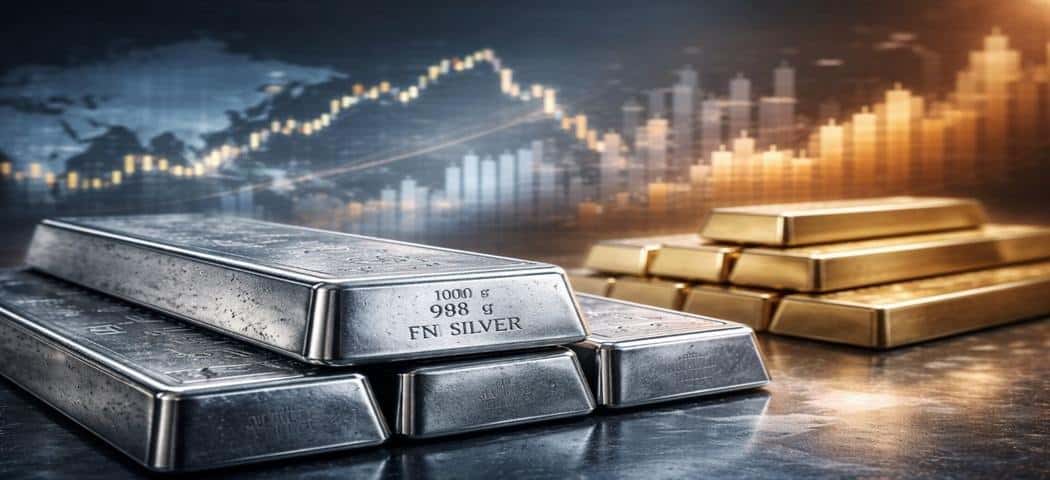
A Historic Shift in the Global Asset Landscape
The global financial landscape is undergoing a quiet but profound transformation. According to real-time asset rankings compiled by CompaniesMarketCap, silver has recently emerged as the world’s second-largest asset by estimated market capitalization, trailing only gold. This development places silver ahead of major cryptocurrencies and many of the world’s largest publicly traded companies, underscoring its growing importance in modern markets.
While this ranking reflects an estimated snapshot rather than an official institutional classification, it highlights how sharply silver’s value has risen amid inflation concerns, monetary uncertainty, and tightening physical supply. For investors, this moment represents more than a headline—it signals a broader reassessment of silver’s role as both a monetary metal and an industrial cornerstone.
How Silver’s Market Value Is Calculated
Silver’s ranking is based on estimated market capitalization, calculated by multiplying the current silver price by the estimated above-ground supply. When silver prices rise meaningfully, its total market value increases rapidly due to the vast quantity of silver held globally in bullion, coins, jewelry, and industrial applications.
At recent price levels, gold’s estimated market capitalization stands near $31.3 trillion, while silver’s estimated value has climbed to approximately $4.6 trillion. These figures are real-time estimates that fluctuate with market conditions, but they help illustrate the sheer scale of both metals relative to other global assets. Unlike equities or cryptocurrencies, silver’s supply is finite, physically distributed, and costly to extract, making its valuation especially sensitive to demand shocks.
Why Silver’s Rise Matters to Investors
Silver’s ascent to the #2 position reflects more than price appreciation—it reflects broad-based demand across multiple sectors. As a precious metal, silver has long served as a store of value and hedge against inflation. Simultaneously, it plays a critical role in modern industry, including solar energy, electric vehicles, electronics, and advanced manufacturing.
This dual demand profile sets silver apart from gold, which is driven primarily by monetary and investment demand. When industrial usage accelerates alongside investor interest, silver can experience outsized moves in both price and total market value. For investors seeking diversification, silver offers exposure to macroeconomic protection as well as structural industrial growth.
Silver vs. Other Major Global Assets
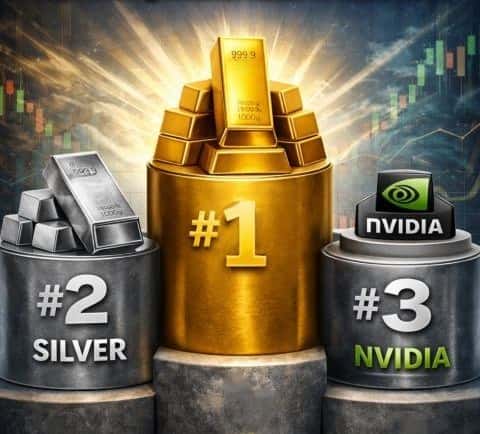
Silver’s rise has placed it ahead of assets such as Bitcoin and several of the world’s largest corporations in estimated market value rankings. At current price levels, silver’s estimated market capitalization has edged above that of companies like NVIDIA, Apple, and Amazon, illustrating the magnitude of silver’s global footprint rather than implying a permanent or fixed hierarchy.
Gold remains the largest global asset by market capitalization, reinforcing its role as the ultimate store of value. Silver’s position directly behind gold, however, highlights that it is no longer a peripheral asset in the global financial system. Instead, silver is increasingly viewed as a core asset class with both monetary relevance and real-world utility.
The Role of Inflation, Supply Constraints, and Monetary Policy
Several macroeconomic forces have converged to propel silver higher. Persistent inflation has eroded purchasing power, driving investors toward hard assets. Prolonged monetary experimentation has increased skepticism toward fiat currencies, while geopolitical uncertainty has elevated demand for tangible stores of value.
At the same time, silver supply growth has struggled to keep pace with demand. Mining output has remained constrained, and above-ground inventories are finite. These supply dynamics amplify silver’s sensitivity to demand shifts, contributing to rapid changes in price and market capitalization during periods of heightened interest.
Understanding the Ranking: Fact vs. Interpretation
It is important to clarify that silver’s #2 ranking comes from real-time, third-party market capitalization estimates, not from official government or institutional asset classifications. Rankings can and do change as prices fluctuate, and different methodologies may produce different results.
That said, the ranking is meaningful because it reflects how markets currently value silver relative to other major assets. It provides context rather than hype, illustrating the scale and influence silver has achieved during a period of strong demand and economic uncertainty.
What Silver’s Rise Signals Going Forward
Silver’s emergence as one of the world’s most valuable assets reinforces its relevance in a changing financial environment. Whether viewed as an inflation hedge, an industrial necessity, or a diversification tool, silver continues to command global attention.
For investors, understanding silver’s scale and market dynamics is increasingly important. As monetary uncertainty persists and industrial demand expands, silver’s role within diversified portfolios may continue to grow—making its recent rise not only remarkable, but instructive.
Related reading you may find interesting:
Gold and Silver Lead Global Assets by Market Capitalization