View Charts
Gold and Silver Lead Global Assets by Market Capitalization
 0
0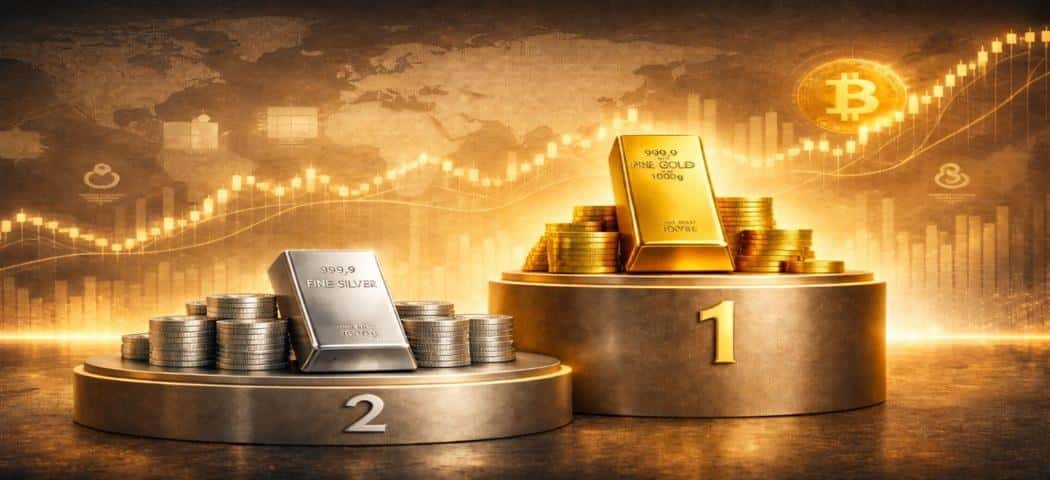
Why Precious Metals Now Sit Above the World’s Largest Companies
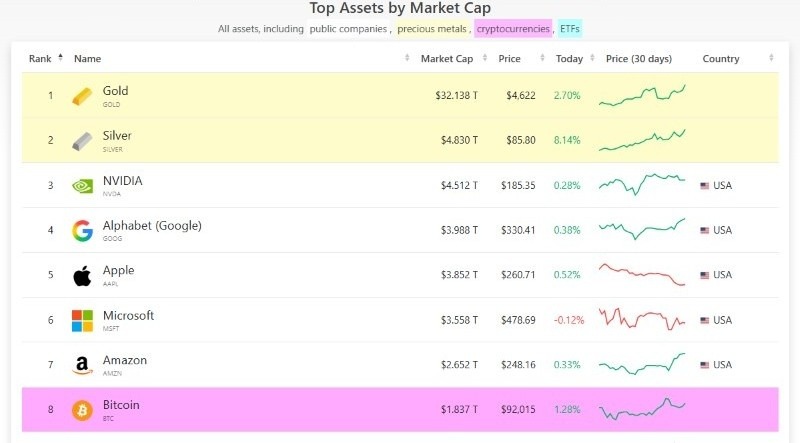
Gold and silver have reached a historic and telling milestone: they are now ranked #1 and #2 among all global assets by market capitalization, surpassing the world’s most valuable corporations. According to CompaniesMarketCap, gold currently holds the top position, with silver following closely behind—placing both precious metals ahead of technology titans such as NVIDIA, Microsoft, Apple, Amazon, and Google. This ranking highlights a powerful shift in global investor priorities toward tangible assets with intrinsic value.
At a time when financial markets are navigating inflation risk, rising sovereign debt, geopolitical instability, and evolving monetary policy, the dominance of gold and silver underscores their enduring role as foundational stores of wealth.
Understanding Market Capitalization and Its Significance
Market capitalization represents the total value of an asset in circulation. For equities, it is calculated by multiplying share price by outstanding shares. For precious metals, market cap is derived from the current spot price multiplied by the estimated amount of above-ground supply available worldwide.
This metric matters because it allows investors to compare vastly different assets—companies, commodities, and digital assets—on equal footing. When gold and silver rank at the top of this list, it signals not only price strength, but deep, sustained confidence across global markets, including central banks, institutional investors, and private individuals.
What This Ranking Means for Gold
Gold’s position as the largest asset by market capitalization in the world reinforces its status as the ultimate safe-haven investment, with the price of gold reflecting sustained global demand. Central banks have been consistent net buyers of gold, seeking to diversify reserves away from fiat currencies and reduce exposure to geopolitical and monetary risk. This steady accumulation has helped support long-term price stability while contributing to gold’s expanding market value.
Beyond official sector demand, investors continue to turn to physical gold bullion as a hedge against inflation, currency debasement, and systemic financial risk, with movements in the price of gold often mirroring broader economic uncertainty. Gold’s scarcity, durability, and global acceptance make it uniquely positioned to retain purchasing power across economic cycles.
Silver’s Rise: Monetary Metal Meets Industrial Powerhouse
Silver’s ranking as the second-largest global asset by market cap is particularly noteworthy given its dual role. Like gold, silver functions as a monetary metal and store of value. At the same time, it is an essential industrial metal, with growing demand from solar energy, electronics, electric vehicles, medical technology, and advanced manufacturing.
Unlike gold, silver’s above-ground supply is far more constrained relative to demand growth. Much of the world’s silver is consumed in industrial processes and not easily recovered, tightening available supply over time. This combination of investment demand and industrial usage has amplified the silver price momentum and elevated its standing among global assets.
Why This Milestone Matters in Today’s Economic Climate
Gold and silver leading all assets by market capitalization reflects more than strong price action—it signals a broader reassessment of risk. Persistent inflation concerns, record levels of global debt, and uncertainty surrounding long-term interest rate policy have driven investors toward assets with intrinsic value and no counterparty risk.
Precious metals do not rely on earnings, management decisions, or technological adoption. Their rise suggests a renewed emphasis on financial resilience and capital preservation, particularly during periods of economic transition.
Outranking Technology Giants: A Powerful Contrast
That gold and silver now exceed the market capitalizations of companies such as NVIDIA, Microsoft, Amazon, and Google is striking. These corporations represent innovation, growth, and the digital economy, yet they remain subject to regulatory risk, valuation cycles, and market sentiment.
Precious metals, by contrast, operate outside corporate balance sheets and political systems. Their dominance highlights the continued importance of diversification and reinforces why investors balance exposure to growth assets with holdings in physical gold and silver.
How Bitcoin Fits Into the Global Asset Landscape
Cryptocurrencies also play a growing role in asset allocation discussions, and Bitcoin currently ranks #8 globally by market capitalization, placing it among the world’s most valuable assets. Often referred to as “digital gold,” Bitcoin shares some characteristics with precious metals, including scarcity and decentralization.
However, Bitcoin’s volatility and relatively short history differentiate it from gold and silver. While many investors view Bitcoin as a complementary hedge against fiat currency risk, precious metals remain unmatched in terms of historical precedent, physical tangibility, and universal acceptance. Together, they reflect a broader shift toward alternatives outside traditional fiat-based financial systems.
Central Bank Demand and Supply Constraints
One of the most important forces behind gold’s market cap dominance is sustained central bank buying. Nations seeking to reduce reliance on reserve currencies have increased gold holdings, reinforcing long-term demand. Silver, while not held in central bank reserves to the same degree, faces increasing pressure from supply limitations and rising industrial consumption.
Mining output for both metals has struggled to keep pace with demand growth, further supporting elevated valuations and reinforcing their global asset rankings.
Why This Ranking Matters to Investors
For investors, gold and silver’s top ranking confirms their role as core portfolio assets rather than tactical trades. High market capitalization reflects liquidity, stability, and global trust—qualities essential for wealth preservation and risk management.
As markets grow increasingly complex, physical precious metals offer simplicity, transparency, and independence from financial intermediaries, making them a compelling anchor in diversified portfolios.
What Gold and Silver’s Dominance Signals to Markets
A Global Shift Toward Tangible Value
Gold and silver leading all global assets by market capitalization is a clear signal of changing investor priorities. In a world shaped by economic uncertainty, rising debt, and evolving financial systems, tangible assets with intrinsic value are reclaiming center stage. For investors, this milestone reinforces why precious metals remain essential tools for diversification, stability, and long-term wealth preservation—regardless of market cycles or technological change.
Data table sourced from: companiesmarketcap.com
Related reading you may find interesting:
Silver Nears $100: Could $500 Be Possible in 2026?