View Charts
Precious Metals Premiums Explained: What Every Buyer Should Know
 0
0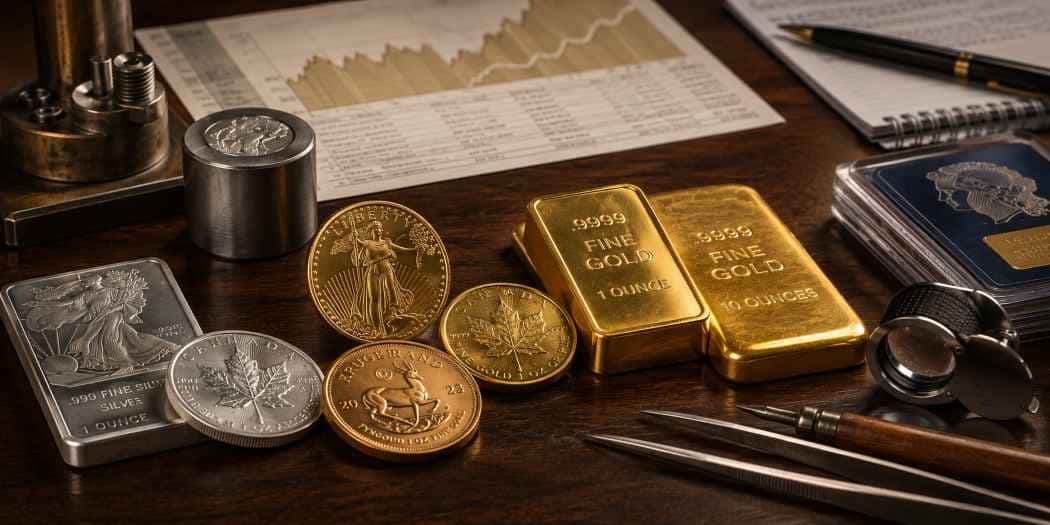
Spot Price Doesn't Tell You What You'll Actually Pay
Gold and silver spot prices dominate financial headlines, but they're only part of the story. Every physical bullion purchase carries an additional cost known as the premium—the amount paid above the intrinsic value of the metal. For new investors, that difference can be confusing, especially when two one-ounce products containing the same amount of gold sell for noticeably different prices.
Premiums are often mistaken for simple dealer markups, yet they represent far more than that. They reflect the costs of refining, minting, transportation, insurance, secure storage, distribution, and retail operations. More importantly, premiums provide insight into conditions within the physical bullion market that spot prices alone cannot reveal. During periods of heightened demand or constrained supply, premiums can climb even if gold or silver prices remain relatively unchanged.
Understanding how premiums work allows investors to evaluate the true cost of ownership rather than focusing solely on commodity prices. The smartest bullion buyers don't simply ask whether gold is expensive—they ask whether the premium they're paying represents fair value for the product they're receiving.
What Really Determines a Bullion Premium?
Every bullion product begins as refined precious metal, but transforming that metal into an investment-grade coin or bar requires multiple specialized steps. Government and private mints purchase refined metal, manufacture investment products to exact specifications, inspect them for quality, package them securely, and distribute them through authorized wholesalers and dealers. Each stage adds measurable costs before the product reaches the investor.
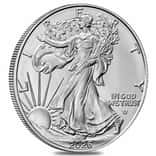
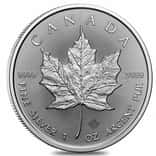
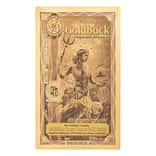
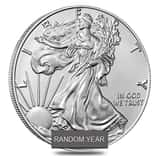
Government-issued bullion coins typically command higher premiums because they carry legal tender status, advanced security features, internationally recognized designs, and the backing of sovereign mints. Products like the American Gold Eagle, American Silver Eagle, Canadian Maple Leaf, and Gold Buffalo are trusted worldwide, making them easier to buy and sell in virtually any market.
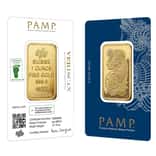
Private mint products generally offer lower premiums while still containing the same amount of precious metal. Investors willing to prioritize ounces over collectibility often choose privately minted bars or rounds because they maximize metal ownership for the purchase price. That doesn't make one option inherently better than the other—it simply reflects different investment objectives.
Dealer pricing also plays a role. Businesses must account for shipping, insurance, inventory financing, labor, and market risk while remaining competitive. In normal market conditions, retail competition helps keep dealer margins relatively modest, leaving manufacturing costs and product demand as the primary drivers of premiums.
Why Premiums Sometimes Rise Faster Than Gold Prices
One of the most misunderstood aspects of physical bullion investing is that premiums and spot prices don't always move together. Gold may fall while premiums rise, or silver may reach new highs even as premiums begin to decline. The reason is simple: they respond to different market forces.
Spot prices are established through global commodity markets and reflect the value of raw precious metal. Premiums, on the other hand, respond to conditions within the physical supply chain. When investor demand suddenly accelerates, refiners, mints, and distributors cannot instantly increase production. Inventory tightens, delivery times lengthen, and premiums rise to reflect those constraints.
The COVID-19 pandemic provided one of the clearest examples. Although financial markets continued to establish spot prices every trading day, refinery shutdowns, transportation bottlenecks, and unprecedented retail demand pushed premiums on many bullion products to historic levels. Investors discovered that buying physical metal depended as much on product availability as on the quoted price of gold or silver.
Similar patterns have appeared during financial crises, periods of elevated inflation, and episodes of geopolitical uncertainty. In each case, premiums became a barometer of physical demand, revealing conditions that were not immediately visible in the futures market. When investors want coins and bars in hand, the physical market can tighten quickly, even if paper-market pricing appears orderly.
That is why premiums should be read as more than an added expense. They can function as a signal of urgency, scarcity, and confidence in physical ownership. When premiums rise sharply across popular products, the market is often saying that buyers are placing greater value on immediate possession, trusted formats, and reliable supply.
Not Every Premium Should Be Judged the Same Way
A common mistake among first-time buyers is assuming the lowest premium automatically represents the best value. In reality, premiums should always be evaluated alongside liquidity, recognition, and long-term resale potential.
Widely recognized bullion coins often carry higher premiums because they're among the easiest products to sell almost anywhere in the world. Investors and dealers immediately recognize their authenticity, purity, and specifications, creating a deeper secondary market. That additional liquidity frequently supports stronger resale prices, helping offset part of the initial premium paid.
Lower-premium products, including many privately minted bars and rounds, remain excellent investment choices for buyers whose primary goal is maximizing precious metal ownership. These products generally offer the lowest cost per ounce and are especially attractive during periods when premiums across the market have expanded.
Size also matters. Fractional gold coins and smaller silver products usually carry higher premiums than larger bars because the production, packaging, and handling costs are spread across less metal. A one-tenth-ounce gold coin may be more accessible for budget-conscious buyers, but it often costs more per ounce than a full one-ounce coin. Larger bars can offer better pricing efficiency, though they may be less flexible when selling in smaller increments.
The right choice depends less on the premium itself than on the investor's objectives. Someone building long-term bullion holdings may prioritize lower acquisition costs, while another investor may willingly pay more for products with exceptional global recognition and resale flexibility.
Looking Beyond Today's Premium
Premiums are constantly changing because the physical bullion market is constantly changing. Manufacturing capacity, refinery output, transportation costs, investor demand, central bank buying, and global economic conditions all influence the final price of investment-grade precious metals.
Rather than viewing premiums as an unnecessary expense, investors should recognize them as an important market signal. Elevated premiums often indicate exceptionally strong physical demand or limited product availability, while declining premiums can suggest improving supply conditions even if precious metal prices continue rising.
Successful bullion investing has never been about chasing the lowest spot price or the smallest premium in isolation. It is about understanding the relationship between both. Investors who evaluate total acquisition cost, product liquidity, market recognition, and long-term value tend to make better purchasing decisions than those who focus on a single number.
This is especially important when comparing products across categories. A low-premium silver bar may be ideal for accumulating ounces, while a sovereign gold coin may be preferable for investors who value broad recognition and easier resale. A collectible or semi-numismatic coin may carry an even higher premium, but that premium reflects factors beyond metal content, including condition, scarcity, design, mintage, and collector demand.
The next time gold or silver prices make headlines, remember that the market price is only the starting point. The premium tells the rest of the story—and often provides the clearest picture of what's happening in the physical precious metals market.
Related reading you may find interesting:
Top 10 Reasons to Buy Copper Bullion: Why Dr. Copper Matters