View Charts
Platinum Investment and How It Can Hedge Industrial and Market Risk
 0
0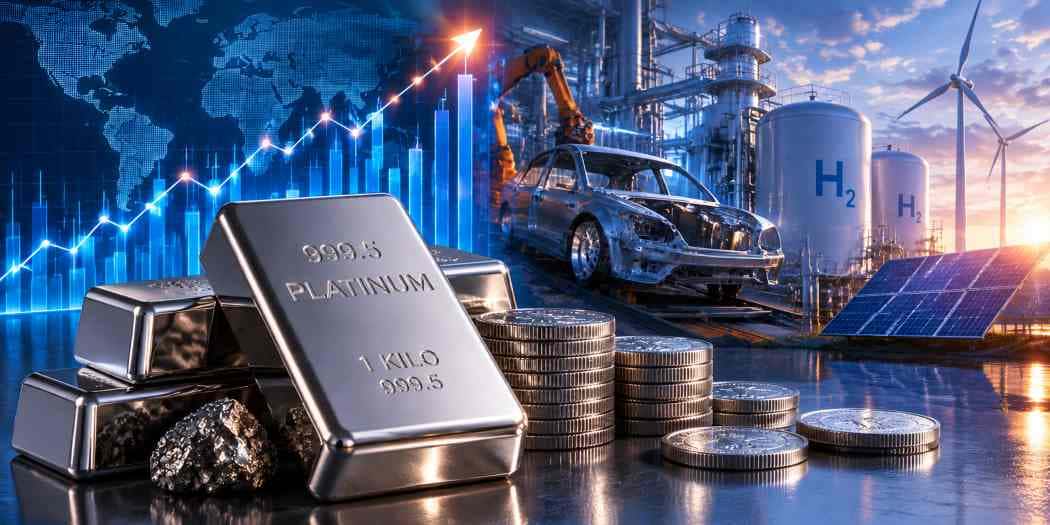
Why Platinum Matters When Industrial Demand and Market Risk Collide
Platinum occupies a unique position in the precious metals complex because it behaves as both a monetary metal and a deeply industrial commodity. For investors evaluating platinum investment strategies in 2026, the appeal lies in its dual sensitivity to macroeconomic conditions and real-world manufacturing demand. Unlike gold, which is driven primarily by monetary policy and safe-haven flows, platinum reacts strongly to automotive production cycles, emissions standards, and industrial expansion trends. This combination creates both volatility and opportunity, making platinum a compelling component within a broader precious metals portfolio designed to hedge industrial and market risk simultaneously.
Platinum Price Behavior in a Supply-Constrained Industrial Metal Cycle
Platinum spot price action is heavily influenced by tight physical supply conditions combined with cyclical industrial demand shifts. Historically, platinum has demonstrated sharp price movements during periods of economic expansion when automotive manufacturing and heavy industry accelerate. However, during slowdowns, prices can weaken quickly due to its concentrated industrial usage. In 2026, platinum continues to reflect a market structure where relatively small shifts in demand create outsized price reactions. This sensitivity makes it an important diversification tool within precious metals investing, especially when compared to gold and silver, which are more heavily driven by monetary demand and investor sentiment.
Industrial Demand Pressures: Automotive Catalysts, Hydrogen, and Electrification
A major driver of platinum demand is its critical role in automotive catalytic converters, particularly in diesel and hybrid vehicles. Even as electric vehicle adoption grows, internal combustion engines and hybrid systems continue to rely on platinum group metals for emissions control. At the same time, platinum is gaining attention in hydrogen fuel cell technology, where it serves as a key catalyst in clean energy applications. These overlapping industrial uses create a layered demand structure that ties platinum directly to long-term energy transition trends. As global electrification and decarbonization efforts expand, platinum’s industrial relevance remains a core pillar supporting its investment case.
Scarcity Dynamics and the Structural Supply Deficit in Platinum Markets
Platinum’s supply profile is one of the most constrained in the precious metals sector, with production heavily concentrated in South Africa and Russia. This geographic concentration introduces operational risks such as labor disruptions, energy instability, and geopolitical uncertainty. Unlike gold, platinum is rarely recycled at sufficient levels to offset mine production constraints, which contributes to periodic structural deficits. These supply-side limitations mean that even modest increases in industrial demand can quickly tighten the market. For investors, this scarcity dynamic reinforces platinum’s role as a strategic hedge within a diversified precious metals portfolio, particularly during periods of global supply chain stress.
Portfolio Construction: How Platinum Fits Within Precious Metals Allocation
Within a balanced precious metals portfolio, platinum serves a distinct role compared to gold and silver. Gold typically acts as a macroeconomic hedge against inflation and currency debasement, while silver bridges monetary and industrial demand. Platinum, however, is more directly tied to industrial growth cycles, making it a complementary exposure rather than a substitute. Investors often allocate a smaller percentage to platinum due to its volatility, but this exposure can enhance overall portfolio responsiveness to industrial recovery phases. When combined with gold and silver, platinum adds a layer of cyclical upside potential that improves diversification across different economic regimes.
Historical Cycles: Lessons from Commodity Shocks and Industrial Recessions
Historical performance data shows that platinum tends to outperform during early-stage economic recoveries when industrial activity rebounds faster than monetary tightening effects. Conversely, it often underperforms during recessions or periods of aggressive interest rate hikes. For example, past commodity cycles have demonstrated that platinum prices can surge rapidly when automotive demand rebounds or supply disruptions occur simultaneously. These historical patterns highlight the importance of timing and macro awareness when considering platinum investment exposure. Unlike more stable monetary metals, platinum rewards investors who understand cyclical positioning and industrial momentum shifts.
ETF Flows, Physical Bullion Demand, and Institutional Positioning in Platinum
Platinum exposure can be gained through physical bullion products, exchange-traded funds, and futures markets. Physical platinum coins and bars offer direct ownership, though liquidity is lower compared to gold. ETFs provide easier access and greater liquidity, allowing investors to track price movements without handling physical storage. Institutional investors often use futures markets to manage exposure to industrial commodities, including platinum. In recent years, ETF flows have become an important signal of investor sentiment, with inflows typically rising during periods of anticipated industrial recovery or tightening supply conditions in global metals markets.
Looking Ahead: How Platinum May Respond to Macro Shifts in 2026
Platinum’s outlook in 2026 will likely be shaped by the interplay between industrial demand growth and macroeconomic policy shifts. If global manufacturing stabilizes and energy transition investment accelerates, platinum could benefit from renewed structural demand. However, higher real interest rates or global slowdown risks may temporarily suppress industrial consumption. Inflation trends, central bank policy decisions, and energy market volatility will also play key roles in shaping price direction. For investors, platinum remains a high-beta industrial metal that can enhance portfolio performance during expansion phases while serving as a diversification tool within broader precious metals exposure.
Related reading you may find interesting:
Platinum Essentials: Top 25 FAQs for Investors and Collectors