View Charts
Gold Eagle vs Gold Buffalo: Which Is Better Long Term?
 0
0
A Complete Investor Comparison of America’s Top Gold Coins
For long-term investors evaluating physical gold, two U.S. Mint coins consistently dominate the conversation: the American Gold Eagle and the American Gold Buffalo. Both contain one full troy ounce of gold in their standard format. Both are backed by the U.S. government for weight and purity. And both closely follow movements in the gold spot price.
Yet meaningful differences separate these flagship coins — including purity, fractional availability, premiums, liquidity, and even design legacy. Understanding how these structural and psychological factors interact with the gold market price today is essential for investors building multi-year or multi-decade gold allocations.
Purity and Composition: 22-Karat vs 24-Karat Gold
The most immediate distinction between the two coins is purity.
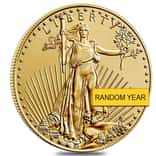
The American Gold Eagle is struck in 22-karat gold (.9167 fine) and alloyed with small amounts of silver and copper. Despite the alloy, it still contains a full ounce of pure gold. The added metals improve durability, making the Eagle more resistant to scratches and handling wear — an understated advantage for long-term holders.
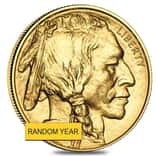
The Gold Buffalo, introduced in 2006, is struck in .9999 fine gold. Its 24-karat purity aligns with global bullion standards and appeals strongly to investors who prefer gold in its purest form.
From a performance standpoint, both coins move in tandem with the underlying gold market, reflecting fluctuations in real-time bullion values. Differences in purity do not materially alter how each responds to price movements, but they can shape investor preference and secondary-market demand. Over time, those perception factors may influence premiums and resale dynamics more than the metal content itself.
Historical Background and Iconic Designs
Beyond structure, both coins carry deep historical significance that strengthens long-term demand.
Introduced in 1986, the American Gold Eagle features Augustus Saint Gaudens’ legendary Liberty design, originally created in 1907 for the $20 Double Eagle. Widely regarded as one of the most beautiful designs in U.S. coinage history, it depicts Liberty striding forward with a torch and olive branch, symbolizing enlightenment and peace. The reverse presents a powerful eagle design, reinforcing national strength and continuity.
The Gold Buffalo draws from James Earle Fraser’s iconic 1913 Buffalo Nickel. Its obverse portrays a Native American profile composite, while the reverse features a majestic American buffalo inspired by “Black Diamond” of the Central Park Zoo. The design evokes early 20th-century American frontier imagery and resonates strongly with collectors and investors who value classic Americana.
While design does not alter how either coin tracks the gold spot price, aesthetic appeal and historical legacy can influence buyer preference, long-term desirability, and resale confidence.
The Fractional Advantage: Where Gold Eagles Stand Apart
One of the most important strategic differences is availability.
American Gold Eagles are offered not only in 1 oz format, but also in:
-
1/2 oz
-
1/4 oz
Gold Buffalos are currently produced only in the 1 oz format.
This distinction introduces flexibility.
Fractional Gold Eagles provide:
-
Lower entry price points
-
Greater ease in dollar-cost averaging
-
The ability to liquidate portions of holdings
-
Accessibility for newer investors
However, fractional coins carry higher premiums per ounce. Over long time horizons, higher per-ounce premiums can reduce cost efficiency relative to full-ounce bullion.
For investors prioritizing scalability and portfolio precision, fractional Eagles offer a meaningful structural advantage that Buffalos do not match.
Premiums and Long-Term Cost Efficiency
Premium behavior plays a measurable role in total return.
The gold spot price reflects raw metal value. Physical coins trade above that level to account for minting, distribution, and supply-demand conditions.
Historically:
-
1 oz Gold Eagles often carry slightly lower premiums than Buffalos during stable market conditions.
-
Gold Buffalos may command modestly higher premiums due to .9999 purity and global demand.
-
Fractional Eagles carry higher premiums per ounce due to fabrication costs.
During periods of elevated demand or U.S. Mint allocation, premiums on both coins can expand. Government-backed bullion frequently retains premium strength during volatile periods when investors closely monitor the gold market price for safe-haven positioning.
Over decades, movements in the gold price dominate total return, but disciplined premium management enhances long-term efficiency.
Liquidity and Resale Strength
Liquidity remains central to long-term planning.
American Gold Eagles are among the most recognizable bullion coins in the United States. Their long production history, IRA eligibility, and deep domestic demand make resale straightforward. Fractional sizes further increase liquidity flexibility by allowing partial liquidation.
Gold Buffalos also enjoy strong liquidity, particularly in international markets where 24-karat gold is preferred. Investors considering global resale channels may favor the Buffalo’s purity alignment.
In practice, both coins are highly liquid. Gold Eagles simply provide additional divisibility.
Supply Dynamics and Mint Production
U.S. Mint production patterns can influence premiums.
Gold Eagles are typically produced in larger quantities and have experienced allocation periods during demand surges. Fractional sizes may see sharper premium spikes during constrained supply.
Gold Buffalos generally have lower annual mintages, which can support premium resilience in tight markets.
Over extended holding periods, these fluctuations normalize, but investors who follow both the live gold spot price and mint production levels can better anticipate premium cycles.
Tax Treatment and IRA Eligibility
Both coins share similar regulatory treatment.
American Gold Eagles and Gold Buffalos are eligible for self-directed precious metals IRAs. In taxable accounts, gains are generally subject to capital gains treatment under current U.S. law.
Neither coin offers a distinct structural tax advantage for most investors.
Performance Across Market Cycles
Over long time horizons, both coins move with the gold spot price.
In bull markets:
-
Gold appreciation dominates.
-
Premium differences often compress.
In financial stress:
-
Government-backed coins see premium expansion.
-
Fractional coins may become particularly attractive due to affordability constraints.
Historically, structural performance differences between the two have been incremental. The dominant driver remains gold price direction.
So, Which Is Better Long Term?
For most U.S.-based long-term investors, the American Gold Eagle often emerges as the more versatile choice. Its slightly lower historical premiums in 1 oz format, exceptional domestic liquidity, and fractional availability provide structural flexibility across economic cycles.
For investors who prioritize maximum purity and international resale alignment, the Gold Buffalo offers compelling advantages. Its .9999 fine gold composition and global bullion standard appeal make it attractive to purity-focused buyers.
For investors who value historic American artistry, the Saint Gaudens design of the Gold Eagle adds a legacy component beyond simple bullion exposure.
In practical terms, long-term performance differences are modest. The key variables are entry premium, flexibility needs, purity preference, and intended resale market. Above all, appreciation in the gold spot price remains the primary driver of long-term returns.
Who Should Choose Each Coin?
Gold Eagle may be better for:
-
Investors seeking lower entry premiums in 1 oz format
-
Those who want fractional buying flexibility
-
U.S.-focused investors prioritizing domestic liquidity
-
Long-term accumulators using dollar-cost averaging
Gold Buffalo may be better for:
-
Investors who prefer 24-karat gold
-
Buyers targeting international resale markets
-
Purity-focused portfolio builders
Some investors allocate to both — using 1 oz coins for cost efficiency and fractional Eagles for flexibility.
Final Perspective for Long-Term Gold Investors
The debate between Gold Eagle vs Gold Buffalo is not about dramatic outperformance. It is about structural alignment.
Both coins provide:
-
One ounce of government-backed gold
-
Strong liquidity
-
IRA eligibility
-
Direct exposure to movements in the gold spot price
The Gold Eagle offers flexibility and divisibility.
The Gold Buffalo offers maximum purity and global alignment.
Over decades, disciplined exposure to gold — combined with thoughtful premium management and awareness of the current gold price — will matter far more than minor structural distinctions.
The better coin is the one that fits your long-term strategy, portfolio objectives, and comfort with flexibility versus purity.
Related reading you may find interesting:
Mint of Poland Gram Gold Bars: Sizes, History & Value