View Charts
Fractional Gold Eagles: 1/10, 1/4, and 1/2 oz Guide
 0
0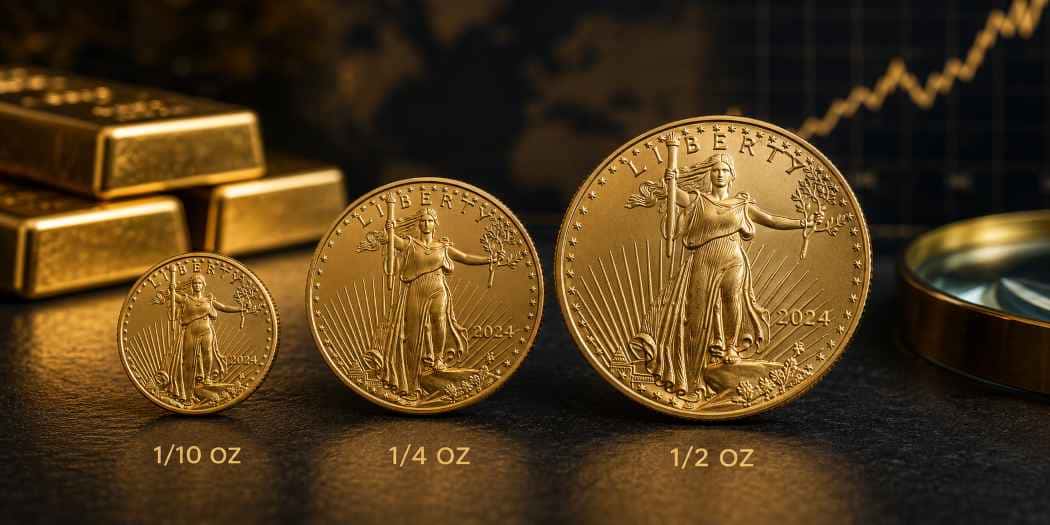
Smaller Gold Eagles Give Buyers More Ways to Own U.S. Gold
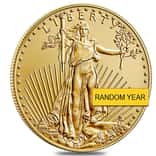
Fractional gold eagles have become increasingly important as gold prices remain historically elevated and more buyers look for flexible entry points into physical gold ownership. Instead of purchasing a full one-ounce American Gold Eagle, investors can choose smaller 1/10 oz, 1/4 oz, and 1/2 oz coins that carry the same trusted U.S. Mint backing, the same iconic design heritage, and the same legal tender status in a more accessible format.
That flexibility matters in today’s market. Strong central bank demand, geopolitical uncertainty, inflation concerns, and growing investor interest in tangible assets have kept gold highly relevant. For many buyers, fractional coins offer a practical way to build a gold position gradually, improve resale flexibility, and diversify without committing to the higher upfront cost of a full one-ounce coin.
How Fractional Gold Eagles Fit Into the American Eagle Program
The American Gold Eagle program launched in 1986 and quickly became one of the most recognized modern gold coin series in the world. Each coin is struck in 22-karat gold, meaning it contains 91.67% gold alloyed with silver and copper for added durability. While the total coin weight varies by size, each denomination contains its stated amount of actual gold weight.
The modern fractional lineup includes:
-
1/10 oz Gold Eagle with a $5 face value
-
1/4 oz Gold Eagle with a $10 face value
-
1/2 oz Gold Eagle with a $25 face value
-
1 oz Gold Eagle with a $50 face value
This article focuses on the three smaller sizes because they serve a distinct role. They are not simply “smaller versions” of the one-ounce coin. They offer different advantages in affordability, liquidity, premium structure, gifting, emergency use, and portfolio building.
The 1/10 Oz Gold Eagle Offers the Lowest Entry Point
The 1/10 oz Gold Eagle is the smallest standard American Gold Eagle denomination and often the most approachable option for new gold buyers. Because it contains one-tenth of a troy ounce of gold, it allows investors to purchase U.S. government-backed gold in smaller increments.
This size is popular for several reasons. It is easier to budget for, simple to store, widely recognized, and highly liquid among both collectors and bullion buyers. It can also be useful for those who want to dollar-cost average into gold over time instead of making one large purchase.
The tradeoff is premium. Smaller gold coins generally carry higher premiums per ounce than larger coins because production, packaging, handling, and distribution costs are spread across less gold content. That means a 1/10 oz coin usually costs more per ounce than a 1/2 oz or 1 oz coin.
For buyers prioritizing flexibility and accessibility, that higher premium may be acceptable. For buyers focused purely on minimizing cost per ounce, larger sizes may be more efficient.
The 1/4 Oz Gold Eagle Balances Cost and Flexibility
The 1/4 oz Gold Eagle sits in the middle of the fractional range and often appeals to buyers who want more gold content than a 1/10 oz coin but still prefer a smaller purchase than a half-ounce or full-ounce coin.
This size can be especially practical for steady accumulation. It allows investors to build meaningful gold exposure over time while maintaining resale flexibility. If an investor owns four 1/4 oz coins, they have roughly the same gold content as one full-ounce Gold Eagle but can sell one piece at a time instead of liquidating the entire ounce.
That divisibility is one of the biggest advantages of fractional bullion. A single one-ounce coin is efficient, but it is not always ideal if the owner later wants to sell only part of their position. Smaller units provide more control.
The 1/4 oz size also tends to have broad appeal among gift buyers, collectors, and investors who want recognizable gold without the full commitment of larger denominations.
The 1/2 Oz Gold Eagle Offers Strong Gold Content With Better Efficiency
The 1/2 oz Gold Eagle is the largest fractional size and often represents a strong compromise between premium efficiency and liquidity. It contains a meaningful amount of gold, carries a lower premium per ounce than smaller fractional denominations in many market conditions, and remains easier to liquidate in partial amounts than a full one-ounce coin.
For investors with a moderate gold budget, the 1/2 oz option can be appealing because it provides substantial gold exposure while retaining some divisibility. Two half-ounce coins equal one ounce of gold content, but each can be sold separately if needed.
This size is often overlooked compared with the 1/10 oz and 1/4 oz coins, yet it can be one of the most strategic choices for buyers who want to reduce premium drag without giving up flexibility. It is also easier to handle and authenticate visually than very small coins, while still requiring less upfront capital than a full-ounce Gold Eagle.
Premiums Matter More With Smaller Gold Coins
Premiums are one of the most important considerations when comparing fractional Gold Eagles. The gold spot price reflects the value of raw gold per ounce, but coins trade above spot due to minting, distribution, market demand, dealer costs, and product scarcity.
Fractional coins usually carry higher percentage premiums than one-ounce coins. This does not make them bad purchases, but it does mean buyers should understand what they are paying for.
A smaller coin may offer:
-
Lower total purchase price
-
Easier resale in small amounts
-
More flexible gifting
-
Better emergency divisibility
-
Wider accessibility for new buyers
A larger coin may offer:
-
Lower cost per ounce
-
Stronger premium efficiency
-
Simpler bulk storage
-
Better value for larger purchases
The right choice depends on whether the buyer values flexibility or cost efficiency more.
Liquidity Is a Major Strength of Fractional Gold Eagles
Liquidity is one reason American Gold Eagles are so widely trusted. They are recognizable, government-backed, easy to verify, and actively traded across the U.S. bullion market.
Fractional sizes benefit from that same recognition. A 1/10 oz, 1/4 oz, or 1/2 oz Gold Eagle is generally easier to sell than an obscure private-mint gold piece of similar weight because buyers understand the product. The face value, gold content, U.S. Mint origin, and familiar design all support confidence.
Liquidity can be especially important during volatile markets. When gold prices rise quickly, fractional coins may attract strong retail demand from buyers priced out of larger coins. When investors need to sell, smaller denominations can make it easier to liquidate only what is necessary.
This practical flexibility is one of the main reasons fractional coins remain popular even when their premiums are higher.
Bullion Value and Collectible Appeal Can Overlap
Most fractional Gold Eagles are purchased primarily for bullion value, but they can also carry collectible appeal depending on year, condition, finish, mintmark, packaging, or certification.
Bullion strikes are usually valued close to gold content plus premium. Proof and burnished versions may carry stronger numismatic premiums because they are produced for collectors and often have lower mintages or special finishes. Certified high-grade examples can also trade above ordinary bullion values if collector demand is strong.
This distinction matters because buyers should not evaluate every fractional coin the same way. A common random-year 1/10 oz Gold Eagle is usually a bullion-focused product. A low-mintage proof fractional Gold Eagle in original government packaging or a perfect certified grade may be priced as both gold and collectible numismatics.
Understanding the difference helps buyers avoid overpaying for bullion or undervaluing genuinely collectible pieces.
Fractional Gold Eagles Can Support Dollar-Cost Averaging
Dollar-cost averaging is a common strategy for buyers who want to build a gold position gradually. Instead of trying to time the market perfectly, an investor makes purchases over time at different price levels.
Fractional Gold Eagles fit this strategy well because they allow smaller, repeatable purchases. A buyer may add a 1/10 oz coin monthly, a 1/4 oz coin periodically, or a 1/2 oz coin when budget allows. This approach can reduce emotional decision-making and make gold ownership more consistent.
Because gold can move sharply during inflation scares, banking stress, geopolitical conflict, or Federal Reserve policy shifts, gradual accumulation can help buyers avoid committing all funds at one price point.
Which Fractional Size Is Best for Different Buyers?
The best fractional size depends on the buyer’s goal.
The 1/10 oz Gold Eagle may be best for buyers who want the lowest entry point, maximum small-unit flexibility, and easy gifting potential.
The 1/4 oz Gold Eagle may be best for buyers seeking a balance between affordability and meaningful gold exposure.
The 1/2 oz Gold Eagle may be best for buyers who want stronger premium efficiency while still keeping the option to sell in smaller units than a full ounce.
There is no universal best choice. A balanced approach may include multiple sizes. Some investors build a base position in larger coins, then add fractional pieces for flexibility. Others focus entirely on fractional gold because divisibility matters more to their strategy than minimizing premiums.
Storage, Authentication, and Resale Planning Matter
Fractional coins are small, valuable, and easy to store, but that also means organization is important. Buyers should keep records of purchase dates, quantities, invoices, and storage locations.
Authentication also matters. American Gold Eagles are widely counterfeited due to their popularity. Buying from reputable dealers, keeping original packaging when available, and considering certified examples for higher-premium coins can help reduce risk.
For resale planning, condition matters. Even bullion coins can lose some resale appeal if scratched, mishandled, or damaged. Protective flips, capsules, tubes, and secure storage can help preserve surfaces.
Fractional gold should be treated as both a financial asset and a physical object. Proper handling supports long-term liquidity.
Fractional Gold Eagles Remain Practical in a High-Gold-Price Era
As gold prices remain elevated, smaller-denomination Gold Eagles have become more relevant for buyers who want trusted U.S. gold without the cost of a full-ounce coin. The 1/10 oz, 1/4 oz, and 1/2 oz sizes each serve a different purpose, from affordable entry points to balanced accumulation and improved resale flexibility.
The key is understanding the tradeoff. Fractional coins usually cost more per ounce than larger gold coins, but they offer practical benefits that larger coins cannot match. They are divisible, recognizable, portable, and accessible.
For investors focused on long-term wealth preservation, fractional Gold Eagles can provide a flexible way to build gold exposure while maintaining control over purchase size and future resale options.
Related reading you may find interesting:
W Mint Mark Gold Eagles and the West Point Collector Premium