View Charts
Fort Knox Gold Reserves Return to the National Spotlight
 0
0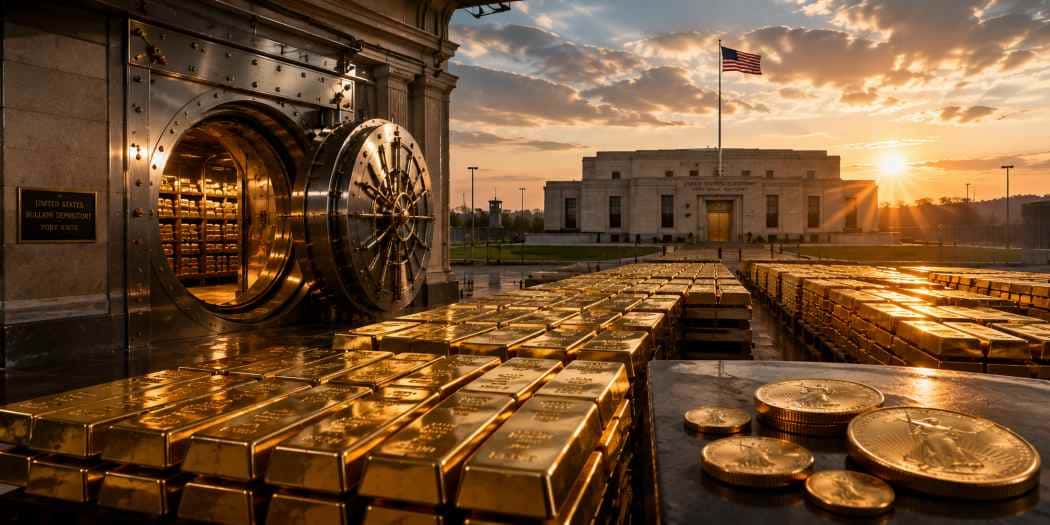
Renewed Attention on America’s Gold Supply Is Reshaping Bullion Conversations
Fort Knox and America’s gold reserves are back in headlines after President Donald Trump publicly renewed calls to personally inspect the nation’s gold holdings, reviving a debate that has circulated throughout financial and political circles since early 2025. The renewed discussion arrives at a time when gold spot prices remain near historic highs, central banks continue aggressively accumulating bullion, and investor demand for physical precious metals remains elevated amid inflation concerns, geopolitical instability, and growing distrust in global sovereign debt markets. While Fort Knox has long represented the symbolic center of America’s monetary strength, recent discussions surrounding U.S. Mint gold sourcing and supply-chain transparency have added new layers to the broader conversation surrounding national gold reserves.
The issue is not centered on whether Fort Knox gold exists, but rather on transparency, verification, and public confidence in how America manages and safeguards its bullion reserves. Combined with recent scrutiny surrounding gold refining practices and domestic sourcing standards tied to American Gold Eagle bullion coins, the topic has once again positioned gold ownership and sovereign reserve policy near the center of public financial discussion.
Fort Knox Still Holds One of the Largest Gold Stockpiles in the World
Fort Knox remains one of the most heavily protected bullion depositories in existence and continues serving as a cornerstone of U.S. gold reserve holdings. Operated by the U.S. Treasury Department, the United States Bullion Depository at Fort Knox reportedly stores approximately 147.3 million troy ounces of gold, representing a substantial portion of total U.S. sovereign reserves. At current gold prices near $4,700 per ounce, those holdings would carry an estimated market value approaching $700 billion, underscoring the enormous financial significance of America’s bullion reserves.
The facility has become globally recognized not only for its security, but also for what it symbolizes: financial stability, monetary power, and long-term sovereign wealth preservation.
Although Fort Knox is often discussed alongside American Gold Eagle bullion coins and U.S. Mint operations, the gold stored within the depository is distinct from the Mint’s modern bullion coin sourcing system. The reserves held at Fort Knox primarily represent longstanding sovereign holdings accumulated over decades rather than newly refined bullion entering commercial coin production programs.
That distinction has become increasingly important as debates surrounding bullion traceability and gold sourcing continue expanding.
Trump and Musk Help Reignite Public Interest in Fort Knox
Public discussion surrounding Fort Knox intensified after President Trump renewed interest in personally inspecting America’s gold reserves, echoing broader skepticism that has circulated online and throughout financial commentary over the past year. Elon Musk also helped amplify public curiosity surrounding the subject during 2025 through social media discussions questioning transparency surrounding national gold holdings and reserve audits.
While there is no evidence suggesting Fort Knox reserves are missing or compromised, the renewed attention reflects a broader shift in investor psychology during periods of economic uncertainty. In times of elevated inflation, banking instability, and geopolitical tension, public focus often returns to hard assets and sovereign reserve credibility.
Gold’s role as a store of value becomes especially important when confidence in fiat currencies, debt markets, or central bank policy weakens.
The resurgence of Fort Knox discussions reflects more than political headlines alone—it also highlights the growing public fascination with tangible reserves in an increasingly digital financial system.
Gold Transparency Has Become a Larger Market Theme
The renewed spotlight on Fort Knox coincides with broader industry discussions surrounding transparency in precious metals markets. Recent reports examining U.S. Mint gold sourcing practices have already raised questions about supply-chain verification, domestic sourcing requirements, and refining traceability.
Those concerns are separate from Fort Knox itself, but together they have amplified public interest in how America sources, stores, audits, and certifies gold holdings.
Modern bullion investors increasingly care about:
-
reserve transparency
-
chain-of-custody standards
-
sovereign bullion verification
-
ethical sourcing practices
-
refinery oversight
This shift reflects changing investor priorities across the precious metals industry. Historically, bullion buyers focused primarily on purity, weight, and liquidity. Today, many investors also want assurance regarding where bullion originates, how it was refined, and how sovereign reserves are maintained.
As physical gold demand continues rising globally, transparency itself is becoming part of the investment conversation.
Why Fort Knox Continues Carrying Symbolic Weight
Fort Knox occupies a unique position within global finance because it represents far more than a storage facility. For decades, the depository has symbolized American monetary power and the enduring role of gold within the international financial system.
Even though the United States officially abandoned the gold standard generations ago, gold reserves still play a critical role in:
-
central bank confidence
-
sovereign reserve diversification
-
currency credibility
-
financial crisis preparedness
-
geopolitical positioning
Recent years have seen central banks worldwide significantly increase gold purchases, particularly among emerging-market economies seeking to reduce dependence on the U.S. dollar. Countries including China, Russia, India, and Turkey have all expanded gold reserves amid rising geopolitical fragmentation and global debt concerns.
Against that backdrop, renewed attention on Fort Knox reflects broader global interest in sovereign gold ownership itself.
The U.S. Mint Supply Debate Is Separate From Fort Knox
One important distinction often overlooked in public discussion is that the recent controversy surrounding U.S. Mint gold sourcing is operationally separate from Fort Knox reserves.
Recent investigations involving the Mint focused primarily on:
-
origin verification
-
refining traceability
-
domestic sourcing compliance
-
allocation accounting methods
Those reports questioned whether refiners could fully verify that all gold used in American Gold Eagle coins originated exclusively from newly mined U.S. sources as outlined under the Gold Bullion Coin Act of 1985.
Fort Knox reserves, by contrast, represent longstanding sovereign bullion holdings maintained by the Treasury Department rather than newly refined commercial bullion entering coin production programs.
Understanding that distinction is important because the current scrutiny surrounding Mint sourcing practices does not suggest that Fort Knox reserves themselves are compromised or missing.
Investor Demand for Physical Gold Remains Historically Strong
The renewed public focus on Fort Knox is arriving during one of the strongest periods of global physical gold demand in recent history. Gold prices remain elevated due to:
-
persistent inflation concerns
-
geopolitical instability
-
central bank accumulation
-
sovereign debt expansion
-
elevated oil prices
-
broader financial market volatility
Physical bullion demand has remained particularly strong among investors seeking portfolio diversification and long-term wealth preservation.
American Gold Eagles, Gold Buffalos, gold bars, and sovereign bullion products continue seeing consistent demand despite ongoing market volatility. For many investors, physical gold remains one of the few assets viewed as independent from both digital financial systems and counterparty risk.
That environment helps explain why discussions surrounding sovereign gold reserves continue attracting public attention.
Reserve Verification Could Become a Bigger Political Topic
The renewed focus on Fort Knox may also influence future political discussions surrounding reserve audits, sovereign transparency, and bullion reporting standards. Calls for additional reserve verification or independent inspections tend to intensify during periods of financial uncertainty, especially when gold prices surge or public trust in institutions weakens.
A major part of the modern debate centers on the fact that Fort Knox has not undergone a fully public, comprehensive physical audit in decades. While Treasury officials conduct annual seal checks and internal accounting reviews, the last widely referenced public inspection involving members of Congress and journalists took place in 1974, and many analysts note that even that event was not considered a full independent audit of every gold bar stored inside the depository. Several historical reviews point to 1953 as the last truly comprehensive physical examination of substantial portions of the reserve.
Renewed political attention from figures such as President Trump, Elon Musk, and Senator Rand Paul is increasing pressure on policymakers to provide more visible transparency regarding sovereign reserves and precious metals management. At the same time, many analysts caution that modern bullion markets rely heavily on trust, continuity, and institutional stability, meaning highly politicized reserve debates could create unintended volatility across global precious metals markets.
For investors, the broader takeaway may be less about conspiracy theories and more about the enduring importance of physical gold, reserve transparency, and sovereign credibility within the modern financial system.
Physical Gold Remains Central to Long-Term Financial Confidence
The renewed headlines surrounding Fort Knox highlight how deeply gold remains connected to perceptions of financial stability, sovereign credibility, and long-term wealth preservation. Even in an era dominated by digital banking, cryptocurrencies, and algorithmic trading, physical gold reserves continue carrying enormous symbolic and financial significance worldwide.
As investors navigate inflation pressures, geopolitical instability, and growing concerns surrounding sovereign debt levels, physical gold continues serving as both a financial asset and a psychological anchor within global markets. Whether discussions center on Fort Knox inspections, U.S. Mint sourcing practices, or rising central bank purchases, one reality remains clear: confidence in gold itself remains deeply embedded in the modern financial system.
Related reading you may find interesting:
Gold 1970s Rally: From $35 to the 1980 Peak