View Charts
Economic Crossroads: Deciphering the Rise in SuperCore CPI and Its Broader Implications
 0
0
The latest Consumer Price Index (CPI) report has cast a new light on inflation trends in the U.S., especially with the Core CPI Services Excluding Shelter – the 'SuperCore CPI' – once again crossing the 4.00% threshold.
This article delves deeper into the complexities of the November CPI data, exploring the factors behind this increase and its broader implications for the Federal Reserve's policy decisions and the overall economy.
CPI Overview - A Closer Look at November's Figures
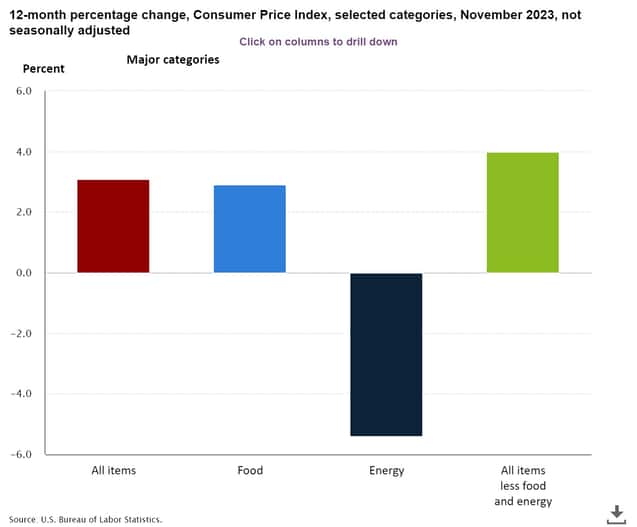
The headline CPI for November showed a subtle month-over-month increase of 0.1%, bringing the annual rate down to 3.1% from October's 3.2%. This aligns with the low point recorded in June. The Core CPI, which strips out the volatile food and energy components, also witnessed a modest acceleration, maintaining a year-over-year rate of 4.0%.
The SuperCore CPI Surge
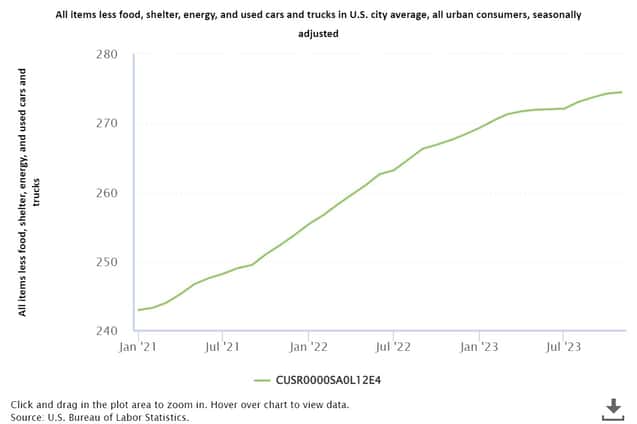
The SuperCore CPI, which notably excludes shelter costs, recorded a 0.5% month-over-month increase, reaching a 4.08% year-over-year growth. This uptick, surpassing the critical 4% mark, poses a significant challenge for the Federal Reserve and dampens the hopes of those anticipating rate cuts.
Diving into Inflation Drivers
Several sectors significantly contributed to the inflation figures in November:
- Used Cars and Shelter: A notable driver was the shelter index, which saw a rise of 0.4%. Additionally, the used car and truck index increased by 1.6%, ending its five-month streak of declines.
- Energy Sector: Contrasting these increases, the energy sector experienced a notable decline.
- Healthcare and Insurance Costs: The medical care index rose by 0.6%, with noticeable increases in physician services and prescription drugs. The motor vehicle insurance index increased by 1.0%.
Sector-Specific Movements:
- Declines: Apparel saw a decrease of 1.3%, and household furnishings and operations declined by 0.4%. Sectors like communication, recreation, airline fares, and new vehicles also experienced drops.
- Increases: Year-over-year increases were observed in sectors including motor vehicle insurance, recreation, personal care, and new vehicles.
Analyzing Economic Impacts:
- Shelter Inflation Trends: The rate of shelter inflation is showing signs of deceleration, potentially indicating future dips in the CPI.
- Real-Time Rent Inflation: Current observations suggest that real-time rent inflation is significantly lower than reported figures, hinting at a further potential decrease in CPI next year.
- Wage Growth and Purchasing Power: Real average hourly earnings rose by 0.5% year-over-year in November, which is a positive sign for consumer purchasing power and the overall economy.

Source: Canva
Federal Reserve's Policy Considerations:
- The November CPI data, while largely aligning with expectations, continues to hover above the Fed's 2% target. This persistent above-target inflation may influence the Fed's approach towards interest rates.
- Policymakers might interpret ongoing disinflation as positive, but the sustained high inflation rates could complicate their decisions.
- The Fed is expected to maintain interest rates, signaling an end to the policy tightening phase. Future rate reductions, possibly beginning in May, are anticipated by futures markets.
Market Reactions and Expectations:
- The financial markets reacted with cautious optimism to the CPI data. The modest rise in CPI has slightly eased the pressure on the Federal Reserve.
- Experts like Liz Ann Sonders, chief investment strategist at Charles Schwab, pointed out that the data was somewhat in line with expectations, though not as favorable as some had hoped for in terms of deceleration.
Looking Ahead:
- The road ahead seems mixed for the U.S. economy. While certain sectors show signs of price stabilization or decline, others continue to fuel inflationary pressures.
- The Federal Reserve's next moves will be closely watched, as it balances the need to control inflation to support economic growth.
- The future trajectory of the CPI and its components, especially in sectors like shelter and used cars, will be critical in shaping economic policies and market sentiments.
Conclusion
The November CPI report paints a picture of an economy at a crossroads, grappling with varied inflationary pressures across different sectors. As the Federal Reserve navigates this complex economic landscape, its decisions will be pivotal in shaping the trajectory of inflation and economic stability. The coming months will undoubtedly be crucial in understanding the effectiveness of monetary policy in achieving a balance between inflation control and economic growth.