View Charts
December Inflation Spike Drives Gold Prices Up as Fed Rate Hike Looms
 0
0
In December, the Consumer Price Inflation (CPI) report delivered unexpected news: a significant spike in inflation, with headline figures and food costs soaring to record highs. This +0.3% month-over-month increase in the CPI, propelling the year-over-year figure to +3.4%, surpassed both the previous +3.1% and the anticipated +3.2%. This development has profound implications, particularly in the gold market, as investors react to potential aggressive Federal Reserve moves.
In-Depth Analysis of Inflation and Its Drivers
The primary contributors to this surge in inflation were an increase in services costs, notably in shelter, and a stall in energy deflation. Interestingly, the core CPI, which excludes the often volatile food and energy sectors, rose by 0.3% month-over-month. This rise is significant as it marks the first instance since May 2021 that the year-over-year rate fell below 4.00%, down to 3.93%.
The goods sector also demonstrated worrying signs, particularly in the used cars and trucks market, which saw a 0.5% increase in December following a 1.6% rise in November. More concerning was the 0.4% month-over-month increase in the Core CPI Services Ex-Shelter (SuperCore), leading to a year-over-year rise of +4.09%. This category, a focus of Federal Reserve policymakers, has shown notable inflationary pressure.
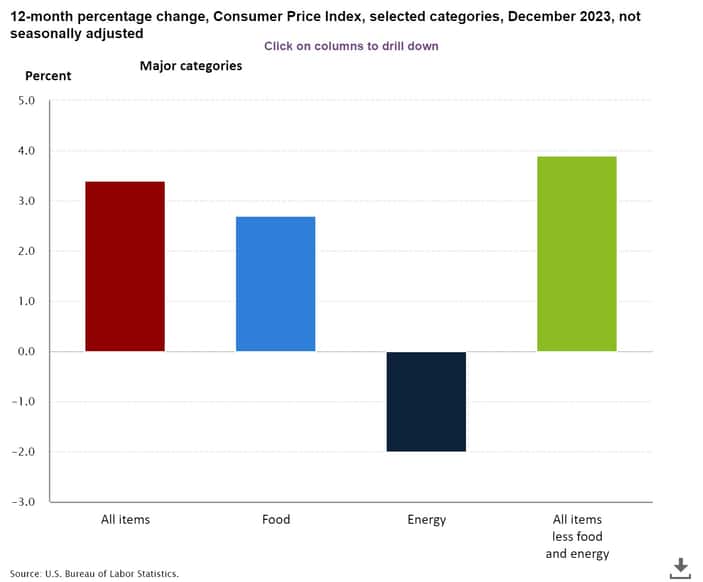
Despite these increases, there were signs of a slowdown in shelter inflation. December’s figures showed a year-over-year increase of 6.15%, a decrease from November's 6.51% and the lowest since July 2022. Similarly, rent inflation decelerated to 6.47% year-over-year in December, down from November's 6.87%.
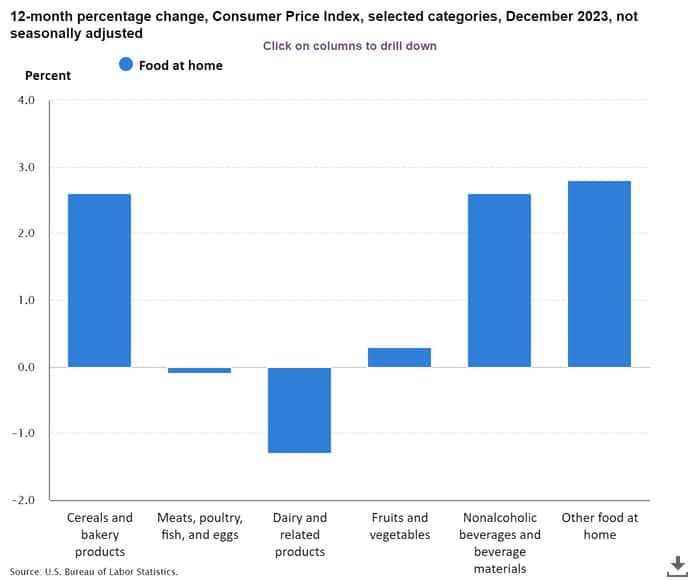
However, the broader picture remains challenging. The Biden administration's narrative of declining inflation clashes with the reality of escalating headline costs, core costs, food costs, and rising fuel prices. The grocery sector, for instance, saw increases in four out of six major food group indexes in December, with the index for meats, poultry, fish, and eggs rising by 0.5%, primarily driven by an 8.9% spike in egg prices.
Gold Prices in the Wake of Inflation Data
This backdrop of rising inflation has direct implications for gold prices. Gold, traditionally a safe-haven asset during times of economic uncertainty and a hedge against inflation, has seen an uptick in demand and price. This increase is partly attributed to speculation that the Federal Reserve might adopt a more aggressive stance in response to the inflation data, possibly through rate hikes.
The relationship between gold prices and interest rates is nuanced. Generally, higher interest rates lead to a stronger dollar and higher bond yields, which are negative for gold. However, the current economic environment, characterized by persistently high inflation and uncertainty, has bolstered the appeal of gold. Investors are seeking stability and protection against inflation, leading to increased demand for the precious metal.

Source: Canva
Federal Reserve's Policy Challenges
The Federal Reserve, led by Chair Jerome Powell, is now in a tough spot. They must balance the need to control inflation without harming economic growth. The decisions they make, particularly regarding interest rates and Quantitative Tightening (QT), are crucial. An aggressive rate hike could slow down economic growth, affecting everything from employment to consumer spending. On the other hand, insufficient action might allow inflation to persist, eroding consumer purchasing power and economic stability.
Implications for Investors and the Economy
For investors, gold's role in portfolios has become increasingly important. As a non-yielding asset, gold does not offer interest or dividends but serves as a store of value and a hedge against inflation. The Fed’s next steps, whether it involves more aggressive rate hikes or adjustments in QT, will significantly impact investor behavior and the attractiveness of gold as an investment.
Conclusion
The unexpected rise in December's CPI has set off a ripple effect across the economy and financial markets, particularly evident in the gold market. As the Federal Reserve navigates this complex economic landscape, the role of gold as a safe-haven asset and a key barometer of economic sentiment is being reinforced. Investors, seeking stability and protection against inflation, are likely to continue turning to gold, making it a critical element in understanding the broader economic dynamics at play.