View Charts
Burnished Coins Explained: Satin Finish and Collector Premiums
 0
0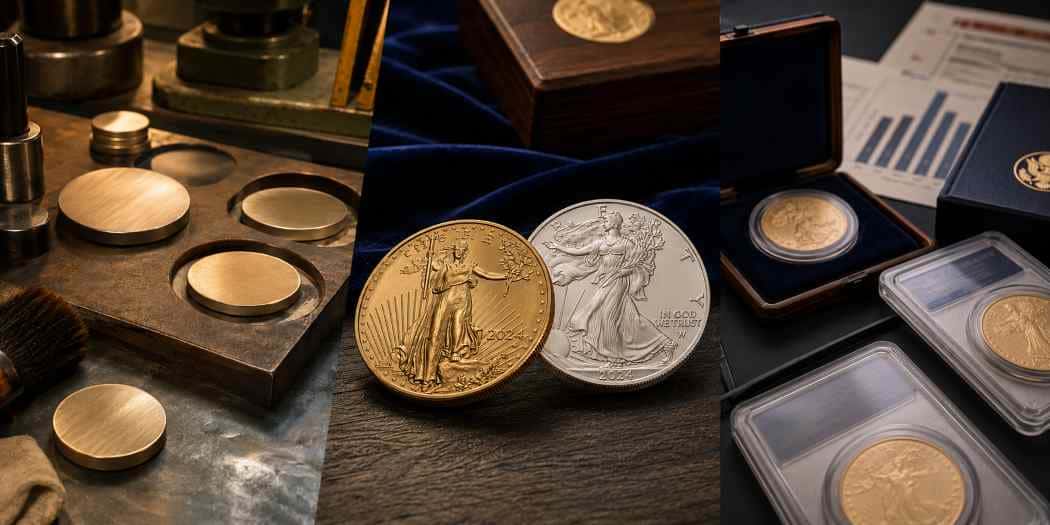
A Subtle Mint Finish Can Create Strong Collector Demand
Burnished coins occupy a distinct place in modern numismatics because their appeal comes from details that are easy to overlook at first glance. Unlike proof coins, which are known for mirrored fields and dramatic frosted devices, burnished coins feature a softer satin-like surface created through special blank preparation and collector-focused minting. That understated finish has made them especially popular among buyers who want coins that feel more refined than standard bullion but less reflective than proofs.
The market for burnished coins has grown alongside demand for modern U.S. Mint products, certified American Eagles, and W mint mark collector issues. Elevated gold and silver spot prices continue attracting investors to physical precious metals, while collectors increasingly seek coins that combine bullion value with distinctive numismatic features. Burnished American Gold Eagles and Burnished American Silver Eagles fit that crossover demand because they contain recognized precious metal content while also carrying finish, mint mark, packaging, and grading characteristics that can support premiums above ordinary bullion.
Understanding how burnished coins are made, why the W mint mark matters, and what actually drives premiums helps buyers avoid treating every collector finish as automatically rare. Some burnished issues have strong long-term appeal, while others depend heavily on mintage, grade, population data, and collector participation.
The Burnished Finish Starts With Specially Prepared Blanks
The defining feature of burnished coins is their surface texture. Before striking, blanks are typically polished or treated in a way that creates a smooth, matte, or satin-like appearance. This preparation gives the finished coin a softer visual character than regular bullion strikes, which are produced primarily for investment distribution rather than collector presentation.
The result is a coin with a more refined and subdued look. Burnished coins do not have the deep mirror fields associated with proof coinage, but they often display enhanced surface consistency and visual sharpness compared with standard bullion coins. This finish appeals to collectors who appreciate modern minting craftsmanship without the high contrast of proof surfaces.
The difference is important because collectors often pay premiums for finish variety. In modern coin markets, a coin’s value is not based solely on metal content. Strike type, finish, mint mark, grade, packaging, and release format all influence demand. Burnished coins sit in the middle of that spectrum, offering a collector-quality product with a distinctive texture that separates them from both bullion and proof issues.
W Mint Mark Coins Carry West Point Prestige
Many of the most recognizable burnished U.S. coins carry the W mint mark, identifying production at the West Point Mint. West Point has become deeply associated with American Eagle precious metals coinage, including gold, silver, platinum, and palladium collector issues.
For buyers, the W mint mark provides more than a production location. It signals that the coin belongs to a collector-focused mint program rather than ordinary mass bullion distribution. Standard bullion American Eagles generally do not carry a visible mint mark, while burnished and proof versions often do.
This distinction gives burnished W mint mark coins added appeal within American Eagle collecting. A Burnished Silver Eagle or Burnished Gold Eagle can attract buyers who want a more specialized version of a familiar series. The mint mark also supports set-building demand because collectors often organize modern Eagle collections by finish, year, denomination, and mint origin.
Still, the mint mark alone does not guarantee a strong premium. It works best when combined with lower mintage, high-grade certification, strong eye appeal, and sustained collector demand.
Burnished Coins Differ From Proof and Bullion Issues
Burnished coins are often confused with proof coins or regular bullion coins, but each category serves a different purpose.
Bullion coins are primarily made for precious metal investors. They are generally distributed through authorized dealer networks and priced close to spot metal value plus a market premium. Their main appeal is gold, silver, platinum, or palladium content, not specialized presentation.
Proof coins are designed for collectors and feature highly polished mirror-like fields with frosted design elements. They often come in official government packaging and are priced at higher premiums because of their finish, production process, and presentation appeal.
Burnished coins occupy a middle ground. They are collector coins, but their satin finish is more restrained than proof coinage. They often carry official packaging and a visible mint mark, yet their visual identity remains closer to a refined matte bullion-style product. This positioning gives them unique appeal for collectors who want something more limited and distinctive than bullion without the dramatic reflectivity of proofs.
American Eagle Programs Drive Burnished Coin Popularity
The most widely followed burnished coins are tied to the American Eagle program, especially Burnished American Silver Eagles and Burnished American Gold Eagles. These coins benefit from the strength of one of the most recognized modern U.S. Mint series in the world.
American Eagles already carry strong demand because of their government backing, trusted metal content, and broad collector base. Burnished versions add another layer of desirability by introducing a distinct finish and West Point mint mark. This makes them important for collectors building complete American Eagle sets.
Burnished Silver Eagles are especially popular because their lower price point makes them accessible to a wider audience. Burnished Gold Eagles, meanwhile, appeal to buyers who want gold ownership with added numismatic depth. Because gold prices can significantly influence the base value of these coins, the premium structure often reflects both bullion-market movement and collector demand.
This dual identity is what makes burnished Eagles so interesting. They are not pure bullion, but they are not detached from metal prices either.
Mintage Levels Can Separate Common Issues From Key Dates
Mintage is one of the most important factors affecting burnished coin premiums. Lower mintage issues often attract stronger collector attention because fewer coins are available for future buyers, but mintage must be considered alongside demand.
A low-mintage coin with limited collector interest may not perform as strongly as a slightly higher-mintage coin tied to a popular series, special year, or strong registry demand. Burnished American Eagles can become especially desirable when a low production figure intersects with high series participation.
Collectors often watch for key dates within burnished programs. Some years stand out because production was lower, sales were weaker, or later collector demand exceeded original expectations. These coins may command stronger premiums in both raw and certified form.
However, buyers should avoid assuming that every burnished issue is scarce. Some are widely available, particularly in common grades. Careful comparison of mintages, market prices, and grading populations is essential before paying a large premium.
Certified Grades Can Strengthen Burnished Coin Premiums
Professional grading has become a major part of the burnished coin market. PCGS and NGC certified examples often trade differently from raw coins, especially when they receive perfect or near-perfect grades such as MS70, SP70, or similar service-specific designations.
Certification can increase buyer confidence by confirming authenticity, grade, and condition. It can also support registry-set competition, where collectors pursue top-ranked sets by acquiring high-grade examples across multiple years and finishes.
Population reports matter heavily. If many burnished coins receive perfect grades, premiums may remain moderate. If a particular issue has a low top-grade population, competition among registry collectors can increase values.
Labels also influence the market. Early-release labels, special inserts, and signature labels may appeal to certain buyers, but the core premium should still be supported by the coin’s mintage, grade, eye appeal, and series demand. A slab can improve marketability, but it does not replace the fundamentals.
Premiums Reflect Both Metal Value and Numismatic Demand
Burnished coins are especially interesting because their value contains two layers. The first is intrinsic metal value, based on the coin’s gold or silver content and current spot prices. The second is numismatic premium, based on finish, mint mark, mintage, grade, certification, packaging, and collector demand.
This means burnished coins can behave differently from standard bullion. When gold or silver prices rise, the base value of burnished coins generally increases. However, the collectible premium may expand, contract, or remain unchanged depending on market sentiment.
For buyers focused purely on metal accumulation, standard bullion coins or bars may offer a lower-cost path. For collectors who value finish variety, West Point production, and potential long-term scarcity, burnished coins may provide a more layered ownership experience.
The key is understanding the premium before buying. A reasonable premium may be justified for a desirable issue, but excessive premiums can limit future returns if collector demand weakens.
Original Packaging Can Matter to Collectors
Many burnished coins were sold in official U.S. Mint packaging with certificates of authenticity. For some collectors, original government packaging adds value because it preserves the coin’s release context and supports authenticity.
Raw coins in complete original packaging may appeal to buyers who prefer untouched Mint presentation. Certified coins may appeal more to registry collectors or buyers seeking third-party grade confirmation. Both formats can be valuable, but they serve different markets.
This creates an important decision for collectors. Submitting a burnished coin for grading may increase its value if it receives a top grade, but it also removes the coin from its original presentation. Some buyers prefer certified examples, while others prefer complete Mint packaging.
The best choice depends on the coin, condition, expected grade, and resale strategy. For common issues, grading fees may not always be justified. For low-mintage or high-quality examples, certification can meaningfully improve liquidity and premium strength.
Burnished Coins Reward Selective Buying
Burnished coins can be excellent additions to a modern coin collection, but they reward selectivity. The strongest candidates often combine recognizable series demand, lower mintage, excellent condition, West Point minting, attractive finish quality, and strong certified-population dynamics.
Buyers should compare a burnished coin’s price against both standard bullion and proof versions of the same series. This helps reveal whether the premium is reasonable or inflated. It is also important to understand whether the coin is being purchased mainly for metal value, collector appeal, registry participation, or long-term set completion.
In modern numismatics, finish varieties can create real demand, but not all premiums are equally durable. Burnished coins with broad collector recognition and limited supply tend to have stronger staying power than issues relying only on short-term hype.
Satin-Finish Collector Coins Remain a Modern Market Staple
Burnished coins continue to hold an important place in modern U.S. Mint collecting because they offer something distinct from both bullion and proof coinage. Their satin finish, W mint mark connection, official packaging, and certified-grade potential give them a unique identity within American Eagle and other collector programs.
For investors, burnished coins provide precious metal exposure with added numismatic character. For collectors, they offer a specialized finish type that supports set-building and registry competition. Their long-term appeal depends on mintage, grade, demand, and premium discipline.
As gold and silver ownership remains strong and modern certified coin markets continue evolving, burnished coins are likely to remain an important category for buyers seeking physical precious metals with refined presentation and collector-driven upside.
Related reading you may find interesting:
Top 5 Reasons to Buy Gold Coins
Reverse Proof Coins: What They Are and Are They Worth It?