View Charts
Bitcoin’s Dramatic Drop: What’s Driving the Sell-Off?
 0
0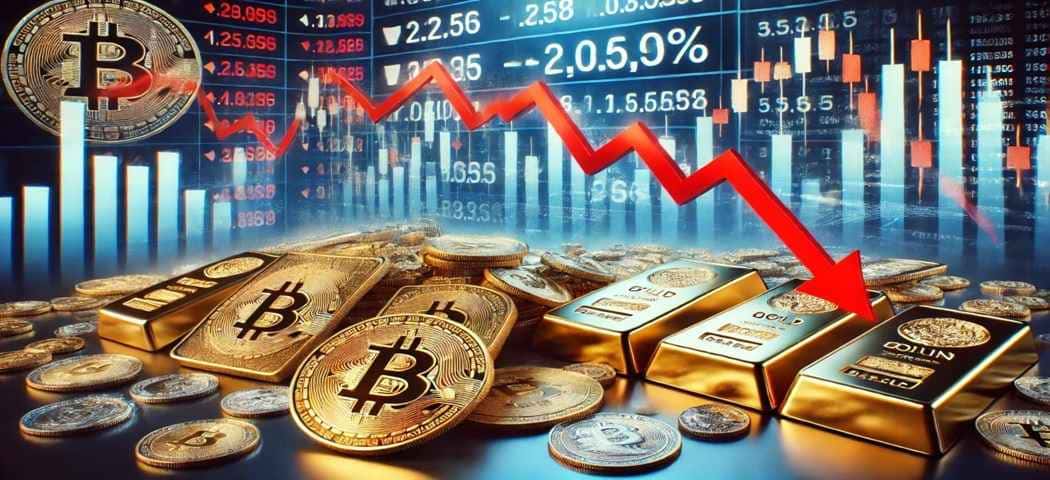
Bitcoin Plunges Below $90,000 Amid Market Turmoil
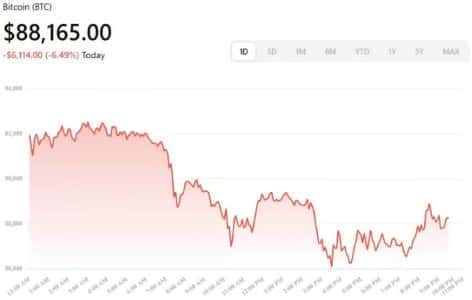
Bitcoin prices took a steep dive today, falling below $90,000 for the first time in months, triggering concerns among investors. As of 4:00 PM EST, Bitcoin is trading at $88,165, reflecting a 6% decline from the previous day. The downturn comes amid a perfect storm of economic uncertainty, regulatory concerns, and a major crypto exchange security breach, leading to a widespread sell-off in the cryptocurrency market.
While Bitcoin has seen volatility in the past, today’s plunge highlights the risks associated with digital assets. Let’s take a closer look at the key factors driving Bitcoin’s decline and why investors should consider diversifying with gold and silver to hedge against market uncertainty.
1. U.S. Tariff Policies Spark Economic Fears
Bitcoin’s fall coincides with President Donald Trump’s recent announcement that his administration will impose a 25% tariff on imports from Canada and Mexico. This policy shift has heightened fears of a potential trade war, leading to uncertainty across financial markets.
-
Global trade tensions have historically spooked investors, causing capital to flow out of riskier assets like Bitcoin and into safe-haven investments.
-
If retaliatory tariffs emerge, economic growth may slow, impacting global liquidity and investor confidence.
-
Stock markets have also reacted negatively, dragging down sentiment in the cryptocurrency space.
As the deadline for these tariffs nears, investors are bracing for further volatility, making Bitcoin a less attractive asset in the short term.
2. Inflation Concerns & Federal Reserve Stance
Recent inflation reports have come in higher than expected, leading to renewed fears that price pressures may persist longer than anticipated. Federal Reserve Chair Jerome Powell has reaffirmed that interest rate cuts are not coming anytime soon, further unsettling markets.
-
Higher interest rates tend to weaken speculative assets, making Bitcoin less attractive compared to traditional fixed-income investments.
-
If inflation remains stubbornly high, institutional investors may further reduce exposure to volatile assets like cryptocurrencies.
-
The crypto market often reacts strongly to macroeconomic indicators, and today’s sell-off reflects the growing uncertainty surrounding monetary policy.
Without the prospect of Federal Reserve support, Bitcoin’s role as an inflation hedge is being challenged, leading investors to rethink their exposure to digital assets.
3. $1.5 Billion Crypto Exchange Hack Shakes Investor Confidence
Adding to the panic, a major security breach hit the Bybit exchange, where hackers reportedly stole $1.5 billion worth of Ethereum. This incident has eroded trust in cryptocurrency platforms, prompting users to withdraw funds and liquidate holdings.
-
Crypto hacks often trigger sell-offs, as investors fear losses and instability.
-
Regulatory concerns grow when major breaches occur, increasing scrutiny on exchanges and decentralized finance (DeFi) platforms.
-
Investors may move funds into more secure assets, contributing to Bitcoin’s price drop.
Security breaches highlight the risks of centralized exchanges, making investors wary of keeping large sums of money in crypto platforms.
4. Regulatory Uncertainty & Political Setbacks
The regulatory landscape surrounding Bitcoin remains highly uncertain, with multiple U.S. states failing to pass Bitcoin reserve proposals.
-
Montana, North Dakota, and Wyoming had proposed bills that would have allowed the states to hold Bitcoin as part of their reserves, but all three measures failed.
-
Fading optimism regarding government support under the Trump administration has further dampened investor sentiment.
-
Increased scrutiny from the Securities and Exchange Commission (SEC) over Bitcoin ETFs and crypto exchanges has led to uncertainty in the market.
Without clear government backing, institutional investors may hesitate to allocate large sums into Bitcoin, contributing to today’s sell-off.
The Importance of Diversifying with Precious Metals
With Bitcoin facing increased volatility, investors are once again turning to traditional safe-haven assets like gold and silver to protect their portfolios. Precious metals have historically served as reliable hedges during times of market uncertainty, providing stability when speculative assets decline.
Why Gold and Silver Remain Strong Investments:
-
Gold has a long-standing history as a store of value, maintaining purchasing power during economic downturns.
-
Silver’s dual role as an industrial and monetary metal makes it a resilient asset in times of economic uncertainty.
-
Unlike Bitcoin, gold and silver are physical assets, free from cyber risks, exchange failures, or regulatory crackdowns.
How to Diversify Your Portfolio:
-
Consider allocating a portion of your investments to gold and silver bullion.
-
Explore IRA-approved precious metals for long-term wealth preservation.
-
Take advantage of Bullion Exchanges’ secure vault storage options for added protection.
By diversifying with gold and silver, investors can reduce exposure to Bitcoin’s volatility while maintaining a hedge against inflation and economic instability.
What’s Next for Bitcoin?
Bitcoin’s drop below $90,000 is a stark reminder of the cryptocurrency market’s volatility. With trade tensions rising, inflation concerns growing, and security breaches shaking confidence, investors are re-evaluating their crypto holdings.
As traditional markets react to macroeconomic shifts, precious metals remain a proven hedge against uncertainty. Whether you’re investing in gold, silver, or Bitcoin, staying informed and diversifying your portfolio is crucial in navigating today’s unpredictable market.
For the latest updates on precious metals prices, market trends, and investment insights, visit Bullion Exchanges—your trusted source for gold, silver, and cryptocurrency market analysis.