View Charts

2027 American Silver Eagle: What Buyers Should Know
 0
A New Chapter After the 2026 Anniversary
The American Silver Eagle enters 2027 following an unusual year for the nation's flagship silver bullion coin. To commemorate America's 250th anniversary, the U.S. Mint introduced special 2026 collector editions featuring dual dates and a Liberty Bell privy mark. These commemorative elements gave collectors something different from the familiar annual releases and naturally raised questions about what the next year might bring.
For buyers anticipating the 2027 Silver Eagle, the important distinction is between the series' established characteristics and features that have yet to be announced. The coin's longstanding specifications provide a dependable foundation, but they do not establish a release date, mintage, or special design for the coming year. The anniversary treatment applied to designated 2026 products should not be interpreted as a preview of the 2027 lineup.
That uncertainty matters differently to investors and collectors. Someone purchasing silver for its metal content may care most about availability and premiums, while a collector maintaining a date set or pursuing special finishes will pay closer attention to individual product announcements. Both groups benefit from understanding what makes the Silver Eagle recognizable before considering what might change.
The Specifications and Designs Behind the Silver Eagle
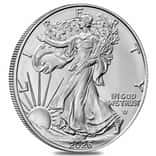
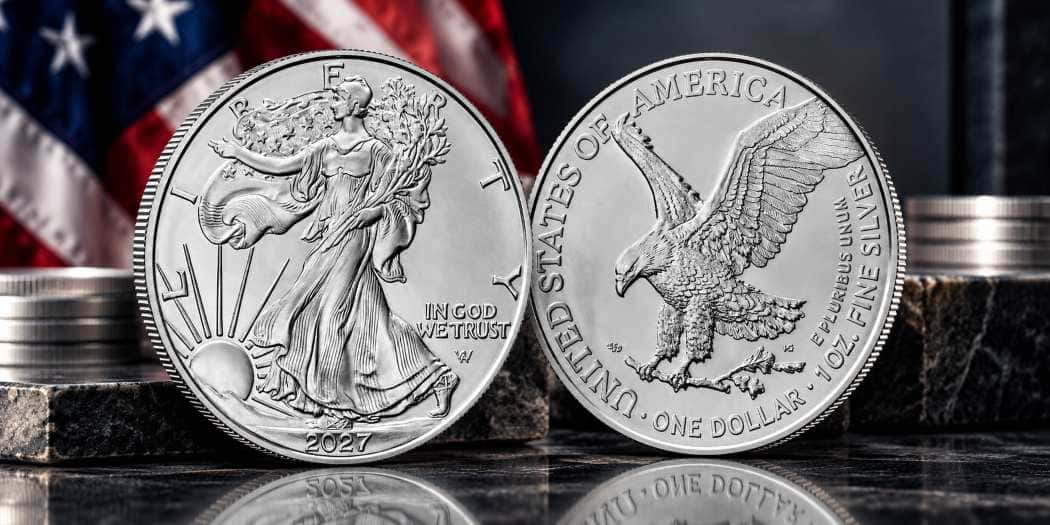
Introduced in 1986, the American Silver Eagle contains one troy ounce of .999 fine silver and carries a legal-tender face value of one dollar. The U.S. government guarantees its weight, content, and purity, distinguishing the coin from privately produced silver rounds. Its diameter measures 40.60 millimeters, and its established specifications have helped make it one of the most widely recognized modern silver bullion coins.
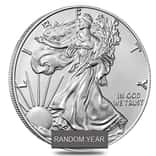
Much of that recognition comes from Adolph A. Weinman's Walking Liberty design. Originally created for the half dollar introduced in 1916, the obverse depicts Liberty moving toward the sunrise while carrying laurel and oak branches. The design connects a contemporary investment product with an earlier period of American coinage, giving the Silver Eagle an identity that extends beyond its precious-metal content.
The reverse has evolved more recently. In 2021, Emily Damstra's depiction of an eagle approaching a landing with an oak branch replaced John Mercanti's heraldic eagle. The transition established the Type 2 Silver Eagle and introduced a reeded-edge variation intended to strengthen security. Unlike a temporary anniversary inscription, the Type 2 design became part of the continuing series.
These features explain why buyers can approach a new annual release with some confidence about the coin's underlying identity. The U.S. Mint's bullion program information provides the official reference for the series. Any additional 2027 characteristics, however, should be evaluated through the Mint's specific product announcements rather than inferred from previous issues.
What the 2026 Anniversary Means for 2027
The 2026 semiquincentennial releases present an interesting comparison because they combined familiar Silver Eagle imagery with features associated with a particular historical event. Designated collector products carried the dual dates “1776 ~ 2026” and a Liberty Bell privy mark incorporating the number 250. Their significance was tied directly to the anniversary, rather than to a permanent redesign of the bullion program.
That distinction should guide expectations for 2027. There is no basis for assuming the same privy mark will continue, that another commemorative symbol will replace it, or that the next annual issue will receive an unusual finish. The Mint has offered different collector variations throughout the series' history, but past practices do not establish a future product lineup.
The difference also has implications for pricing. Collectors may assign additional value to a coin commemorating a specific anniversary, especially when its finish, packaging, or production characteristics distinguish it from ordinary bullion. Those considerations do not necessarily transfer to the following year's release. A standard 2027 Silver Eagle could appeal primarily to annual collectors and bullion investors without requiring a special feature to justify its place in the series.
The U.S. Mint's 2026 Silver Eagle proof listing illustrates how product-specific characteristics are documented. Buyers evaluating a future listing should look for the same level of clarity about its finish, inscriptions, mint mark, and any advertised commemorative elements.
When Will 2027 Silver Eagles Become Available?
American Silver Eagles do not all reach the market through the same channels. Regular bullion coins are distributed through the U.S. Mint's Authorized Purchaser network, which supplies dealers rather than selling directly to individual retail customers. Proofs and other numismatic editions are generally offered through the Mint's collector sales channels, with separate product announcements and purchasing arrangements.
This distinction can cause confusion when release information begins circulating. A date associated with a proof coin does not necessarily indicate when ordinary bullion Eagles will appear in dealer inventories. Likewise, a dealer accepting preorders for standard bullion coins does not confirm that the Mint has announced a particular collector edition.
Product identification becomes especially important when several versions share the same annual date. Standard bullion Silver Eagles generally lack a visible mint mark, while certain collector editions carry one identifying the production facility. Proof finishes, specialized packaging, and third-party certification can introduce further differences. A buyer assembling an annual bullion set may simply want a Brilliant Uncirculated example, whereas someone collecting proofs will need to verify the exact issue.
Preorders deserve attention for another reason: estimated availability and actual fulfillment are not always identical. Before committing funds, buyers should review whether the price is locked, how shipping dates are described, and what cancellation terms apply. An early listing can be useful for planning, but it should not be mistaken for confirmation that the seller already possesses the coins.
Pricing, Premiums, and the Buying Decision
Although the silver content of a standard American Silver Eagle is fixed, its retail price changes with market conditions. Dealers generally calculate bullion prices using the prevailing value of the metal plus a premium that reflects acquisition costs, distribution, operating expenses, and demand. A newly released coin can therefore cost more than an older example containing exactly the same amount of silver.
Early interest in a new annual issue may influence premiums, particularly among collectors completing consecutive date sets. Whether that interest persists depends on subsequent availability and demand. A higher introductory price does not automatically indicate lasting scarcity or stronger resale value, and buyers should be cautious about paying a substantial premium based solely on the year.
Quantity can make a meaningful difference to the purchase calculation. Individual coins, rolls of 20, and monster boxes of 500 may carry different per-ounce premiums. For larger orders, even a modest difference becomes significant when multiplied across the entire purchase. Shipping costs and payment-related charges should also be included when comparing offers.
Certified examples require a separate assessment. A high numerical grade, special label, or release designation may attract collector interest, but those attributes do not increase the coin's silver content. Their additional cost is justified only to the extent that a buyer values the collectible characteristics and understands the potential resale market.
Comparing American Silver Eagle offerings with the current silver spot price can help distinguish changes in metal value from changes in premiums. That comparison is particularly useful when evaluating a new release against readily available coins from earlier years.
What Buyers Should Watch Next
The most meaningful developments will be official Mint announcements identifying the 2027 products, followed by confirmed dealer availability and actual market pricing. Collectors should pay attention to documented finishes, mint marks, privy marks, and production limits, while bullion investors can focus on the premium, purchase quantity, and fulfillment terms.
The 2027 American Silver Eagle does not need to repeat the special characteristics of 2026 to remain significant. Its appeal rests on a longstanding combination of government-backed silver content, recognizable American designs, and an established market. Understanding those fundamentals makes it easier to recognize when a new offering provides something genuinely different—and when it is simply the next annual issue in a familiar series.