View Charts

2027 Canadian Maple Leaf Coins: Gold and Silver Buying Guide
 0
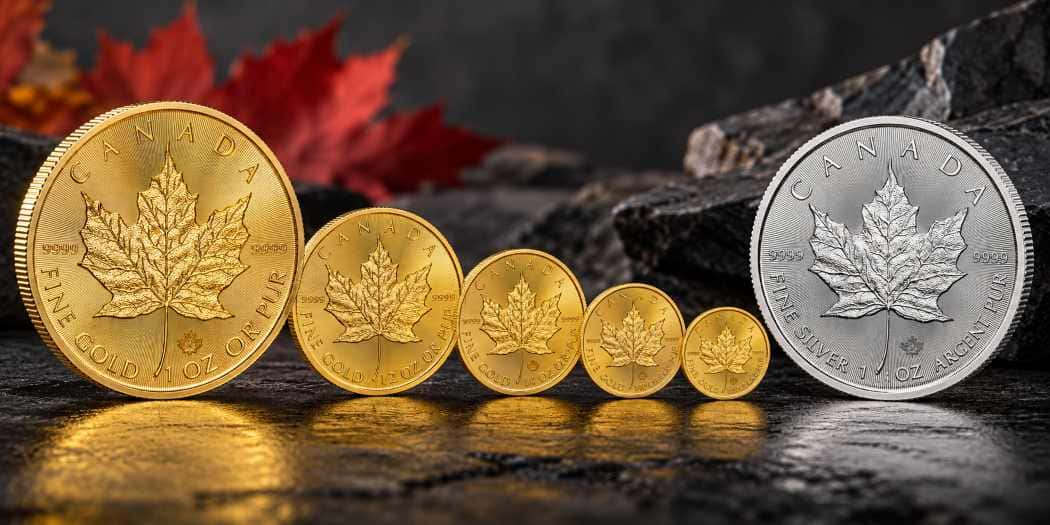
One Design, Three Different Bullion Choices
The Canadian Maple Leaf is among the world's most recognizable bullion coins, yet its familiar design can obscure important differences between gold and silver. Buyers considering the 2027 editions face a choice that extends beyond metal prices: how much to purchase at once, what premium to pay, and how easily those holdings could eventually be sold.
A one-ounce Gold Maple Leaf concentrates substantial value in a single coin. Fractional gold denominations allow smaller purchases and more flexible resale, usually at a higher cost per ounce. The one-ounce Silver Maple Leaf offers a lower individual purchase cost, although larger holdings introduce different storage and market considerations.
All three share the reputation established by the Royal Canadian Mint's bullion program, which emphasizes high purity, consistent designs, and advanced authentication technology. Those characteristics provide a foundation for evaluating the 2027 coins, while specific annual features and availability should be confirmed against official product information.
Why the One-Ounce Gold Maple Leaf Remains a Bullion Standard
Introduced in 1979, the Canadian Gold Maple Leaf helped establish a market for government-issued bullion coins with exceptionally high purity. Modern standard issues contain .9999 fine gold, equivalent to 99.99% purity, and feature Walter Ott's enduring maple leaf design.
The one-ounce coin weighs approximately 31.11 grams and measures 30 millimeters in diameter. Its denomination is 50 Canadian dollars, although the coin's bullion value follows the gold market rather than its legal-tender face value.
Its composition differs from the 22-karat American Gold Eagle, which contains silver and copper alongside its gold. Both coins provide one troy ounce of fine gold, but the Gold Eagle is heavier overall because of its alloy. The Maple Leaf's nearly pure composition produces different physical characteristics, including a somewhat softer surface that benefits from careful handling.
The series has evolved visually without abandoning its identity. Recent issues feature King Charles III on the obverse, continuing Canada's tradition of displaying the reigning monarch opposite the maple leaf. This combination of familiar imagery and changing annual dates appeals to collectors assembling chronological sets. Bullion buyers, meanwhile, often prioritize recognizable specifications and competitive premiums over the particular year.
The Canadian Gold Maple Leaf collection includes different dates and denominations. Standard bullion issues should be distinguished from special editions, whose additional premiums may reflect limited production, distinctive finishes, or presentation features.
Fractional Gold Maple Leafs: Smaller Purchases, Different Economics
A full ounce of gold represents a substantial financial commitment, especially during periods of elevated prices. Fractional Gold Maple Leafs provide another approach, allowing buyers to accumulate smaller quantities while retaining the series' established .9999 purity standard.
The traditional fractional Gold Maple Leaf denominations include the following face values and approximate weights in grams of fine gold:
-
1/2 oz: $20 CAD — 15.55 grams
-
1/4 oz: $10 CAD — 7.78 grams
-
1/10 oz: $5 CAD — 3.11 grams
-
1/20 oz: $1 CAD — 1.56 grams
These smaller coins can be useful for buyers making periodic purchases or building holdings gradually. They also provide flexibility when selling. Someone holding four quarter-ounce coins can liquidate part of that position without selling an entire ounce, whereas a single one-ounce coin must generally be sold as one unit.
The trade-off is the premium. Manufacturing, distribution, and handling costs account for a larger proportion of smaller coins' metal value, so fractional denominations generally command higher premiums per ounce. Acquiring ten one-tenth-ounce coins will typically cost more than purchasing the same amount of gold in a single one-ounce coin.
That difference can become significant over repeated purchases. A buyer focused primarily on accumulating the greatest amount of gold for a fixed budget may find full-ounce coins more efficient. Someone who values smaller transaction sizes might reasonably accept the additional expense.
Resale conditions complicate the calculation further. Fractional coins may appeal to buyers seeking affordable individual pieces, but dealer buyback spreads vary by denomination, inventory, and market demand. Comparing both the initial premium and potential resale terms provides a more useful assessment than judging a coin by its individual purchase price.
The One-Ounce Silver Maple Leaf Offers Different Exposure
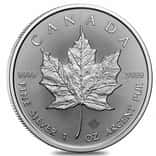
The Canadian Silver Maple Leaf debuted in 1988 and contains one troy ounce of .9999 fine silver. That purity exceeds the .999 standard used by many competing bullion coins, although the difference in silver content is small and does not automatically produce a proportionate resale advantage.
Measuring approximately 38 millimeters in diameter, the standard coin carries a five-Canadian-dollar denomination. Like the Gold Maple Leaf, its market value depends primarily on precious-metal prices and dealer premiums rather than its legal-tender face value.
Silver's lower individual purchase cost makes the series accessible to collectors building annual date sets and buyers accumulating bullion over time. Purchasing several Silver Maple Leafs requires considerably less capital than acquiring a single one-ounce gold coin, allowing purchases to be spread across different dates or market conditions.
However, the economics of holding silver change as quantities increase.
An equivalent-value silver position occupies substantially more space and weighs far more than gold. Storage, shipping, insurance, and handling costs may therefore become increasingly relevant. Buyers acquiring large quantities should consider those practical expenses alongside the premium paid above silver's spot price.
Silver also responds to a different combination of market forces. Its applications in electronics, solar technology, and industrial manufacturing create demand that extends beyond investment and jewelry markets. Changes in economic activity can influence silver prices alongside monetary conditions and precious-metal investment sentiment, sometimes producing sharper movements than those seen in gold.
The Canadian Silver Maple Leaf collection includes multiple annual issues. Collectors should distinguish ordinary bullion coins from versions featuring special finishes or privy marks, which may carry additional numismatic premiums.
Security Technology Adds Another Layer of Consideration
The Royal Canadian Mint has invested heavily in authentication technology, making security a defining characteristic of modern Maple Leaf bullion.
Precision radial lines create distinctive light-reflecting patterns across coin surfaces, while micro-engraved maple leaf marks provide additional details for examination. The Mint's Bullion DNA™ technology supports verification through specialized equipment used by participating dealers.
These protections are particularly relevant when purchasing secondary-market coins. Although recognizable designs and standardized specifications can assist identification, visual inspection alone does not always establish authenticity. Buyers considering unfamiliar coins should evaluate the seller's reputation and available authentication methods.
Silver Maple Leafs have another distinctive feature. In 2018, the Mint introduced MINTSHIELD™ surface-protection technology to reduce the occurrence of milk spots, the cloudy white marks that can appear on silver coins. Such spotting can affect appearance and collector appeal without changing the coin's stated silver content.
MINTSHIELD™ reduces the risk of these marks but does not guarantee that every coin will remain spotless. Surface condition, storage, and handling remain relevant, especially for collectors who place greater emphasis on visual quality.
Because security features can differ across products and production years, buyers should verify the specifications of individual 2027 coins rather than assume every denomination incorporates identical protections.
Choosing the Right Maple Leaf for 2027
The most suitable Maple Leaf depends on the intended role of the purchase. A one-ounce 2027 Gold Maple Leaf offers substantial precious-metal value in a compact, internationally recognized format, generally with more efficient premiums than smaller denominations. Fractional gold provides smaller purchasing and resale increments, although buyers usually pay more per ounce for that convenience.
The 2027 Silver Maple Leaf serves a different purpose. Its lower individual cost supports gradual accumulation, but larger holdings require more physical storage and expose buyers to silver's distinct industrial and investment cycles.
Premiums deserve particular attention because two coins containing the same total metal weight can have noticeably different acquisition costs. Comparing dealer prices against the current gold spot price or silver spot price helps reveal how much is being paid beyond intrinsic metal value. Potential buyback terms and any delivery or storage expenses complete that comparison.
Collectors approaching the 2027 issues may prioritize annual continuity, matching denominations, or particularly attractive examples. Bullion buyers are more likely to focus on acquisition efficiency and liquidity. Neither approach requires treating the newest date as inherently more valuable.
The lasting appeal of the Maple Leaf lies partly in its consistency. Its recognizable design and established standards make different years readily comparable, leaving buyers to concentrate on the decisions that matter most: metal selection, denomination, total cost, and the flexibility they want from their holdings.