View Charts

2027 American Gold Eagle: Gold Content, Sizes and What to Expect
 0
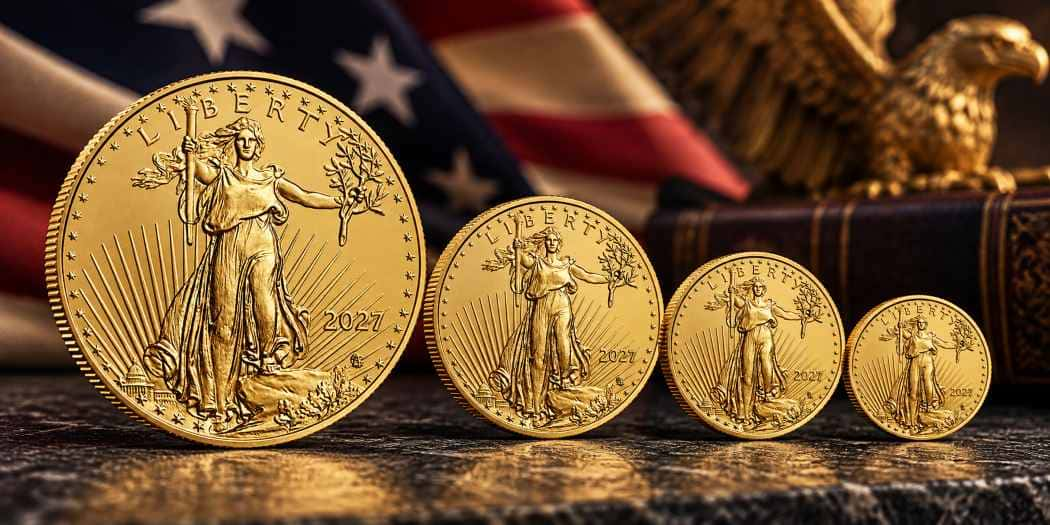
A Familiar Gold Coin Entering a New Minting Year
As the U.S. Mint moves beyond the nation's 250th-anniversary celebrations, the American Gold Eagle remains one of its most recognizable bullion products. Unlike commemorative coins whose designs and availability may change substantially, the 2027 Gold Eagle offers buyers government-guaranteed gold content, established specifications, and a long-running resale market. Its familiar design and four available denominations have helped establish the series as a consistent option for buyers seeking physical gold.
The anticipated 2027 release raises a practical question: which Gold Eagle size offers the best combination of gold exposure, purchase flexibility, and resale convenience? The answer involves more than choosing a denomination, since premiums, transaction costs, and the quantity of gold in each coin influence overall value. Although the American Gold Eagle program has established specifications, individual 2027 release dates, production quantities, and special-edition details should not be assumed until officially announced.
Why 22-Karat Gold Does Not Mean Less Gold
One persistent misconception concerns the Gold Eagle's purity. Unlike the 24-karat American Gold Buffalo, the Gold Eagle is struck from 22-karat gold, consisting of 91.67% gold with silver and copper making up the remaining alloy. This sometimes leads buyers to believe a one-ounce Gold Eagle contains less gold than a one-ounce coin struck from .9999 fine gold, but both contain one full troy ounce of pure gold.
The U.S. Mint's bullion program specifications explain that the alloy produces a harder coin that better resists scratching and marring. This durability was particularly relevant when the program began in 1986, establishing the Gold Eagle as a practical bullion product. A one-ounce Gold Eagle weighs approximately 33.931 grams overall, compared with its 31.103 grams of fine-gold content, with the additional weight coming from the alloy rather than extra gold. The same principle applies proportionally to fractional denominations, making fine-gold weight and purchase premiums more useful comparisons than purity alone.
Four Gold Eagle Sizes, Four Buying Considerations
The American Gold Eagle program offers four bullion denominations, each containing a specified quantity of pure gold. Their legal-tender face values are symbolic rather than representative of their precious-metal market value. All four share the same 22-karat composition, with their total weights increasing in proportion to their fine-gold content.
|
Denomination |
Fine Gold Content |
Face Value |
Approximate Total Weight |
|
1 oz |
1 troy oz |
$50 |
33.931 g |
|
0.5 troy oz |
$25 |
16.966 g | |
|
0.25 troy oz |
$10 |
8.483 g | |
|
0.1 troy oz |
$5 |
3.393 g |
The one-ounce 2027 Gold Eagle generally offers the most economical way to acquire larger quantities of gold within the series, since its premium per ounce is often lower than those of fractional coins. Smaller denominations serve a different purpose, allowing buyers to make more manageable purchases and giving owners the flexibility to sell part of their holdings without liquidating a full ounce. This can be particularly useful for those building a collection gradually or seeking greater control over individual transactions.
That convenience comes at a cost. Fractional coins typically carry higher premiums relative to their gold content because minting, distribution, and retail expenses are spread across less metal. Purchasing ten tenth-ounce Eagles therefore commonly costs more than purchasing one full-ounce Eagle containing the same quantity of gold. The half-ounce and quarter-ounce denominations occupy the middle ground, offering smaller transaction sizes without necessarily carrying the highest fractional premiums.
Buyers comparing the American Gold Eagle lineup should calculate the total purchase price per fine troy ounce rather than judging value solely by an individual coin's price. The difference becomes particularly important when purchasing multiple fractional coins, where premiums can accumulate substantially. Current dealer pricing and expected resale spreads deserve consideration alongside the initial purchase budget.
What Makes the Gold Eagle Recognizable?
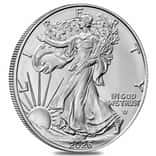
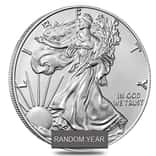
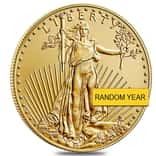
The Gold Eagle's identity rests partly on artwork connecting modern bullion production with classic American coinage. Its obverse features Augustus Saint-Gaudens' celebrated depiction of Liberty, originally created for the $20 Double Eagle introduced in 1907. Liberty advances with a torch and olive branch, framed by rays of sunlight and the Capitol Building, creating one of the most recognizable images in American numismatics.
The design has remained central to the series since 1986, although the Mint introduced refinements to the obverse in 2021. That year also brought a significant reverse redesign, replacing Miley Busiek's family-of-eagles composition with Jennie Norris's close-up portrait of a bald eagle. The U.S. Mint's American Eagle program history documents this transition, which established the current Type 2 design while preserving the coin's familiar identity.
Modern one-ounce Gold Eagles also incorporate a variable reeded-edge security feature introduced with the 2021 redesign. This adds another authentication characteristic, although it should be considered alongside weight, dimensions, appearance, and provenance. Buyers should not assume additional 2027 design changes or special privy marks without official confirmation.
Bullion, Proof, and Certified Gold Eagles Serve Different Markets
Not every American Gold Eagle is purchased for the same reason. Standard bullion coins are generally valued according to their fine-gold content plus a market premium, while Proof and other collector editions may command additional premiums based on finish, presentation, production quantities, and collector demand. Someone primarily seeking gold exposure may prefer a standard bullion coin because its price tends to follow the underlying metal more closely, whereas collectors may place greater importance on condition, rarity, and presentation.
Certification introduces another consideration. Third-party grading provides authentication and an assessment of condition, but a high grade does not guarantee a profitable resale premium. Common bullion issues may be readily available in excellent condition, limiting the additional value certification provides. Buyers considering graded examples should compare the asking premium with actual demand for that particular date, grade, and designation.
Distribution also differs between bullion and collector products. American Eagle bullion coins reach buyers through authorized purchasers and dealers rather than direct public sales from the Mint. Collector editions, including Proof issues, are offered through separate Mint channels, helping explain why Gold Eagles containing identical quantities of gold can have substantially different asking prices.
What Buyers Should Watch Before the 2027 Release
Several factors will influence the 2027 Gold Eagle's market once confirmed inventory becomes available. The first is the prevailing gold spot price, which establishes the underlying metal value, while the second is the premium above spot. That premium fluctuates with wholesale supply, retail demand, and distribution costs, sometimes changing independently of gold's market price.
Availability across denominations also matters, particularly when demand for fractional coins increases. Buyers planning multiple purchases should consider whether acquiring smaller coins over time justifies the additional cost compared with purchasing larger denominations less frequently. Payment costs, shipping expenses, and potential resale spreads can further influence the effective price of ownership.
Official Mint announcements will establish release timing and any product-specific changes, while production totals and eventual collector interest should be evaluated when reliable figures become available. The Gold Eagle's enduring appeal comes from its established specifications, recognizable design, and purchasing flexibility rather than speculation about future rarity. For 2027, choosing an appropriate denomination and evaluating its premium may prove more useful than trying to predict which date or edition will become collectible.