View Charts

2027 American Gold Buffalo: What to Know About the 24K Coin
 0
A New Year for America's First 24-Karat Gold Bullion Coin
The 2027 American Gold Buffalo continues one of the United States' most distinctive precious-metals programs. Introduced in 2006 as the nation's first .9999 fine gold bullion coin, the Buffalo combines exceptional purity with a design that originated nearly a century earlier. Its twentieth anniversary in 2026 brought renewed attention to the series, making the transition to the 2027 issue particularly interesting for collectors.
The standard one-ounce coin retains the characteristics that established the Buffalo's reputation: 24-karat gold, James Earle Fraser's celebrated artwork, and official U.S. legal-tender status. For buyers considering the new release, understanding those established features is more useful than anticipating unconfirmed varieties or future collector premiums.
How the Gold Buffalo Changed American Bullion Coinage
When the Gold Buffalo debuted in 2006, the American Gold Eagle had already served as the country's principal gold bullion coin for two decades. The Eagle's 22-karat composition followed a traditional approach to coinage, incorporating copper and silver to improve durability. International competitors, particularly Canada's Gold Maple Leaf, had meanwhile established a strong market for higher-purity bullion.
Authorized under the Presidential $1 Coin Act of 2005, the Buffalo addressed that distinction. It gave American buyers a domestic 24-karat alternative without replacing the Gold Eagle, allowing both programs to serve different preferences. According to PCGS's history of the Gold Buffalo series, the new coin combined the appeal of a familiar American design with the purity already offered by several international bullion programs.
The Buffalo also established a separate identity within the U.S. gold market. Its $50 face value confirms its legal-tender status, although the denomination bears little relationship to its precious-metal value. Like other bullion coins, its market price primarily reflects gold content and the premium associated with fabrication, distribution, and demand.
Bullion Buffalos are distributed through established dealer channels, while Proof versions are produced for collectors seeking specialized finishes and presentation. These distinctions explain why coins bearing the same fundamental design can occupy different pricing categories.
James Earle Fraser's Design Connects Two Eras
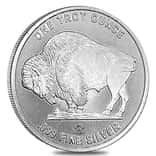
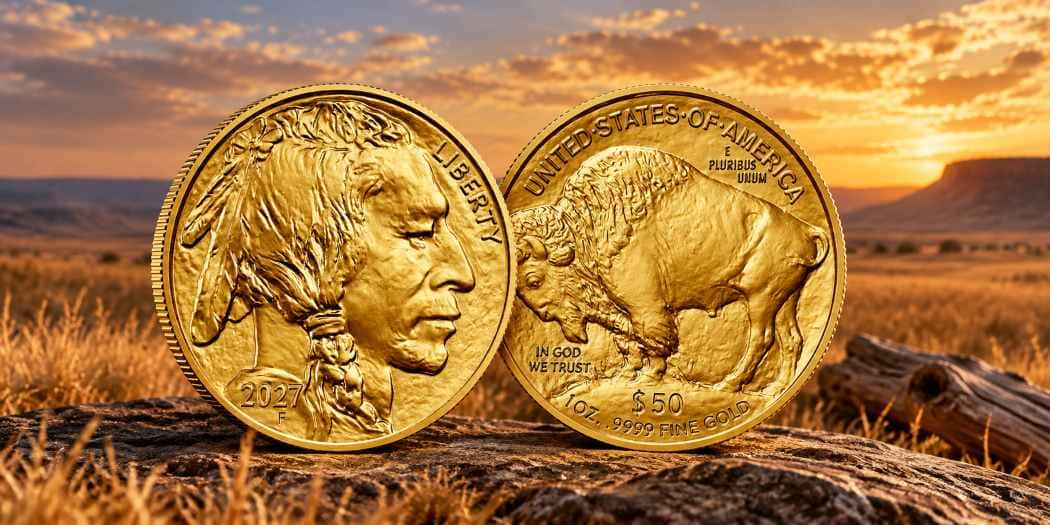
The Gold Buffalo's artwork originated with James Earle Fraser's Buffalo nickel, introduced in 1913. Its obverse depicts a Native American profile, while the reverse features an American bison standing on raised ground. The original nickel became one of the most recognizable American coin designs, admired for its bold relief and distinctive portrayal of the American West.
Fraser's composition translated naturally to a larger gold coin. The portrait's pronounced facial contours and the bison's substantial form give the modern Buffalo a sculptural appearance that distinguishes it from bullion programs featuring contemporary designs. The connection also introduces a historical dimension that appeals to collectors familiar with early twentieth-century coinage.
The obverse traditionally carries LIBERTY, the year of issue, and Fraser's initial. The reverse identifies the denomination, weight, and fineness alongside the required national inscriptions. These elements establish the coin's official identity while making its precious-metal content readily recognizable.
The design's continuity has helped create a collectible series extending across two decades. Collectors can pursue individual dates or certified examples, while bullion buyers receive a familiar design with standardized specifications. The original 2006 issue is documented in PCGS CoinFacts, including its physical characteristics and production history.
What .9999 Fine Gold Means for Buyers
The standard American Gold Buffalo contains one troy ounce of .9999 fine gold, approximately 31.103 grams, and measures 32.70 millimeters in diameter. Its 24-karat composition means that 99.99% of its metal content is gold, placing it among the highest-purity sovereign bullion coins available.
That distinction is sometimes misunderstood when comparing the Buffalo with the American Gold Eagle. Although the Eagle uses a 22-karat alloy, its standard one-ounce version also contains a full troy ounce of fine gold. The additional metals increase its overall weight and durability; they do not reduce its stated gold content. Buyers comparing the two coins are therefore evaluating different compositions rather than different amounts of precious metal.
The Buffalo's higher purity does have practical implications. Nearly pure gold is comparatively soft, making the coin susceptible to contact marks and surface abrasions. Protective capsules, careful handling, and avoiding unnecessary contact with the coin's faces can help preserve its original appearance.
Purity alone does not determine investment value, however. Premiums, resale conditions, and total acquisition costs influence the economics of ownership. Buyers interested primarily in gold exposure should compare the amount of fine gold acquired against the complete transaction price rather than treating a higher karat designation as an automatic advantage.
What the 2026 Anniversary Means for the 2027 Release
The Gold Buffalo's twentieth anniversary coincided with America's Semiquincentennial in 2026, creating an unusual backdrop for the series. Selected precious-metal releases received commemorative treatments associated with the nation's 250th anniversary, including special inscriptions and privy marks. These features distinguish anniversary products from ordinary issues but should not be interpreted as permanent changes to established bullion programs.
Fractional Gold Buffalos offer another important historical comparison. In 2008, the Mint introduced smaller denominations, including one-half-ounce, one-quarter-ounce, and one-tenth-ounce coins. Those offerings did not become a continuing annual bullion lineup. The PCGS Gold Buffalo series guide documents these fractional issues alongside the standard one-ounce coins.
The Mint's planned December 2026 one-tenth-ounce anniversary collector release renewed interest in that history. Nevertheless, a special anniversary offering does not establish that fractional Buffalos will return as regular bullion products in 2027. Similarly, collectors should not assume that special 2026 design treatments will continue without official confirmation.
The 2027 one-ounce American Gold Buffalo is already represented in dealer listings. Buyers can evaluate the new issue based on its established specifications while awaiting authoritative information concerning final production figures or additional varieties.
Evaluating the 2027 Gold Buffalo as a Purchase
For buyers seeking physical gold exposure, the most meaningful starting point is the coin's total acquisition cost. Every standard one-ounce Gold Buffalo contains the same amount of fine gold, regardless of date. Differences in retail pricing therefore reflect premiums associated with production, inventory, distribution, and demand rather than differences in precious-metal content.
The live gold spot price provides a reference point for evaluating those premiums. However, the final purchase price may also depend on payment methods and fulfillment terms. Comparing complete transaction costs is generally more informative than focusing exclusively on an advertised premium.
Resale considerations deserve equal attention. The Buffalo benefits from its established identity as a U.S. sovereign bullion coin, making its weight, purity, and design familiar to many precious-metals dealers. Nevertheless, recognition does not guarantee a particular buyback offer. Dealer bids can vary with prevailing market conditions, inventory requirements, transaction size, and coin condition.
Collectors may approach the purchase differently. A Brilliant Uncirculated Buffalo generally carries a premium tied primarily to its bullion content, while professionally certified examples can command additional premiums based on grade and demand. An MS70 designation identifies a coin that received the highest numerical grade, but certification alone does not establish rarity or future appreciation.
Buyers interested in these distinctions can compare certified Gold Buffalo coins with ordinary bullion examples. The appropriate choice depends on whether the priority is acquiring gold efficiently or pursuing particular collectible characteristics.
An Established Coin With a New Date
The 2027 Gold Buffalo continues a program defined by one ounce of .9999 fine gold, Fraser's historic artwork, and official U.S. recognition. Those established qualities provide a foundation for evaluating the coin without anticipating unconfirmed special features.
For buyers, the essential considerations remain purity, total cost, condition, and resale opportunities. New production details may eventually create additional collector interest, but the standard Buffalo's identity is already well established.