View Charts

U.S. Mint Product Limits vs. Mintages: What Collectors Should Know
 0
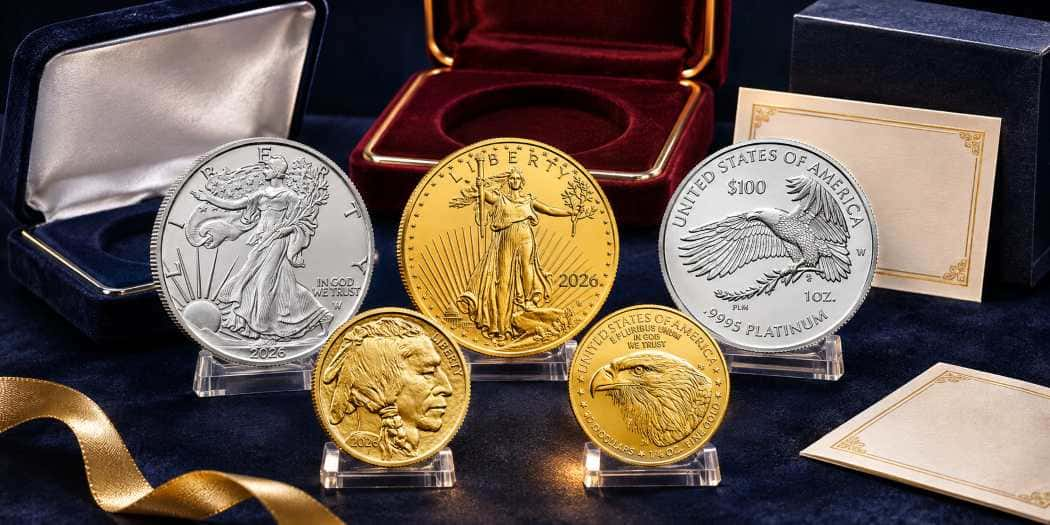
Why a Limited Release Does Not Always Mean a Low Mintage
When the U.S. Mint announces a new collectible coin, three numbers can shape the initial response: its mintage limit, product limit, and household order limit. They often appear together in official product listings, yet each describes something different. Confusing them can lead collectors to overestimate a coin's scarcity or misunderstand how many examples may eventually enter the market.
The distinction matters especially during popular releases, when low limits and rapid sellouts can generate excitement before the full distribution picture becomes clear. A product limited to 10,000 units may contain a coin available in other packaging, while a household order limit of one says nothing about the number ultimately produced.
Understanding these figures helps collectors evaluate new releases without relying solely on promotional language or initial availability. It also provides a more reliable foundation for comparing original Mint products with coins offered later by dealers or grading services.
Mintage Limits, Product Limits, and Household Limits Explained
The U.S. Mint uses three separate measures to describe production and distribution. Although the terminology appears straightforward, the relationship between the numbers can become complicated when the same coin is included in multiple products.
|
Term |
What it measures |
What collectors should understand |
|
Mintage limit |
Maximum number of a particular coin or |
Applies to the coin or medal, not |
|
Product limit |
Maximum number of units offered in |
Does not automatically represent |
|
Household order limit |
Number of units a household |
Controls purchasing access, |
The U.S. Mint explains these distinctions in its official product listings. A coin may be sold individually, included in an annual set, or packaged in a special presentation. When the same issue appears in multiple configurations, its overall mintage limit may cover all those appearances, while each individual offering has a separate product limit.
Consider a hypothetical proof silver dollar with a maximum mintage of 100,000 coins. The Mint might allocate 60,000 to individual packaging and make the remaining coins available through special sets. In that situation, the individual product limit would not represent the total possible population. Conversely, if a coin appears exclusively in one product, the two limits may effectively describe the same quantity.
Household limits serve a different purpose. They restrict how many units a customer may order during the initial release period, helping distribute opportunities among buyers. According to the Mint's order and payment guidance, these restrictions can be adjusted or removed, often shortly after launch. A one-per-household limit therefore does not establish rarity.
Why Special Packaging Can Make Mintage Figures Misleading
Packaging is one of the most common reasons collectors misinterpret Mint production figures. A coin sold in a presentation case may also appear in a commemorative set, anniversary collection, or other official offering. Although the packaging differs, the underlying coin may share the same specifications and production total.
The distinction becomes particularly important when comparing coins offered with different certificates, labels, or accompanying medals. A limited-edition set may be scarce as a complete original product without making every coin inside it equally scarce. Collectors should determine whether the included coin is identical to one sold separately or whether it has distinguishing features, such as a special finish, mint mark, or privy mark.
For example, the Mint's 2025 Congratulations Set had a product limit of 55,000 units, but its product listing did not establish a separate mintage limit for the included proof American Silver Eagle. The packaging represented a specific offering, rather than proof that only 55,000 examples of the underlying coin could exist.
This distinction also applies when collectors encounter products offered without their original packaging. A coin removed from a limited set may retain its numismatic characteristics, but the collectible value associated with a complete set can depend on the presence of its original box, certificate, and accompanying components.
When evaluating a special release, buyers should compare the specifications of the included coin with those of other Mint products from the same year. The relevant questions are whether the coin itself is different, how many examples could be produced, and whether the packaging has an independent collector market.
Maximum Mintage Is Not the Same as Final Mintage
Even when the Mint announces a firm mintage ceiling, that number does not necessarily represent how many coins were ultimately struck or sold. A maximum establishes an upper boundary, while final production and sales figures describe what actually occurred.
Suppose a commemorative coin has a maximum authorized mintage of 200,000 pieces but attracts substantially less demand. The Mint may finish the program without producing the full authorized quantity. Collectors who treat the ceiling as a confirmed final mintage would misunderstand the coin's actual supply.
Sales figures introduce another distinction. A product's initial sellout does not always indicate that every unit has permanently entered private hands. Payment failures, canceled orders, and inventory adjustments can affect availability, while final audited sales totals may differ from preliminary reports.
Collectors researching older issues can consult the PCGS CoinFacts reference, which provides historical information about many U.S. coins, including production figures and recognized varieties. For modern releases, Mint announcements and subsequent sales reporting remain important for understanding how a program developed.
A coin's final population may also be influenced by distribution through sets and other products. Determining the total number of examples requires examining the complete program rather than relying on the quantity advertised for a single product.
How Limits Influence Collector Demand and Secondary-Market Prices
Low limits can attract attention, particularly when a release combines a popular design, unusual finish, or significant anniversary. However, scarcity alone does not establish lasting collector demand. A coin with a relatively low mintage may trade near its precious-metal value if interest remains limited, while a more widely produced issue can command substantial premiums when collector demand is consistently strong.
Initial sellouts deserve similar caution. A release may disappear from the Mint's website quickly because of concentrated demand, purchase restrictions, or a limited initial inventory allocation. Its secondary-market price can rise during that period, but those premiums may change as more coins reach dealers and collectors.
Professional certification adds another consideration. A coin graded PR70 or MS70 may command a premium because of its condition and the number of comparable certified examples. Yet the population reported by a grading service is not the same as the total mintage. Certification populations can change as additional coins are submitted, and different labels may divide otherwise identical coins into separate marketing categories.
The NGC Census and PCGS Population Report provide useful information about certified examples, but neither should be interpreted as a complete count of every surviving coin.
Collectors comparing certified gold coins or silver bullion products should consider the relationship between original Mint production, certified populations, and current market demand. A low product limit may support interest in a particular release, but it should not be treated as a guarantee of future appreciation.
What to Check Before Buying a Limited U.S. Mint Release
A disciplined evaluation begins with identifying exactly what is being limited. If the product limit is low, determine whether the coin also appears elsewhere. If a maximum mintage is announced, distinguish that ceiling from actual production or sales. When a household limit is emphasized, remember that it concerns access during ordering rather than the total number of coins.
Collectors should also examine the coin's distinguishing characteristics. A unique privy mark, finish, or mint mark may establish a separate collectible issue, while alternative packaging alone may not. Comparing the specifications of related products can prevent confusion about whether two offerings contain different coins or simply different presentations.
Finally, consider the asking price in relation to the coin's metal content, condition, certification, and established collector demand. A limited release can be desirable for historical, artistic, or numismatic reasons without necessarily becoming a profitable purchase.
The most useful number is not always the smallest one displayed on a U.S. Mint product page. Understanding how mintage limits, product limits, and household restrictions work together allows collectors to judge a release according to its actual characteristics rather than the excitement surrounding its launch.