View Charts
1944 Lincoln Wheat Penny: History, Errors, and Collectible Value
The 1944 Lincoln Wheat Cent may look like a typical penny at first glance, but this unassuming copper coin carries a fascinating backstory rooted in wartime change and minting anomalies. As the U.S. emerged from the throes of World War II, the U.S. Mint returned to traditional copper-based cents following the temporary steel issue of 1943. However, this transition wasn’t without its complications—and some of the rarest error coins in American numismatics were born.
From its standard copper composition to the elusive 1944 steel cent error, the 1944 Lincoln Wheat Cent continues to attract collectors and history buffs alike. Here’s everything you need to know about this iconic coin.
The Story Behind the 1944 Copper Cent
In 1943, the U.S. Mint produced pennies using zinc-coated steel due to wartime copper shortages. These “steel cents” were a one-year-only issue, and by 1944, copper returned as the primary metal for U.S. one-cent coins. The 1944 cents were struck using recycled ammunition shell casings, resulting in a slightly different alloy known as “shell case bronze”—consisting of 95% copper and 5% zinc.
This change marked the end of the short-lived steel cent era and a return to the familiar reddish tone of prewar pennies. The 1944 Lincoln Wheat Cent was produced in massive quantities across the Philadelphia, Denver, and San Francisco mints, making it one of the most common wheat cents in existence today. It also became the first U.S. cent in history to surpass a mintage of one billion coins, with over 1.4 billion struck at the Philadelphia Mint alone. This record-setting production reflected both the resumed availability of copper and the high demand for coinage in a post-war economy.
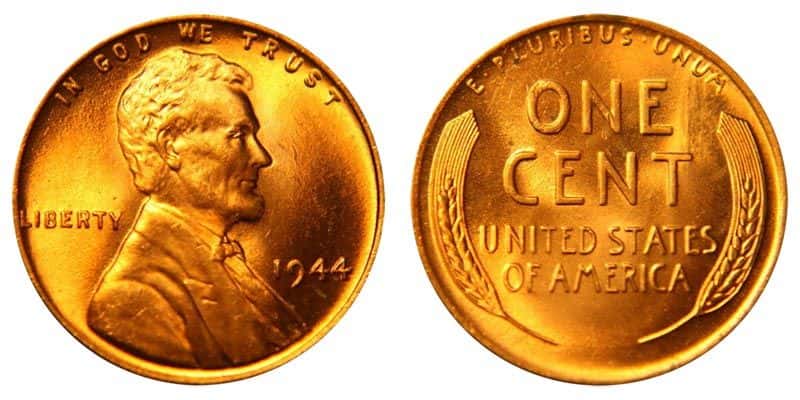
Image source: usacoinbook.com
The Rare 1944 Steel Cent Error
Although 1944 cents were meant to be struck in copper, a small number were accidentally produced using leftover steel planchets from the previous year. These steel planchets had somehow remained in the coining presses and were mistakenly struck with 1944 dies, resulting in one of the most prized U.S. error coins in circulation.
How to Identify a 1944 Steel Cent:
-
Magnet Test: Like the 1943 steel cents, authentic 1944 steel cents are magnetic due to their steel core.
-
Weight: Steel cents typically weigh around 2.7 grams, lighter than the 3.11 grams of standard copper cents.
-
Color: Genuine steel cents will appear silvery and lack the reddish hue of copper coins.
Only a handful of these 1944 steel cents are known to exist, and they have sold for tens—and sometimes hundreds—of thousands of dollars at auction.
Common Counterfeit Warning: Silvery-Plated Copper
As with many valuable coins, counterfeit versions of the 1944 steel cent exist. Some ordinary 1944 copper cents are plated with a silvery coating (like zinc or chrome) to mimic the appearance of the much rarer steel version. These fakes may look convincing at first glance but are non-magnetic and heavier than authentic steel cents.
If you suspect you may have a steel cent dated 1944, it’s important to verify its authenticity using a magnet test, a precise weight check, and, ideally, by submitting the coin to a professional grading service.
Mint Marks and Value Guide
The 1944 Lincoln Wheat Cent was produced at all three major U.S. Mints that year:
-
Philadelphia Mint (no mint mark)
Mintage: 1,435,400,000 -
Denver Mint (“D” mint mark)
Mintage: 430,578,000 -
San Francisco Mint (“S” mint mark)
Mintage: 282,760,000
General Value (as of March 2026):
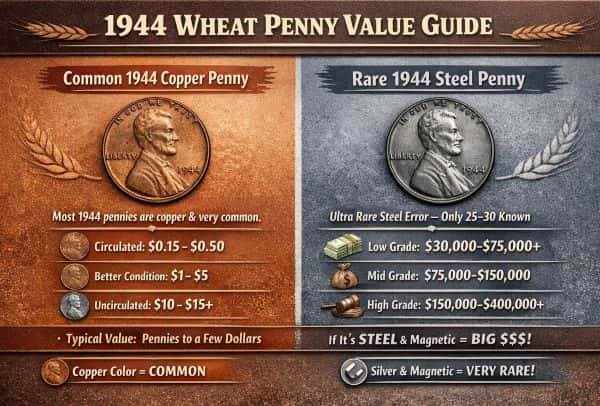
Note: Values fluctuate based on market demand, grading, and rarity. Consult a certified coin dealer for appraisals.
Why Collect the 1944 Wheat Penny?
The 1944 Lincoln Wheat Cent is a must-have for both beginning and advanced collectors. While the standard copper coins are affordable and widely available, the 1944 steel cent error offers the thrill of rarity and historical intrigue. Together, they tell a compelling story of America’s wartime economy, resource conservation, and the resilience of the U.S. Mint during one of the most transformative periods in modern history.
A Wartime Coin with Enduring Value
Whether you're drawn to its historical background or on the hunt for a rare steel error, the 1944 Lincoln Wheat Cent holds lasting appeal. It serves as a snapshot of wartime America—when even pennies were shaped by the needs of a nation in conflict. Affordable, collectible, and occasionally rare, this coin continues to fascinate collectors nearly a century after its release.