View Charts
Will Silver Break $50 in 2025? The Path to a New Record High
 0
0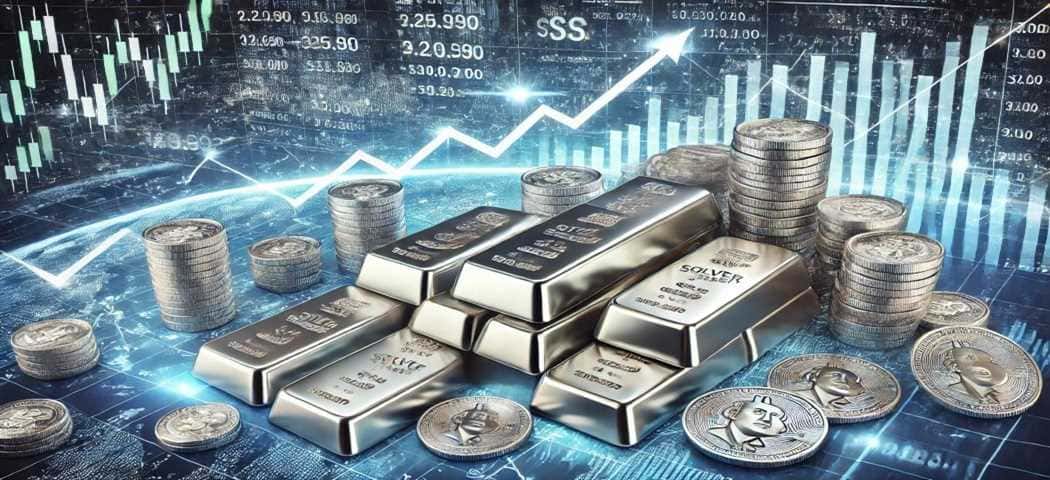
Silver’s Strong Rally: Is $50 in Sight?
Silver prices are on the rise, currently trading around $34 per ounce and edging closer to the significant $40 mark. With growing industrial demand, economic uncertainties, and gold prices continuing to post record highs, many investors are asking:
Could silver break its all-time high of $49.51 (set in 2011) and push past $50 per ounce in 2025?
In this article, we’ll examine the key drivers behind silver’s upward momentum, the role of the gold-to-silver ratio, and expert predictions on whether silver could set a new record in 2025.
Historical Silver Highs: A Look Back
Silver has experienced major price surges in the past, often fueled by inflation fears, economic crises, or supply shortages.
-
1980 Silver Surge – The Hunt brothers' attempt to corner the silver market pushed prices to $49.45 per ounce, before government intervention caused a crash.
-
2011 Silver Rally – Amid fears of currency debasement following the Federal Reserve’s quantitative easing program, silver hit its all-time high of $49.51 per ounce on April 28, 2011.
-
2020 Pandemic Spike – Economic instability and supply chain concerns drove silver prices above $30 per ounce as investors sought safe-haven assets.
With silver now climbing toward the $40 level, many experts believe the current momentum could push prices beyond their previous highs in 2025.
Key Drivers Fueling Silver’s Price Surge
Several fundamental factors are propelling silver’s price upward, potentially setting the stage for a new record.
1. Exploding Industrial Demand
Silver’s unique conductivity and antibacterial properties make it an essential component in various industries:
-
Solar Energy: Silver is crucial in photovoltaic (PV) cells for solar panels. With governments worldwide increasing their renewable energy investments, demand for silver is skyrocketing.
-
Electric Vehicles (EVs): Each EV requires 25-50 grams of silver for battery components, wiring, and advanced sensors. As EV production scales up, silver consumption will rise.
-
5G Technology & Electronics: The expansion of 5G networks and high-tech electronics depends heavily on silver’s conductivity.
2. Inflation & Economic Uncertainty
-
Persistent Inflation: With inflation still above target levels, investors are turning to precious metals as a hedge against rising prices.
-
Banking & Debt Concerns: Central banks are accumulating gold at record levels, a sign of waning confidence in fiat currencies. Since silver often follows gold’s trajectory, this trend could boost silver prices further.
3. Supply Constraints & Mining Challenges
-
Declining Mine Output: Many major silver-producing countries, including Mexico and Peru, have reported lower silver yields in recent years.
-
Above-Ground Silver Shortages: Unlike gold, silver is often consumed in industrial applications, reducing the available investment-grade supply.
-
Market Manipulation Theories: Some analysts believe that silver prices have been artificially suppressed for years. If this dynamic changes, a rapid price revaluation could occur.
4. Investment Demand & Market Sentiment
-
Strong Physical Silver Sales: Demand for silver bullion remains strong, with investors seeking tangible assets amid global uncertainty.
-
ETF Inflows: Silver-backed exchange-traded funds (ETFs) are seeing increased inflows, signaling rising institutional interest.
-
Silver as ‘Poor Man’s Gold’: With gold nearing $3,000 per ounce, silver presents a more affordable alternative for investors looking to hedge against economic instability.
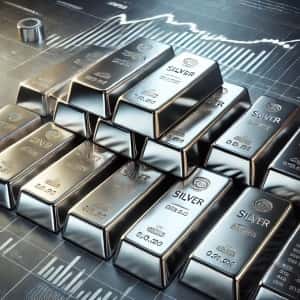
The Gold-to-Silver Ratio: What It Means for Silver’s Potential
One of the most critical indicators for silver’s future price movements is the gold-to-silver ratio (GSR).
What is the Gold-to-Silver Ratio?
The gold-to-silver ratio represents the number of ounces of silver it takes to purchase one ounce of gold. Historically, the ratio has fluctuated between 40:1 and 80:1, but it currently hovers near 90:1—one of the highest levels in history.
Why Does the Ratio Matter?
-
A high GSR suggests silver is undervalued compared to gold.
-
Historically, when the ratio has been this high, silver has outperformed gold in subsequent rallies.
-
If the GSR reverts closer to its historical average (around 50:1), silver could experience a significant price surge.
If gold climbs beyond $3,000 per ounce while the GSR tightens to 50:1, silver could easily surpass $60 per ounce.
Could Silver Break $50 and Beyond? Analyst Predictions
Experts have differing views on how high silver could go in 2025, but many see $50 as a realistic target.
Short-Term Outlook (2025-2027)
-
Base Case: Analysts expect silver to reach between $40 and $50 per ounce by the end of 2025 if current demand trends continue.
-
Bullish Scenario: If inflation accelerates and gold hits new highs, silver could push beyond $50 per ounce.
Long-Term Potential (2030 and Beyond)
-
Industrial growth + monetary instability could drive silver beyond $75-$100 per ounce over the next decade.
-
Extreme inflation or currency crises could send silver skyrocketing to new all-time highs.
Is Now the Time to Buy Silver?
With silver trading around $34 per ounce and approaching $40, the opportunity for long-term gains is significant. If silver follows its historical patterns and the gold-to-silver ratio corrects, $50 or even $75 per ounce could become reality in 2025.
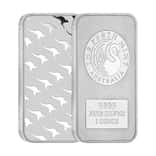
For investors looking to secure their financial future with physical silver, Bullion Exchanges offers a wide selection of silver bullion, including American Silver Eagles, Canadian Silver Maples, and 10 oz silver bars.
Don’t wait—start stacking silver today and position yourself ahead of the next major price surge!
Other articles that may interest you:
2025 Silver Koala Coins Now Available for Presale
The Hunt Brothers & Silver Thursday: Lessons for Today’s Market