View Charts
Why Platinum Price Is Rising: Supply and Demand Explained
 0
0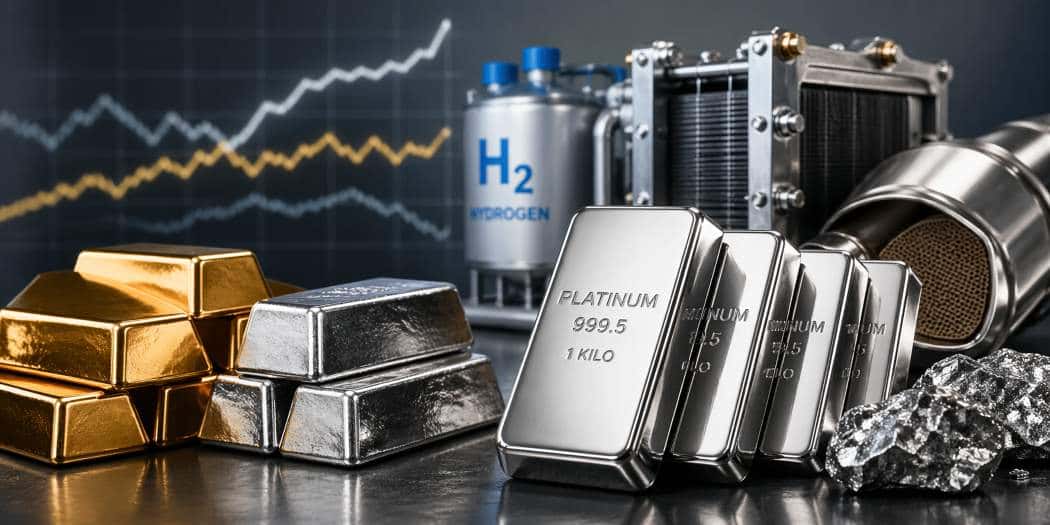
What Is Driving Platinum Higher While Gold and Silver Lag?
Platinum is emerging as one of the strongest performers in the precious metals market, breaking away from the more familiar movements seen in gold and silver. While many investors track the gold spot price and silver spot price for direction, the spot price of platinum is now telling a different story—one shaped by tightening supply and accelerating industrial demand. This shift is not random. It reflects a meaningful change in how capital is flowing across metals, and why platinum is gaining momentum in the current environment.
Platinum Spot Price Strength Signals a Market Shift
Recent price action shows platinum outperforming both gold and silver, even as broader macro conditions remain mixed. Gold has been influenced by interest rate expectations, while silver continues to respond to both monetary and industrial factors.
Platinum, however, is moving higher on a more focused set of drivers. This separation suggests that the market is no longer treating all precious metals equally. Instead, investors are responding to specific supply and demand conditions that are uniquely favorable for platinum.
Platinum Supply Constraints Are Tightening Globally
A key reason the platinum price is rising lies in its supply profile. Unlike gold, which benefits from extensive above-ground reserves, platinum production is geographically concentrated and more vulnerable to disruption.
South Africa accounts for the majority of global platinum output, and ongoing challenges—ranging from energy instability to operational constraints—continue to limit production. These issues have reduced available supply at a time when demand remains steady or increasing.
With limited new mining capacity coming online, the market is facing a structural imbalance. This supply pressure is one of the clearest explanations for why platinum is outperforming other metals right now.
Industrial Demand for Platinum Is Accelerating
Platinum demand is being reinforced by its critical role in modern industry. While gold is primarily held as a store of value, platinum is actively consumed across several high-growth sectors.
Key demand drivers include:
-
Automotive Catalysts: Platinum remains essential in emissions control systems, particularly as manufacturers adapt to regulatory changes.
-
Hydrogen Energy Development: Platinum is a core component in fuel cell technology, positioning it at the center of the global energy transition.
-
Advanced Manufacturing: Ongoing growth in electronics and chemical processing continues to support baseline demand.
This industrial reliance creates a different price dynamic compared to the traditional gold vs silver relationship. Platinum’s demand is not just financial—it is functional.
Platinum vs Gold: Why Investors Are Reassessing Value
The platinum vs gold relationship has historically fluctuated, but current conditions are prompting a reassessment. Platinum has traded at a discount to gold despite being rarer and more difficult to produce.
As supply tightens and demand expands, that valuation gap becomes harder to justify. Investors are increasingly recognizing that platinum offers exposure to both scarcity and growth, rather than purely defensive positioning.
This shift in perception is contributing to capital rotation, as market participants look beyond gold for opportunities with stronger upside potential.
Momentum Buying and Capital Rotation Into Platinum
Investor behavior is also playing a role in platinum’s recent strength. As markets adjust to evolving conditions, capital tends to move toward assets with clearer, more immediate drivers.
Platinum’s combination of supply constraints and demand growth has created a favorable environment for momentum-driven buying. This has attracted attention from both institutional and retail investors seeking diversification within the metals space.
As inflows increase, they can reinforce price trends, further supporting platinum’s upward trajectory.
Why Platinum Reacts Differently Than Other Precious Metals
Platinum occupies a unique position in the market, blending characteristics of both a precious metal and an industrial commodity. This dual role allows it to respond to a wider range of economic forces.
While gold is highly sensitive to interest rates and currency movements, platinum is more directly influenced by real-world demand. This distinction helps explain why platinum can rise even when traditional safe-haven metals face headwinds.
In the current environment, that difference is becoming more pronounced, giving platinum a distinct advantage.
Platinum Price Outlook: Can the Rally Continue?
Looking ahead, the sustainability of platinum’s outperformance will depend on whether current conditions persist. Supply constraints remain a key factor, and any continued disruption could further tighten the market.
At the same time, industrial demand—particularly in energy and manufacturing—will play a critical role in supporting prices. If these trends continue, platinum may maintain its leadership position among precious metals.
For investors, monitoring shifts in production, demand, and broader market sentiment will be essential in understanding where platinum moves next.
Platinum’s Outperformance Reflects a Fundamental Market Shift
Platinum’s recent strength is not simply a short-term fluctuation—it is the result of clear and measurable changes in supply and demand.
As the platinum spot price continues to respond to these forces, it is increasingly evident that this metal is operating on its own trajectory. In a market often dominated by gold and silver, platinum is demonstrating that it can lead when conditions align in its favor.