View Charts
Why Investors Turn to Gold During Uncertain Times
 0
0
When Confidence Becomes Scarce, Gold Often Becomes More Valuable
Gold has occupied a unique place in financial markets for centuries, yet its appeal extends far beyond price charts and commodity cycles. Investors rarely become interested in physical gold simply because markets are calm and predictable. Instead, demand tends to strengthen when confidence begins to weaken—whether that uncertainty stems from inflation, banking concerns, geopolitical conflict, volatile equity markets, or questions about the long-term purchasing power of paper currencies.
That pattern repeats itself because gold serves a different purpose than most financial assets. Stocks represent confidence in corporate growth. Bonds reflect confidence in borrowers and interest-rate policy. Cash depends on confidence that a currency will maintain its purchasing power. Gold occupies another category altogether. It is an asset people often seek when they become less certain about those assumptions.
That distinction helps explain why discussions surrounding gold are often less about expected returns than about resilience. Investors are not necessarily predicting an economic collapse when they buy bullion. More often, they are acknowledging that the future has become more difficult to forecast and adjusting their portfolios accordingly. Gold's enduring attraction lies as much in investor psychology as it does in supply, demand, or monetary policy.
Investors Don't Buy Gold Because They're Certain—They Buy It Because They Aren't
Periods of uncertainty change the questions investors ask. During expanding economies and rising equity markets, the focus naturally shifts toward growth, innovation, and maximizing returns. When markets become volatile or economic signals begin to conflict, priorities change. Preserving purchasing power, reducing portfolio risk, and maintaining liquidity become increasingly important.
Gold appeals because it offers something few financial assets can: independence from corporate earnings, government debt, or monetary policy decisions. A one-ounce gold coin carries the same amount of gold regardless of interest-rate changes, election results, or quarterly earnings reports. While its market value fluctuates, its intrinsic nature does not.
This psychological difference is difficult to quantify but easy to observe. During periods of heightened uncertainty, investors frequently describe gold as providing peace of mind rather than simply investment performance. That language reveals an important behavioral shift. Purchasing gold often becomes less about chasing returns and more about reducing dependence on variables that suddenly appear less predictable.
Behavioral finance has long recognized that investors feel losses more intensely than equivalent gains. Economists describe this as loss aversion, and it helps explain why defensive assets become increasingly attractive during periods of market stress. Gold does not eliminate uncertainty, but many investors believe it can soften the financial consequences if unfavorable outcomes materialize.
Trust Is the Real Currency Behind Gold Demand
Gold's reputation as a store of value is rooted in a simple characteristic: it does not depend on anyone else's promise.
Stocks rely on businesses generating profits. Bonds depend on borrowers honoring their obligations. Bank deposits ultimately rely on confidence in financial institutions and monetary systems. Gold exists outside those relationships. It carries no credit risk, requires no issuer, and cannot default on an obligation because it owes investors nothing.
That distinction explains why gold has remained relevant despite dramatic changes in the global financial system. Investors today can trade complex derivatives, purchase cryptocurrencies within seconds, or diversify through thousands of exchange-traded funds. Yet physical gold continues to attract demand because its value is not tied to the performance of a company, government, or financial intermediary.
Central banks provide perhaps the strongest institutional example of this thinking. Over the past several years, official-sector gold purchases have remained historically strong as countries diversified reserves away from concentrated currency exposure. While central banks and individual investors often have different objectives, both recognize gold as an asset that exists outside traditional credit relationships. That shared perspective reinforces public confidence in the metal during periods of geopolitical or economic uncertainty.
Trust, in other words, is the real driver. Gold becomes more attractive when confidence in alternative stores of wealth begins to weaken.
Uncertain Markets Change How People Buy Gold
Investor psychology influences not only whether people buy gold but also what they choose to buy.
In relatively stable markets, buyers often focus on maximizing ounces while minimizing premiums. They compare products carefully, wait for favorable price movements, and weigh the advantages of sovereign coins against lower-premium bullion bars. The decision is largely financial.
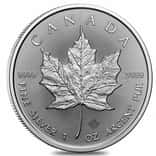
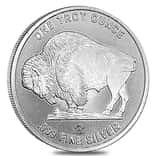
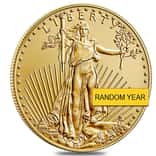
Periods of heightened uncertainty often produce different behavior. Availability, authenticity, and liquidity begin to outweigh small differences in acquisition cost. Widely recognized products such as the American Gold Eagle, Canadian Gold Maple Leaf, South African Krugerrand, and Gold Buffalo frequently attract increased demand because investors know these products are easily recognized throughout the global bullion market.
This shift also explains why premiums can rise independently of gold spot prices. When physical demand accelerates faster than refiners and mints can increase production, investors become willing to pay more for immediate delivery and globally recognized products. The premium itself becomes a reflection of confidence—or, more accurately, the market's desire for confidence.
Physical ownership adds another psychological dimension. Unlike digital financial assets, bullion can be held directly, stored privately, and accessed without relying on electronic systems or financial intermediaries. Even investors who never anticipate using gold outside traditional markets often find reassurance in knowing that ownership remains tangible and immediate.
Gold Is Most Effective When It Is Part of a Plan
One of the biggest misconceptions surrounding gold investing is that successful buyers react quickly when uncertainty appears. In reality, experienced investors often do the opposite. They establish an allocation before headlines dominate financial news, allowing gold to function as a stabilizing component rather than an emotional purchase.
That disciplined approach reflects gold's intended role within a diversified portfolio. Physical bullion is rarely purchased with the expectation that it will outperform every other asset every year. Instead, it provides exposure to a fundamentally different source of value—one that has historically behaved differently from equities, fixed income, and many other financial assets.
This perspective also explains why gold continues attracting both conservative and sophisticated investors. Retirees concerned about preserving purchasing power, institutions managing long-term reserves, younger investors seeking diversification, and central banks adjusting reserve strategies all approach gold differently. Yet each group shares a common objective: reducing exposure to risks that cannot be accurately predicted.
The specific catalyst changes with each economic cycle. One decade may be defined by inflation, another by banking instability, sovereign debt, currency volatility, or geopolitical conflict. Gold itself does not solve those challenges, nor does it guarantee positive returns during every period of uncertainty. What it offers is diversification built on characteristics that remain largely independent of the financial system's day-to-day performance.
That is ultimately why gold continues to occupy a distinctive place in modern portfolios. Investors are not simply buying a precious metal. They are purchasing an asset whose value has survived changing governments, monetary systems, financial innovations, and market cycles for centuries. In an investment landscape increasingly shaped by complexity, that consistency may be gold's greatest psychological advantage.
Related reading you may find interesting:
Is the U.S. Dollar Still Gold's Biggest Competitor?
Precious Metals Premiums Explained: What Every Buyer Should Know