View Charts
Who Uses the Most Silver? Top Industries and Countries
 0
0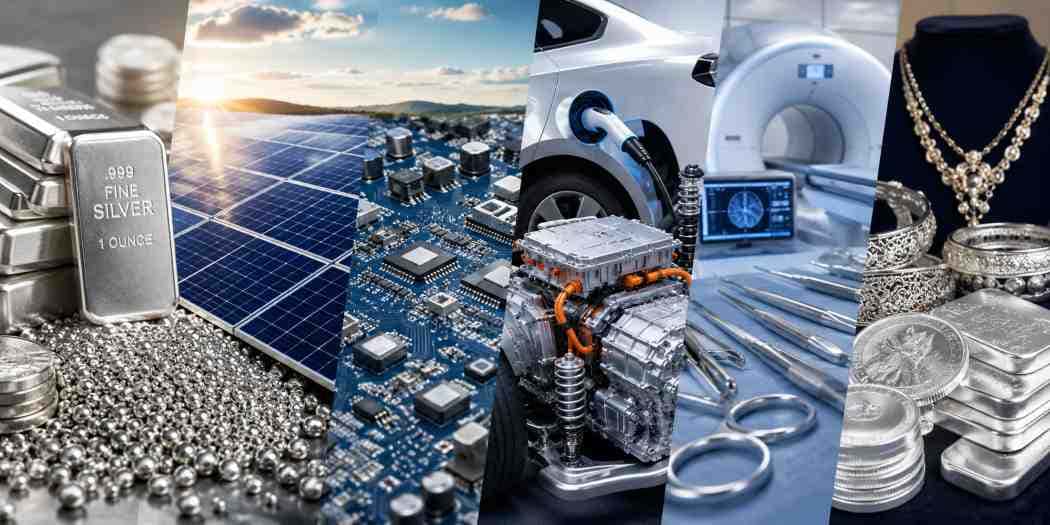
Silver Demand Is No Longer Just a Bullion Market Story
Silver has become one of the most closely watched precious metals because its demand profile reaches far beyond coins, bars, jewelry, and safe-haven buying. Investors still follow the silver spot price for inflation hedging, portfolio diversification, and physical bullion opportunities, but the largest users of silver are increasingly tied to industrial growth. Solar panels, electronics, electric vehicles, medical devices, data centers, power grids, and defense systems all rely on silver’s unusual combination of electrical conductivity, thermal performance, reflectivity, and durability.
This matters now because the global silver market remains structurally tight. The Silver Institute expects another annual market deficit in 2026, extending a multi-year imbalance between supply and demand. That does not mean silver becomes unavailable overnight, but it does mean industrial consumption, investment demand, recycling, mine output, and inventory levels are becoming more important to price behavior. For buyers, understanding who uses the most silver can help explain why the metal often reacts differently than gold.
Industrial Fabrication Dominates the Silver Demand Picture
The biggest user of silver is the industrial sector. More than half of annual silver demand typically comes from industrial fabrication, making silver far more economically sensitive than gold. This is one of the main reasons silver can outperform during periods of strong growth expectations but struggle when investors fear a manufacturing slowdown. The metal’s dual identity creates a more complex pricing structure: silver is both a precious metal and a critical input for modern technology.
Industrial buyers value silver because it is the best electrical conductor among all metals. It is also highly reflective, thermally efficient, and useful in applications that require reliable performance in small amounts. These properties make silver difficult to eliminate completely, even when manufacturers try to reduce loadings to control costs. Thrifting and substitution can slow demand growth in some areas, but many high-performance applications still depend on silver. That makes industrial demand the central force behind silver’s long-term consumption story.
Solar Panels Have Become a Major Silver Consumption Engine
Solar energy is one of the most important silver-using industries in the world. Photovoltaic cells use silver paste to conduct electricity efficiently, helping convert sunlight into usable power. As countries expand renewable energy capacity, solar manufacturing has become a major source of silver demand. Even with ongoing efforts to reduce silver content per panel, total demand from the solar sector remains substantial because installation volumes continue to grow.
China plays an outsized role in this category because it dominates global solar panel manufacturing and remains a major consumer of industrial silver. The solar story is especially important for investors because it connects silver to energy policy, climate targets, power-grid expansion, and government infrastructure spending. When solar demand rises faster than mine supply or recycling can respond, the broader silver market can tighten. This is one reason solar demand is frequently discussed alongside silver supply deficits and long-term price support.
Electronics, Chips, and AI Infrastructure Add Another Demand Layer
Electronics are another major source of silver consumption. Silver appears in printed circuit boards, switches, connectors, contacts, RFID systems, sensors, and high-performance electronic components. Its conductivity helps devices transmit signals efficiently, while its reliability supports long-term performance in consumer, industrial, and military applications. As artificial intelligence infrastructure expands, demand for data centers, servers, networking hardware, cooling systems, and power-management equipment may reinforce silver’s role in advanced electronics.
Semiconductors and high-tech manufacturing do not always use large visible amounts of silver per device, but the scale of global production matters. A small amount of metal multiplied across millions or billions of components can become meaningful. The same is true for smartphones, computers, appliances, telecommunications hardware, and industrial automation systems. As the global economy becomes more electrified and data-intensive, silver’s electronics demand remains a powerful structural theme. This gives the metal a technology-linked profile that traditional bullion analysis sometimes overlooks.
Vehicles, Power Grids, and Electrification Expand Silver’s Reach
The automotive industry is one of the fastest-evolving sources of silver demand. Modern vehicles contain more electronics than ever before, including sensors, control modules, infotainment systems, safety systems, wiring components, and power electronics. Electric vehicles can increase silver exposure because they require additional electrical systems, charging infrastructure, battery-management technology, and high-performance components. Even conventional vehicles use silver, but electrification adds another layer of consumption.
Power grids also matter. As governments and utilities modernize transmission networks, integrate renewable energy, build charging stations, and strengthen electrical infrastructure, silver remains relevant in contacts, conductors, switches, relays, and specialized components. This makes silver a key metal in the broader electrification trend. Unlike some investment demand, which can rise or fall quickly with sentiment, infrastructure demand often develops over longer cycles. That can provide a steadier foundation beneath the market, even when spot prices remain volatile.
Jewelry, Silverware, and Cultural Demand Still Carry Weight
Industrial users dominate the modern silver market, but jewelry and silverware remain important sources of demand. Silver’s affordability compared with gold makes it widely accessible for jewelry buyers around the world. India is especially important because silver jewelry, ornaments, religious items, and investment products have deep cultural and financial significance. In many markets, silver is both decorative and practical, serving as a store of value that can be bought in smaller increments than gold.
Silverware demand is smaller than industrial demand but still contributes to global consumption. Traditional tableware, decorative items, and luxury household goods support fabrication demand, especially in countries with long-standing cultural ties to silver. These categories can be more price-sensitive than industrial uses, since buyers may reduce discretionary purchases when silver prices rise sharply. Still, they help diversify demand and keep silver relevant outside factories, laboratories, and energy systems.
Physical Investment Connects Silver to Inflation and Safe-Haven Demand
Physical investment is another major user of silver. Silver coins, bars, and rounds attract buyers who want tangible assets, inflation protection, and diversification outside traditional financial markets. Silver’s lower price per ounce makes it accessible to a wider range of investors than gold, which is one reason retail demand can surge during periods of economic uncertainty or currency concern.
Investment demand also affects premiums and product availability. When buyers rush into physical silver, mints and refiners may struggle to keep up with demand for finished products even if wholesale silver remains available. This can cause premiums on coins and bars to rise. Bullion silver should also be distinguished from numismatic silver. A standard silver bar is valued mainly by metal content and premium, while a rare coin may carry additional value from mintage, condition, certification, and collector interest. Both are part of the silver market, but they behave differently.
China, India, and the United States Shape Global Silver Consumption
The largest silver-consuming countries reflect the metal’s diverse role. China is a global leader because of its solar manufacturing, electronics production, industrial fabrication, and technology supply chains. India is one of the most important markets for jewelry, investment bars, coins, and cultural silver demand, while also expanding its role in solar and industrial applications. The United States remains a major consumer through electronics, defense, medical technology, investment bullion, and renewable energy development.
Europe also plays a meaningful role, particularly through automotive manufacturing, industrial electronics, renewable energy systems, and high-value engineering. These regional patterns matter because silver demand is not concentrated in one use or one country. A slowdown in one sector can be offset by strength in another, but broad global weakness can pressure the metal quickly. For investors, tracking both sector demand and country demand gives a clearer picture of why silver prices can move sharply.
Mine Supply and Recycling Struggle to Keep Pace
Silver supply comes from mining and recycling, but neither source can always respond quickly to rising demand. A large share of mined silver is produced as a byproduct of copper, lead, zinc, and gold mining. That means silver output often depends on the economics of other metals, not just the silver price. Even if silver rises, new production may not appear quickly unless broader mining conditions support expansion.
Recycling helps fill part of the gap, especially when high prices encourage recovery from old jewelry, electronics, silverware, and industrial scrap. However, recycling can be uneven and may not fully offset rising demand from solar, electronics, and investment buying. This supply structure explains why persistent deficits matter. When demand exceeds supply year after year, inventories become more important and price volatility can increase. Silver’s supply challenge is not simply scarcity; it is the market’s limited ability to respond quickly when multiple demand channels strengthen at once.
Silver’s Biggest Users Will Shape the Next Price Cycle
The future of silver demand will likely be driven by the interaction between industrial growth and investment behavior. Solar power, electronics, AI infrastructure, electric vehicles, grid upgrades, and medical technology all support the metal’s long-term use case. Jewelry and cultural demand remain important, while physical bullion buying adds a monetary and safe-haven layer. This mix makes silver one of the most dynamic metals in the precious metals market.
For buyers, the key takeaway is that silver’s price is not moved by one audience. Industrial users need it for performance. Investors buy it for protection and upside potential. Collectors value certain coins for history and rarity. Countries consume it for different reasons depending on their manufacturing base, cultural traditions, and energy policy. Understanding who uses the most silver helps explain why the metal can be volatile, widely followed, and increasingly important in a world shaped by electrification, technology, and monetary uncertainty.
Related reading you may find interesting:
Silver FAQs: 30 Smart Answers for Buyers and Investors