View Charts
The U.S. $1,000 Bill: A Rare and Valuable Piece of American Currency
 1
1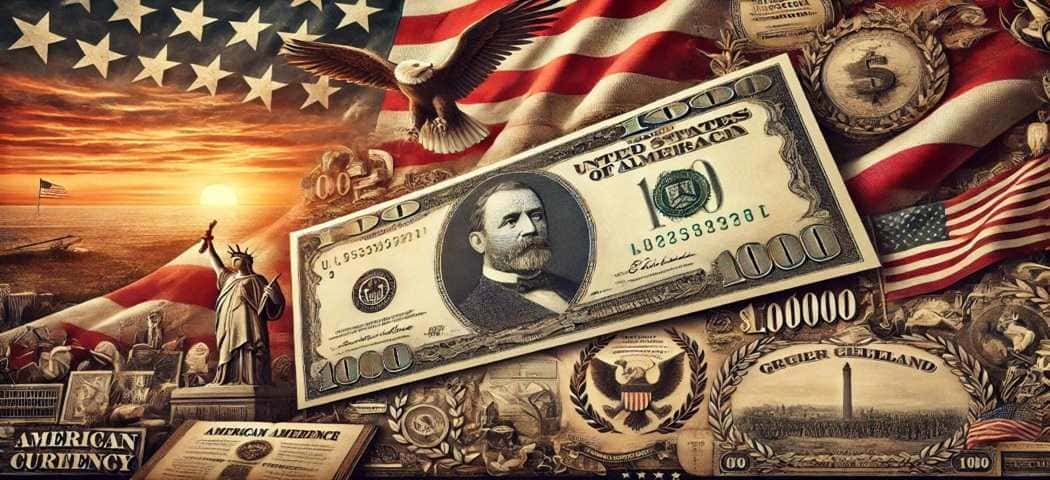
The U.S. $1,000 bill stands as a testament to the rich history of American currency. Known for its rarity and value, this high-denomination note is highly coveted by collectors and numismatists worldwide. While it is no longer in circulation, the $1,000 bill continues to capture the fascination of history enthusiasts and investors alike.
A Brief History of the $1,000 Bill
The $1,000 bill has its origins in the earliest days of U.S. currency. High-denomination notes were first issued in the late 18th century to facilitate large transactions, often between banks or for government purposes. These notes were not intended for everyday use, as most Americans in that era rarely encountered sums of money that large.
The modern $1,000 bill gained prominence in the late 19th and early 20th centuries, with the Series of 1928 featuring a portrait of Grover Cleveland. Until 2025, Cleveland held the distinction of being the only U.S. president to serve two non-consecutive terms, adding historical significance to the note. However, by 1969, the Treasury discontinued all high-denomination bills—including the $500, $1,000, $5,000, and $10,000 notes—due to concerns about their potential misuse in illegal activities.
Why Was the $1,000 Bill Discontinued?
The U.S. Treasury officially stopped issuing the $1,000 bill in 1969 as part of a broader effort to combat money laundering and other illicit activities. By that time, electronic banking and wire transfers had largely replaced the need for large-denomination physical currency in legitimate transactions.
While the bill is no longer produced, it remains legal tender. However, the vast majority of surviving examples are held by collectors, meaning you are highly unlikely to encounter one in circulation today.
What Makes the $1,000 Bill Valuable?
The $1,000 bill is prized for several reasons:
-
Rarity: Since the note has not been produced in over half a century, the remaining examples are scarce. Many were destroyed, lost, or hoarded, adding to their exclusivity.
-
Historical Significance: With its ties to Grover Cleveland and its role in the evolution of American banking, the $1,000 bill holds immense historical appeal.
-
Condition: As with all collectible currency, the condition of a $1,000 bill greatly impacts its value. Crisp, uncirculated examples command significantly higher prices than worn or damaged notes.
-
Serial Numbers: Unique serial numbers, such as radar numbers or low-numbered sequences, add another layer of collectibility and value.
-
Demand from Collectors: The $1,000 bill is a staple in high-denomination collections, driving demand and increasing its market value.
Fun Facts About the $1,000 Bill
The $1,000 bill is more than just a high-value piece of currency; it is a cultural icon with a fascinating backstory:
-
Radar Numbers: Some $1,000 bills feature "radar" serial numbers—sequences that read the same forward and backward, such as 1234321. These notes are especially prized by collectors for their rarity and symmetry.
-
Pop Culture Appearances: The $1,000 bill has made its way into pop culture as a symbol of wealth and exclusivity. For example:
-
"The Simpsons": In the episode "Homer vs. Dignity," Mr. Burns offers Homer a $1,000 bill as part of an over-the-top prank. The large-denomination note becomes a comical representation of Burns' eccentric wealth.
-
"Brewster's Millions" (1985): In this classic comedy film, Richard Pryor's character is tasked with spending $30 million in 30 days, and high-denomination bills, including $1,000 notes, appear as tools for his extravagant spending spree.
-
"Catch Me If You Can" (2002): The $1,000 bill is referenced as part of Frank Abagnale Jr.’s (Leonardo DiCaprio) high-stakes schemes, illustrating the glamor and scale of his fraudulent endeavors.
-
Auction Records: High-quality examples of the $1,000 bill have sold for over $200,000 at auction, particularly those with unique serial numbers or rare errors.
-
Banking History: Before its discontinuation, the $1,000 bill was commonly used in interbank transactions, reflecting its practicality in an era before electronic transfers.
-
Legacy: Despite its rarity, the $1,000 bill remains a legal tender note, though using it today would almost certainly reduce its collector value. Its role in modern media reinforces its allure as a symbol of luxury and historical significance.
How to Identify a $1,000 Bill
Identifying and authenticating a $1,000 bill is crucial to determining its value. Here are key features to examine:
-
Portrait: The $1,000 bill features a portrait of Grover Cleveland, distinct from other high-denomination notes.
-
Serial Numbers: Check for unique serial numbers, such as radars, repeaters, or low-numbered sequences, which can significantly increase value.
-
Condition: Look for signs of wear, tears, or discoloration. Notes in uncirculated condition fetch the highest premiums.
-
Authentication: Always consult a reputable dealer or grading service, such as Paper Money Grading (PMG) to verify authenticity.
Collecting and Investing in the $1,000 Bill
For collectors, the $1,000 bill represents both a financial investment and a piece of American history. It is an ideal addition to any collection of high-denomination currency or U.S. banknotes. Investors often view these bills as a hedge against inflation and a tangible asset that holds its value over time.
When starting a collection, consider the following tips:
-
Research Prices: Consult auction records and price guides to understand the market value of different grades and varieties.
-
Buy from Reputable Sources: Ensure authenticity by purchasing from established dealers like Bullion Exchanges.
-
Store Properly: Use protective sleeves or cases to prevent damage and preserve the condition of your note.
Conclusion: A Timeless Treasure
The U.S. $1,000 bill is more than just currency; it is a relic of a bygone era, a collector’s dream, and a symbol of American financial history. Whether you’re fascinated by its historical significance or intrigued by its value, the $1,000 bill offers a unique opportunity to own a tangible piece of the past. Explore the world of rare currency and discover the enduring allure of this extraordinary banknote.
Other articles that may interest you:
The Enduring Legacy of the $500 Bill: A Rare Numismatic Treasure
The U.S. $100 Bill: History, Security, and Hidden Value
1 Comments