View Charts
The Gold Standard Debate: History, Impact, and Modern Relevance
 0
0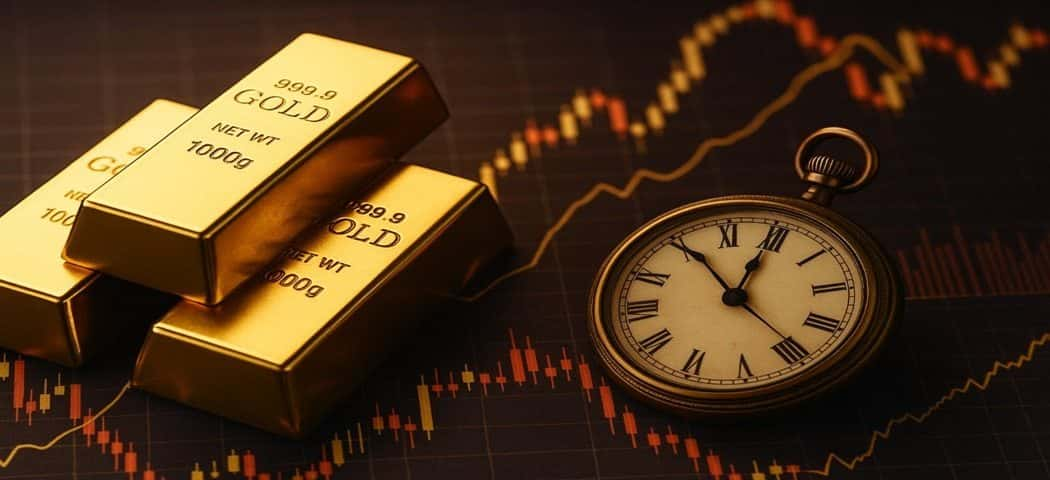
What Was the Gold Standard?
The gold standard was a monetary system where national currencies were directly tied to a fixed quantity of gold. Under this framework, paper money could be redeemed for gold at a set rate, anchoring the value of money to a tangible asset. For much of the 19th and early 20th centuries, it provided global financial stability and confidence in trade.
A Brief History of the Gold Standard
-
Classical Gold Standard (1870s–1914): Many nations pegged their currencies to gold, creating a period of stable exchange and global commerce.
-
Interwar Period (1918–1939): After World War I, countries struggled with inflation and trade disruptions, weakening adherence to gold.
-
Bretton Woods System (1944–1971): Post–World War II, currencies were pegged to the U.S. dollar, which itself was convertible into gold at $35/oz. This system gave the dollar global dominance.
-
Nixon Ends Convertibility (1971): President Richard Nixon suspended the dollar’s convertibility into gold, ending Bretton Woods. The “Nixon Shock” marked the transition to fiat currency systems.
Why the Gold Standard Was Abandoned
The system collapsed because it became increasingly unsustainable:
-
Inflexible Money Supply: Tying currency to finite gold reserves limited governments’ ability to stimulate economies.
-
Trade Imbalances: Countries with deficits often drained their reserves, destabilizing global trade.
-
Population and Growth: Expanding economies required more liquidity than gold stocks could provide.
Franklin D. Roosevelt summarized the issue in 1933 when he ended domestic convertibility: “The sound internal economic system of a nation is a greater factor in its well-being than the price of gold.”
Could the Gold Standard Work Today?
The idea of returning to gold resurfaces during economic uncertainty. Advocates say it could restore fiscal discipline; critics argue it would paralyze modern economies.
Why It Could Work:
-
Restores confidence and discipline in monetary systems.
-
Prevents excessive debt and unchecked money printing.
Why It Would Fail Today:
-
The global economy far exceeds available gold reserves.
-
Governments need flexibility to respond to crises.
-
Implementation would be disruptive and politically difficult.
Gold at $50,000? The Revaluation Debate
If the world re-adopted a gold-backed system, gold demand would skyrocket. Analysts estimate that to cover the U.S. money supply alone, gold would need to be revalued to $50,000–$60,000 per ounce. To back the global economy, which exceeds $100 trillion in broad money supply, prices could climb even higher.
Such a revaluation would dramatically reward gold holders but could destabilize financial markets, shock trade systems, and reduce liquidity worldwide.
How Precious Metals Investors Would Be Affected
-
Potential Windfall: Gold investors could see extraordinary gains if revaluation occurred.
-
Volatility Risks: Liquidity shortages and rigid monetary policy could disrupt financial systems.
-
Other Metals in Focus: Silver, platinum, and palladium might see increased demand as alternative hedges.
-
Modern Portfolio Strategy: Even without a return to gold, investors use it as protection against inflation, debt, and fiat currency risk.
The Modern Debate: Gold vs. Fiat and Digital Assets
Some policymakers and economists occasionally call for a return to gold, citing ballooning debt and weakened trust in fiat systems. At the same time, digital assets like Bitcoin and central bank digital currencies (CBDCs) are rising as modern monetary experiments. Against this backdrop, gold retains its appeal as the ultimate anchor of value — tangible, finite, and universally trusted.
Lessons for Today’s Investors
A return to the gold standard is unlikely, but the debate underscores why gold remains essential. History shows that while fiat systems provide flexibility, they also create risks of inflation and debt. Gold’s enduring strength is that it transcends monetary policy — it is wealth preserved in physical form.
For investors, the takeaway is clear: whether or not governments ever restore the gold standard, gold will continue to play a critical role in protecting wealth. In an era of rising debt, digital currencies, and geopolitical uncertainty, gold stands as the timeless hedge and the bedrock of trust in global finance.
Another article that may interest you:
Is $50,000 Gold Possible? 2025 Insights and Scenarios
Diwali 2025 and the Golden Tradition: Why Gold Shines Brightest