View Charts
State Gold Legal Tender Laws: Is Your State Next?
 0
0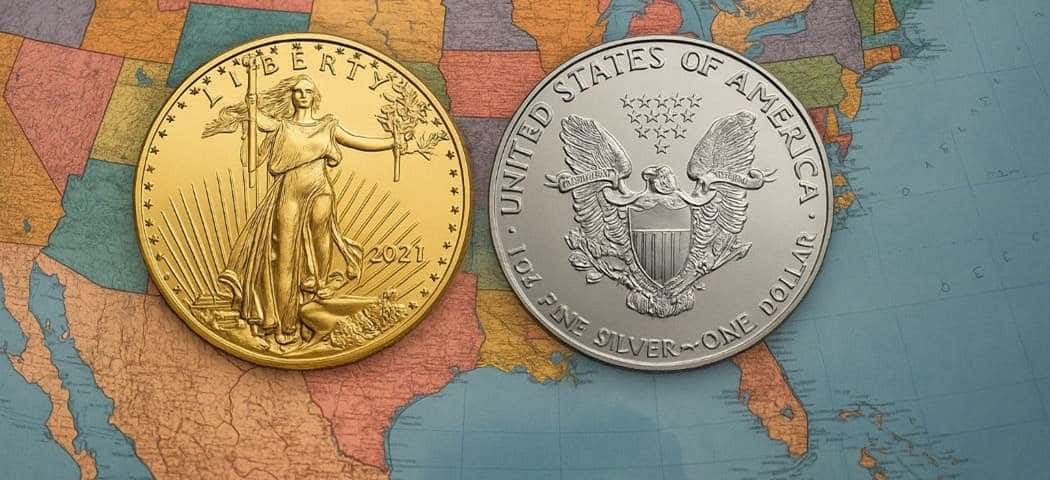
A Quiet Revolution in American Money
As inflation continues to erode the purchasing power of the dollar, a growing number of U.S. states are rethinking the role of precious metals in modern commerce. Gold and silver, long considered safe-haven assets, are now being reintroduced as official forms of legal tender in select regions of the United States. This emerging movement isn’t just symbolic - it’s backed by actual legislation, infrastructure, and investor momentum.
In the latest major development, Texas officially joined the sound money wave by passing a groundbreaking law that makes gold and silver usable as legal tender in everyday transactions. This move, while voluntary, paves the way for a modern return to hard money within state borders - and other states are taking notice.
Texas Passes Landmark Gold & Silver Legal Tender Law
On June 29, 2025, Texas Governor Greg Abbott signed House Bill 1056 into law, making gold and silver legal tender for all transactions within the Lone Star State. The law is set to take effect on May 1, 2027, giving state agencies time to implement systems that allow precious metals to function seamlessly alongside traditional U.S. currency.
Under this legislation, Texans will be able to buy, sell, and pay for goods and services using gold and silver, particularly through digital systems tied to the Texas Bullion Depository. This depository, the first state-administered facility of its kind in the U.S., will serve as a backbone for secure, audited storage of precious metals that can be linked to mobile apps or debit-style cards.
The law is voluntary: no business is required to accept gold or silver, and residents are free to continue using fiat currency. However, those seeking a hedge against inflation, dollar devaluation, or central bank policy will now have the option to transact in real money backed by precious metals.
How the System Will Work
The Texas legislation empowers the Comptroller of Public Accounts to establish or approve digital platforms that facilitate the use of gold and silver in commerce. These platforms will allow residents to access their precious metals holdings - stored securely at the Texas Bullion Depository - and spend them using debit cards, apps, or other digital tools.
For example, a resident with gold stored in their account could use a linked card to pay for groceries, with the system converting the equivalent value of gold to the dollar amount at point of sale. This approach removes the impracticality of carrying physical gold and instead leverages modern fintech to integrate bullion seamlessly into daily life.
Importantly, this setup protects the metal from physical loss or theft, ensures accurate real-time valuation, and adds a level of convenience that was previously unattainable for precious metal transactions.
The Growing Movement Across States
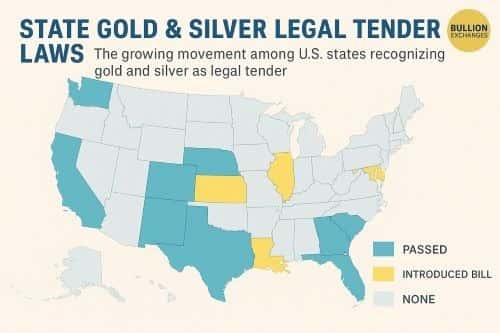
Texas is the most recent - and most high-profile - addition to a growing list of states that are challenging the dominance of fiat currency. While gold and silver remain federally recognized as legal tender under the U.S. Constitution, few states have taken formal action to facilitate their real-world use.
States such as Utah, Wyoming, Oklahoma, and Florida, have also passed laws removing state-level taxes on precious metals and, in some cases, affirming their use in commerce. Others, like Missouri, are actively reviewing or introducing bills that would remove capital gains taxes and classify gold and silver as money, rather than just commodities.
This decentralized push to restore sound money is driven by concerns over inflation, national debt, and reliance on centralized monetary policy. For investors, it’s a signal that physical bullion is not just a hedge - it may soon be a usable currency in select jurisdictions.
Investor Implications: What This Means for You
The implications of these legal tender laws go beyond political statements. For investors and stackers:
-
Liquidity and usability increase – Precious metals can be used in more practical, real-world scenarios.
-
Inflation hedging becomes more flexible – Gold and silver are no longer just stored assets; they can function like cash.
-
State-level tax relief – In many of these jurisdictions, bullion is no longer subject to sales or capital gains tax.
-
Trusted storage options expand – Facilities like the Texas Bullion Depository add a layer of trust and security for large holders.
-
Long-term portfolio utility grows – Gold and silver become not just stores of value but active parts of a parallel monetary system.
For those in states without such laws, it may be worth watching local legislative developments and preparing in case your state is next.
Is Your State Next?
The decision by Texas to officially recognize gold and silver as legal tender is more than a local political move - it’s a signal of shifting sentiment across America. As trust in traditional monetary systems continues to wane, the return to hard money is no longer an idea confined to history books. It is happening now, state by state.
With modern technology bridging the gap between physical bullion and real-time spending, we are entering a new era where precious metals may play a daily role in our financial lives. Investors, collectors, and freedom-minded individuals should take note - and prepare for a future where sound money may once again be the standard.