View Charts
Silver’s Historic Breakout: Why Prices Surged Past $55 in 2025
 0
0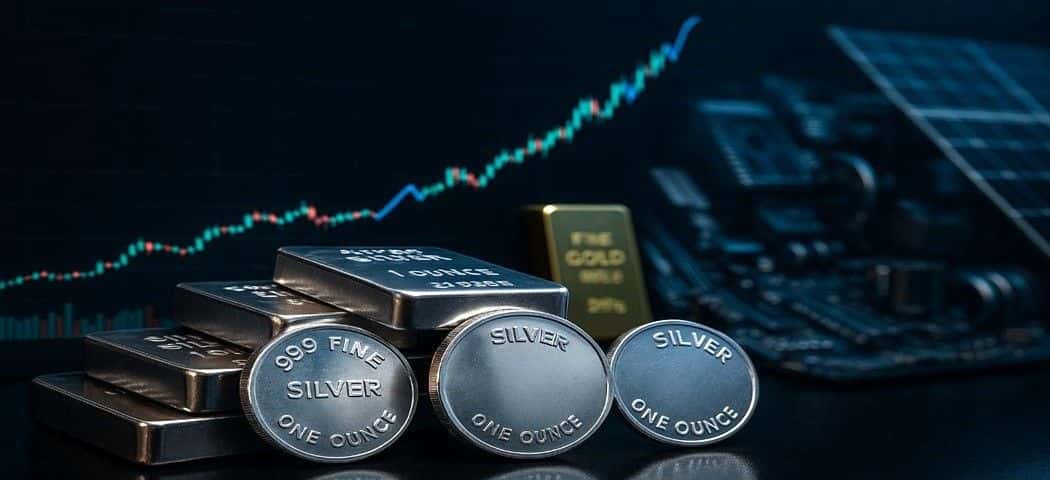
The 2025 Silver Breakout: What’s Driving the New All-Time High
Silver has entered a new era. For the first time in history, the price of silver has surged beyond $55 per ounce, marking an unprecedented milestone for one of the world's most essential precious metals. While gold, platinum, and palladium have all experienced upward movement, silver’s explosive breakout stands out as one of the defining financial stories of 2025.
The rally has captured global attention from industrial buyers, long-term investors, and precious-metals analysts — all asking the same question: Why now, and what comes next for silver?
Why Is Silver at a Record High in 2025?
Silver’s breakout has been fueled by the strongest combination of supply-and-demand factors the market has seen in decades. Unlike short-term spikes driven by speculation, this surge is rooted in structural fundamentals.
1. Industrial Demand Has Surged to All-Time Highs
Silver is the most conductive metal on Earth, making it indispensable for industrial applications such as:
-
Solar photovoltaic cells
-
Electric vehicles
-
Semiconductor production
-
5G infrastructure
-
Advanced electronics
Solar demand alone continues to set new records in 2025, with global PV installations climbing at their fastest pace ever recorded. As solar manufacturers increase per-panel silver loadings, demand has skyrocketed.
2. A Tightening and Persistent Global Supply Deficit
Silver’s supply deficit — now in its third consecutive year — has deepened due to:
-
Underproduction from mining, especially as a byproduct metal
-
Lower ore grades
-
Higher extraction costs
-
Limited new mining investment
-
Increased industrial consumption outpacing refinery output
Even at higher prices, silver mining cannot accelerate quickly because most silver is produced alongside copper, zinc, or lead — metals with their own market cycles.
3. Macro Trends Favoring Physical Assets
Investors have turned strongly toward tangible assets like gold and silver due to:
-
Inflation and currency debasement fears
-
High national debt levels
-
Softer global currency valuations
-
Anticipated rate cuts in 2026
-
Geopolitical risk and market uncertainty
When real yields decline, precious metals historically strengthen — and 2025 is no exception.
4. Investment Demand and Momentum Trading
Silver ETFs, futures positions, and physical buying have all risen dramatically. Once silver broke past $50 per ounce — a key psychological barrier — momentum algorithms and speculative traders piled in, accelerating the climb to $55+.
Silver Price History and Market Behavior in 2025
From January through November, silver has delivered its strongest annual performance in more than four decades.
Silver’s 2025 Performance at a Glance
-
Q1: Began the year around $30–$34 per ounce
-
Q2: Climbed into the low $40s on strong industrial demand
-
Q3: Surpassed $48 as ETF inflows surged
-
Q4: Broke above $55 for the first time in history
This trajectory reflects a sustained and broad-based rally — supported equally by industrial and investment markets.
Silver vs. Gold: Understanding the Gold–Silver Ratio
A major driver of investor sentiment is the Gold–Silver Ratio (GSR) — one of the most important long-term indicators in the metals market.
What the Gold–Silver Ratio Tells Us
The GSR measures how many ounces of silver are needed to buy one ounce of gold:
Gold Price ÷ Silver Price = Gold–Silver Ratio
Historically:
-
A high ratio (70:1, 80:1, etc.) suggests silver is undervalued relative to gold
-
A low ratio (40:1 or lower) suggests silver is outperforming or nearing overbought territory
Where the Gold–Silver Ratio Stands Now
As of late 2025, the ratio remains historically elevated, around 76:1 — even with silver at all-time highs. This suggests that, relative to gold, silver still has room to advance from a long-term valuation standpoint. Many investors view this as confirmation that silver remains in a multi-year bullish cycle.
Silver Price Forecast: What’s Next for 2026 and Beyond?
Analyst forecasts vary, but most agree that key structural catalysts remain in place for 2026.
2026 Silver Price Predictions
According to major analyst models:
-
Base case: Silver reaches $60/oz by early 2026
-
Moderate bull case: Silver climbs to $70–$80/oz by late 2026
-
High-acceleration scenario: Silver tests $100/oz between 2027 and 2028
(if solar demand accelerates and supply deficits widen)
What Could Drive Higher Prices?
-
Continued global solar expansion
-
Growing electrification and semiconductor usage
-
Expanding EV and battery manufacturing
-
Tight mining supply
-
Renewed monetary easing
-
Ongoing inflation and currency pressure
What Risks Could Slow Momentum?
-
Reduced industrial output
-
A stronger-than-expected U.S. dollar
-
Broad market corrections
-
Major increases in silver recycling output
Even with risks, the fundamental picture points to sustained strength in the silver market heading into 2026.
A New Era for Silver
Silver’s surge beyond $55 marks one of the most significant price events in modern precious-metals history. With industrial demand at record levels, supply shortages deepening, and macroeconomic tailwinds boosting investor interest, silver has entered a transformative phase.
Whether silver breaks above $60, $70, or higher in 2026 will depend on how global energy, technology, and economic trends unfold — but one thing is clear:
Silver is no longer the quiet metal in the shadow of gold. It is now firmly at the center of the global commodities conversation.
Related reading you may find interesting:
2026 Precious Metals Forecast: What to Expect Next
1 oz Bullion Exchanges Silver Round: A New Era of Exclusive Silver Bullion
CME Outage Shakes Global Markets: Impact on Gold, Silver & Bullion