View Charts

Rare 2026 Silver July 4 Privy Quarters Set for December 1 Auction
 0
Stack's Bowers Confirms Sale of 250 Historic July 4 Privy Quarters
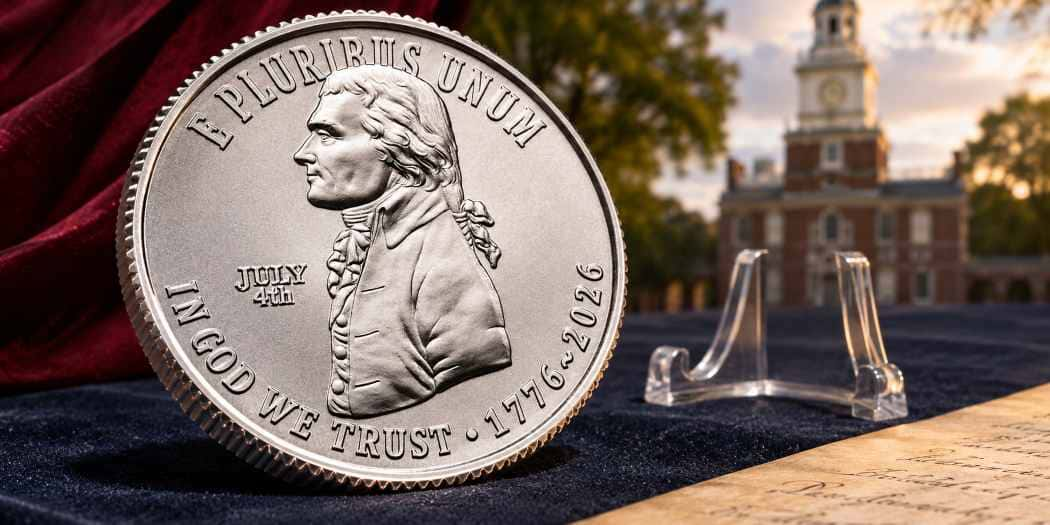
One of the most unusual coin releases of America's 250th anniversary finally has an auction date. Stack's Bowers Galleries has scheduled the sale of 250 specially struck, edge-numbered 2026 Declaration of Independence silver quarters for December 1, 2026. The auction will take place at Griffin Studios in Costa Mesa, California, on behalf of the United States Mint. Each coin contains 2.5 troy ounces of .999 fine silver and was struck at the Philadelphia Mint on Independence Day.
The announcement resolves an important question left unanswered when the Mint introduced the coins in July. At that time, officials confirmed the extraordinary production run but had not established when collectors could acquire the pieces. The official Stack's Bowers auction calendar now identifies the date, venue, and seller, giving collectors a firm milestone. However, the auction's starting time, individual lot descriptions, opening bids, and registration procedures have not yet been specified.
How the July 4 Silver Quarters Became a Semiquincentennial Rarity
The story began with the United States Mint's 2026 Semiquincentennial coin program, created to commemorate 250 years since the Declaration of Independence. Among its special releases was a Declaration of Independence quarter bearing a July 4 privy mark. The Mint announced that 250,000 examples would be distributed through ordinary banking channels, creating an opportunity for collectors to discover anniversary coins in circulation.
The circulating edition generated interest because its special privy mark could appear in everyday change. Unlike a conventional collector product purchased directly from the Mint, these quarters were randomly mixed into shipments intended for banks and financial institutions. That distribution method introduced uncertainty into the search: collectors could know the announced production quantity without knowing which bank rolls or transactions might yield a discovery.
Then came a dramatically different version of the same anniversary concept. On July 4, 2026, the Philadelphia Mint struck just 250 oversized silver Declaration of Independence quarters, each weighing 2.5 troy ounces. The coins were sequentially numbered along their edges from 1 through 250, creating individually identifiable pieces within an exceptionally small production run.
The July 6 announcement established that these silver coins would be offered through a future auction. Our earlier coverage, Philadelphia Mint Strikes 250 Silver July 4 Declaration Quarters, explored the coins' historical background and production details. The newly confirmed auction now moves the story from the Mint's production floor to the collector marketplace.
What Makes These 2.5 oz Silver Quarters Different?
These pieces combine several unusual characteristics that would be notable individually but become especially distinctive together. They are official United States quarters, contain substantially more precious metal than an ordinary circulating coin, and were produced on the exact date being commemorated. Their silver content also echoes the 250-year anniversary through the unconventional 2.5-ounce specification.
Philadelphia provides an additional historical connection. The Declaration of Independence was adopted in that city on July 4, 1776, and the anniversary silver quarters were struck there precisely 250 years later. The modern Mint facility is not the building where the nation's earliest coins were produced, but the choice of city creates a meaningful link between American independence and the country's coinage.
The special July 4 privy mark identifies the anniversary issue, while the edge numbering distinguishes each silver example within the limited group. A coin numbered 1 and one numbered 250 share the same announced production circumstances, yet their individual numbers may attract different levels of collector attention. Whether bidders ultimately assign premiums to particular numbers remains unknown.
Most importantly, the 250 silver quarters should not be confused with the 250,000 circulating July 4 privy quarters. The latter are standard circulating coins, whereas the silver editions contain 2.5 ounces of .999 fine silver and were specifically designated for auction. Their dramatically different quantities, compositions, and distribution methods place them in separate collecting categories.
Why the December 1 Auction Matters for Coin Collectors
The December 1 auction will provide the first organized opportunity for collectors to compete for these particular Mint-issued silver quarters. Rather than establishing a conventional retail price, the Mint is allowing competitive bidding to determine their initial market value. This creates a public test of collector demand for a modern commemorative issue whose significance extends well beyond its precious-metal content.
Each coin contains 2.5 troy ounces of .999 fine silver, giving it an intrinsic metal value tied to the prevailing silver spot price. However, the exceptionally limited production, historic July 4 striking date, official Mint origin, and individually numbered edges could influence bidding far more than changes in silver prices. Collectors will be evaluating these pieces primarily for their numismatic significance rather than their bullion value.
Still, a low production quantity does not guarantee a particular auction result. Collector interest, bidding competition, available budgets, and preferences for specific edge numbers could all affect realized prices. Even within such a small group, individual coins may attract different levels of demand.
Still, a low production quantity does not guarantee a particular auction result. Collector interest, bidding competition, available budgets, and preferences for specific edge numbers could all affect realized prices. Another consideration is third-party certification: at the time of publication, neither the U.S. Mint nor Stack's Bowers Galleries has publicly confirmed whether these 250 silver quarters will be certified by NGC or PCGS. Collectors should review the official auction listings for grading and presentation details before bidding.
The auction could also establish important reference points for the broader market in 2026 Semiquincentennial collectibles. Actual sales results will offer more meaningful evidence of demand than speculative asking prices. However, collectors should be cautious about using these exceptionally limited silver quarters to estimate the value of more widely distributed anniversary coins.
What Collectors Should Verify Before Bidding
The confirmed December 1 date gives prospective participants time to prepare, but several practical details remain outstanding. Stack's Bowers has identified Griffin Studios in Costa Mesa as the auction venue and stated that the sale is being conducted on behalf of the United States Mint. The published calendar does not yet establish how the 250 pieces will be divided into lots or whether all examples will be offered individually.
Before committing to a bidding strategy, collectors should examine the final catalog for each coin's edge number, photographs, condition description, and any certification information. Auction terms will also matter, including buyer's premiums, payment requirements, applicable taxes, shipping arrangements, and bidding eligibility. These details can materially affect the total acquisition cost beyond the winning bid.
Collectors interested in silver coins and other physical silver products should also distinguish collectible premiums from intrinsic metal value. The two can move independently, especially when an issue's historical circumstances become the principal source of demand.
December 1 Could Define the Market for These Historic Quarters
The significance of the announcement lies in what has changed since July: a future auction is now a scheduled event with an identified auctioneer, location, and seller. Collectors no longer need to speculate about whether the sale will occur before the end of America's Semiquincentennial year.
The remaining questions concern participation and price discovery. Once the catalog appears, collectors will be able to evaluate the individual coins and the auction's structure. The results could reveal how strongly bidders value the combination of official Mint production, an Independence Day striking, unusual silver content, and individually numbered edges.
For now, December 1 is the date to watch. The Mint has already established the coins' historical credentials; the auction will determine what collectors are prepared to pay for them.