View Charts
Kevin Warsh's First Testimony: What It Means for Markets
 0
0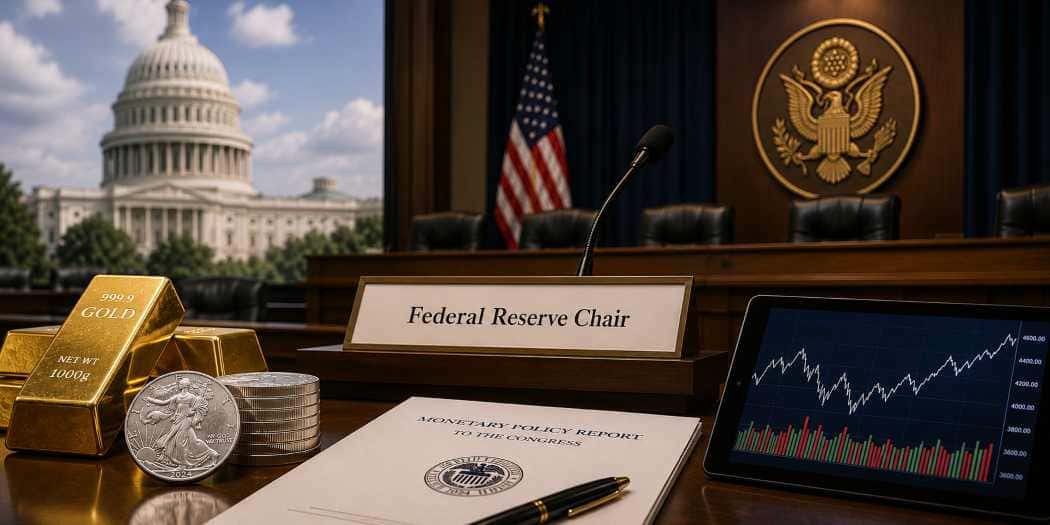
A Softer Inflation Report Changed the Narrative Before the Fed Chair Took the Podium
Federal Reserve Chair Kevin Warsh faced Congress for the first time on Tuesday morning under unusual circumstances. Just ninety minutes before his scheduled appearance before the House Financial Services Committee, the Bureau of Labor Statistics released a surprisingly soft June Consumer Price Index (CPI) report that immediately reshaped investor expectations for monetary policy.
Headline CPI fell 0.4% in June, the largest monthly decline since April 2020, while annual inflation slowed from 4.2% to 3.5%. Even more encouraging for policymakers, core CPI—which excludes food and energy—was unchanged for the month and eased to 2.6% year over year, suggesting underlying inflation pressures may finally be moderating.
By the time Warsh began delivering the Federal Reserve's Semiannual Monetary Policy Report to Congress, markets had already begun repricing the interest-rate outlook. The central question was no longer whether inflation remained elevated, but whether the Fed's new chairman would acknowledge the progress—or push back against investors' growing optimism.
Warsh Reinforced the Fed's Inflation Commitment Without Tightening Expectations
Warsh's prepared remarks struck a familiar tone on inflation, emphasizing that the Federal Reserve remains fully committed to restoring price stability.
'The members of our Committee have no tolerance for persistently elevated inflation,' he told lawmakers, adding that the inflation surge of the past five years would become 'a thing of the past' if monetary policy remains on the right course. He reiterated that the Federal Open Market Committee's June decision to maintain the federal funds target range at 3.50% to 3.75% reflected that commitment.
At the same time, Warsh resisted the opportunity to send a stronger hawkish signal. Rather than suggesting that additional rate increases were becoming more likely, he repeatedly emphasized that future policy decisions would depend on incoming economic data and would be made collectively by the Federal Open Market Committee. He offered no indication of what the Fed might do at its July meeting, maintaining a deliberate policy of limited forward guidance.
That restraint proved to be one of the day's most important developments.
The Testimony Was Less About Today's CPI Than Tomorrow's Economy
Although much of the questioning centered on the morning's inflation report, Warsh avoided treating a single month's data as evidence that inflation had been defeated.
He acknowledged that the latest figures were encouraging while reminding lawmakers that monthly inflation readings can fluctuate, particularly during periods of geopolitical uncertainty. Instead of focusing narrowly on June's CPI, he directed attention toward longer-term structural issues influencing the economy.
One of the most notable themes throughout his testimony was the rapid acceleration in business investment, particularly spending tied to artificial intelligence infrastructure. Warsh described AI-related investment as one of the defining characteristics of today's economy, noting that high-tech equipment investment has expanded at an extraordinary pace and could reshape both productivity and inflation over the coming years. He also announced several internal Federal Reserve task forces to evaluate monetary policy communications, economic data quality, productivity trends, and the Fed's broader inflation framework.
The message was clear: while today's inflation report matters, the Federal Reserve is preparing for a much longer policy horizon.
Why Precious Metals Responded Positively
For precious-metals investors, the most significant aspect of Warsh's testimony may have been what he chose not to say.
Markets entered the hearing concerned that the new Fed chair might use his first congressional appearance to reinforce expectations for additional interest-rate increases. Instead, Warsh acknowledged inflation progress, reaffirmed the Fed's long-term objective, and declined to provide any indication that another rate hike was imminent.
That left the softer-than-expected CPI report as the dominant catalyst for financial markets.
Lower inflation generally reduces pressure on the Federal Reserve to tighten monetary policy further. When investors expect interest rates to remain stable—or potentially decline in the future—non-yielding assets such as gold often become more attractive because the opportunity cost of holding them decreases. Silver typically amplifies those moves due to its higher volatility, while platinum and palladium can also benefit from improving expectations for economic growth and industrial demand.
Importantly, Warsh did not dismiss inflation risks altogether. He cited ongoing geopolitical tensions, elevated energy prices, and accelerating investment as factors that still warrant close attention. Those comments prevented markets from interpreting the testimony as overtly dovish, but they also stopped well short of signaling another immediate tightening cycle.
Expectations Were Reset More by Tone Than by Policy
One reason markets reacted favorably to Tuesday's testimony is that expectations heading into the hearing were unusually cautious. The combination of rising oil prices, escalating tensions in the Middle East, and concerns that higher energy costs could reignite inflation had led many investors to wonder whether the Federal Reserve's new chair might adopt a noticeably more aggressive tone.
Instead, Warsh delivered something far more measured. He acknowledged that inflation remains above the Fed's long-term objective while also recognizing the significance of the morning's CPI report. Rather than using his first appearance before Congress to reinforce expectations for additional rate increases, he consistently returned to the idea that monetary policy would remain dependent on incoming economic data.
That distinction mattered because markets often react as much to changes in expectations as they do to policy itself. Investors were not looking for an immediate commitment to lower interest rates; they simply wanted reassurance that the Federal Reserve was not preparing to tighten policy in response to recent geopolitical developments alone. By declining to provide a more hawkish signal, Warsh effectively allowed the softer inflation data to remain the day's dominant narrative.
For precious-metals investors, that was an important outcome. Gold and silver frequently perform well when expectations for future interest rates become less restrictive, even if the Federal Reserve has not yet changed policy. Tuesday's rally reflected that shift in expectations rather than any immediate change in the federal funds rate.
The July FOMC Meeting Now Takes Center Stage
Although Tuesday's testimony answered several immediate questions about Chair Warsh's communication style, it resolved very little about the Federal Reserve's next policy decision. Investors now move from interpreting remarks to evaluating incoming data, with employment reports, inflation readings, consumer spending, and Treasury market conditions likely to shape expectations before the July Federal Open Market Committee meeting.
For precious metals, that means the focus shifts from headlines to confirmation. The gold spot price recovery following the CPI report suggests investors are increasingly comfortable with the idea that inflation may be cooling without requiring additional monetary tightening. Whether that optimism continues will depend on whether future economic data supports today's encouraging report.
Warsh's testimony demonstrated a chairman willing to acknowledge improving conditions without declaring victory too early. That balanced approach leaves the Federal Reserve with maximum flexibility while giving financial markets room to respond to the data rather than to speculation. For investors, today's hearing may ultimately be remembered less for any single statement than for establishing how the new Fed chair intends to communicate during a period of unusually complex economic and geopolitical crosscurrents.