View Charts
How Much Gold Is in an Olympic Gold Medal—and What Is It Worth in 2026?
 0
0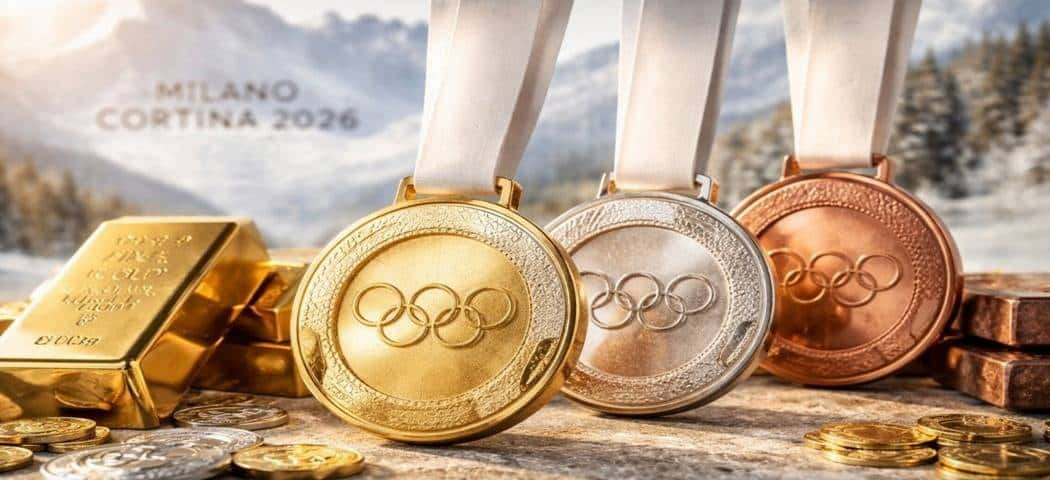
Olympic Medals and Precious Metals: More Than Symbolism
The 2026 Winter Olympics in Milano Cortina will showcase elite athletic achievement on a global stage, but they also shine a spotlight on the enduring importance of precious metals. From gold and silver to copper, the materials used in Olympic medals offer a compelling lens through which investors and collectors can explore the intersection of symbolism, intrinsic value, and global metals markets.
As attention turns to the gold spot price and silver spot price, investors are increasingly curious about a fundamental detail: how much precious metal is actually inside an Olympic medal? While these awards are priceless to the athletes who earn them, their metal content provides a fascinating real-world example of how precious metals continue to play a meaningful role far beyond bullion bars and investment coins.
Understanding the Metals Behind the Medals
Despite their name, Olympic gold medals are not made of solid gold. Under international standards, gold medals must consist primarily of silver and be plated with a minimum amount of pure gold. For the Milano Cortina 2026 Games, the medal composition follows this tradition.
-
Gold medals are composed of approximately 500 grams of fine silver, finished with about 6 grams of pure gold plating
-
Silver medals contain roughly 500 grams of fine silver
-
Bronze medals are made primarily of a copper-based alloy, weighing about 420 grams
In total, the 2026 Winter Olympics will award 245 gold, 245 silver, and 245 bronze medals, for 735 Olympic medals, with additional medals minted for the Paralympic Games. This large-scale production highlights the significant amount of precious and industrial metals required for a single global sporting event.
Olympic Medal Bullion Value Estimates at Current Prices
Using today’s approximate market prices (February 9, 2026)—gold at $5,075 per ounce, silver at $83.25 per ounce, and copper at approximately $6 per pound—we can estimate the bullion value of each Olympic medal strictly based on metal content.
Estimated Bullion Value Per Medal
Gold Medal
-
~16.1 oz silver × $83.25 ≈ $1,341
-
~0.19 oz gold × $5,075 ≈ $964
-
Approximate bullion value: $2,300–$2,305
Silver Medal
-
~16.1 oz silver × $83.25 ≈ $1,341
Bronze Medal
-
~420 grams copper alloy (≈0.93 lb) × $6 ≈ $5–$6
Estimated Total Bullion Value (Olympic Medals Only)
-
Gold medals (245): ≈ $564,000
-
Silver medals (245): ≈ $329,000
-
Bronze medals (245): ≈ $1,300–$1,500
While these figures remain modest relative to the medals’ cultural, historical, and emotional significance, they clearly illustrate how movements in the spot prices of silver and gold, and even base-metal markets directly influence the intrinsic value of some of the world’s most recognizable objects.
All bullion value estimates are approximate and subject to change based on ongoing market price fluctuations.
Precious Metals Prices and Market Perspective
The Olympics provide a unique reminder that gold and silver are not only financial instruments but also deeply embedded in global tradition. Rising precious metals prices have increased the underlying value of Olympic medals compared to earlier decades, reflecting broader trends in inflation hedging, currency confidence, and tangible asset demand.
For investors watching the gold spot price and silver spot price, Olympic medals underscore how these metals continue to command respect as stores of value—whether held in central-bank vaults, private portfolios, or worn briefly on the podium by the world’s greatest athletes.
Design, Craftsmanship, and Sustainable Metals
Beyond their material composition, the Milano Cortina 2026 medals stand out for their craftsmanship and forward-looking production methods. The medals are being produced by the Italian State Mint and Polygraphic Institute (IPZS), an institution with centuries of experience in metalworking, coinage, and secure manufacturing. This connection to a national mint adds an important layer of credibility and tradition to the medals, reinforcing their status as both symbolic and finely crafted metal objects.
In keeping with modern sustainability goals, IPZS is manufacturing the medals using recycled metal recovered from its own production waste, reducing the need for newly mined raw materials. The medals are cast in induction furnaces powered entirely by renewable energy, a process that allows for precise temperature control while significantly lowering environmental impact compared to traditional smelting methods. Packaging has also been designed with sustainability in mind, utilizing FSC-certified materials and minimizing plastic use wherever possible.
This approach closely mirrors broader trends in the precious metals industry, where ethical sourcing, recycled bullion, and transparent production practices are becoming increasingly important to investors and collectors alike. As demand grows for responsibly produced gold and silver, the Milano Cortina 2026 medals offer a real-world example of how tradition, technology, and sustainability can coexist—without compromising craftsmanship or visual impact.
Cultural Significance Beyond Bullion
Although bullion estimates offer an interesting numerical perspective, the true value of an Olympic medal cannot be measured in ounces or dollars. Each medal represents years of dedication, national pride, and personal sacrifice—an enduring reminder that precious metals have always carried meaning far beyond their market price.
For numismatists and precious metals investors, Olympic medals provide a powerful symbol of how gold and silver bridge economics, history, and human achievement.