View Charts
How Inflation Data Drives Precious Metals Demand
 0
0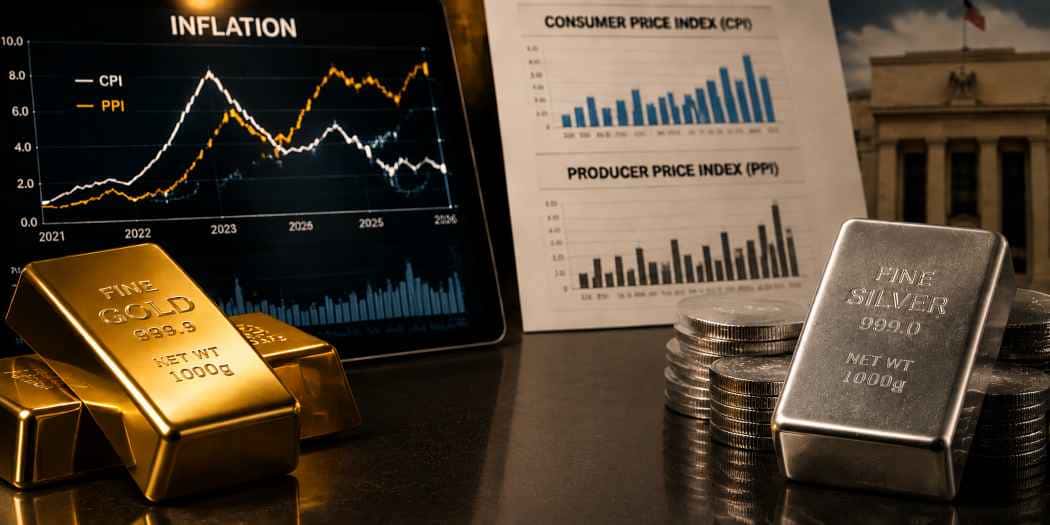
Why CPI and PPI Reports Move Gold and Silver Markets
Inflation data has become one of the most important short-term catalysts for precious metals demand, particularly gold and silver. Reports such as the Consumer Price Index (CPI) and Producer Price Index (PPI) directly influence market expectations around Federal Reserve policy, interest rates, and currency strength. Because gold and silver are priced in U.S. dollars and do not generate yield, they react quickly to shifts in inflation expectations and real interest rates.
When inflation runs hotter than expected, investors often increase exposure to inflation hedges like gold. When inflation cools, markets may reduce short-term demand for metals as expectations for tighter monetary policy ease. In 2026, this relationship remains especially important as inflation data continues to shape the direction of global capital flows and investor positioning in inflation metals.
How CPI Reports Influence Gold and Silver Pricing
The Consumer Price Index is one of the most closely watched inflation indicators because it measures changes in consumer prices across goods and services. When CPI readings come in higher than expected, markets often interpret this as a sign that inflation is persistent, increasing demand for gold as a hedge inflation asset.
Gold tends to respond more directly to CPI surprises because it is primarily a monetary metal. Silver also reacts, but its response is often amplified due to its dual role as both a monetary and industrial metal. Higher inflation expectations can increase investment demand for silver, but industrial concerns may sometimes offset or intensify price movement depending on broader economic conditions.
In inflation-driven environments, CPI data becomes a key trigger for repositioning across precious metals markets.
The Role of PPI in Forward-Looking Inflation Expectations
While CPI reflects consumer-level inflation, the Producer Price Index measures inflation at the wholesale and production level. PPI data is often considered a leading indicator because rising production costs can eventually flow into consumer prices.
When PPI rises significantly, it signals potential future inflation pressures, which can increase demand for gold and silver before CPI even reflects the change. Investors often use PPI data to anticipate Federal Reserve policy adjustments, especially when combined with labor market and wage growth data.
This forward-looking nature makes PPI especially important for traders positioning in silver inflation strategy environments, where expectations can move faster than realized inflation data.
Inflation Expectations vs Real Interest Rates
One of the most important relationships in precious metals markets is the interaction between inflation expectations and real interest rates. Even when inflation is rising, if nominal interest rates rise faster, real yields can increase, which may temporarily pressure gold and silver spot prices.
Conversely, when inflation outpaces interest rate adjustments, real yields fall, creating a favorable environment for precious metals. Gold is particularly sensitive to real yield declines, while silver often reacts more aggressively due to speculative and industrial demand components.
This dynamic explains why inflation data alone does not determine price direction—it must be interpreted alongside monetary policy expectations.
Industrial Demand and Inflation Sensitivity in Silver Markets
Silver behaves differently from gold because a significant portion of its demand comes from industrial applications such as solar energy, electronics, and manufacturing. Inflation data can influence silver through both monetary and industrial channels.
When inflation rises due to strong economic activity, industrial demand for silver may increase alongside investment demand. However, if inflation is driven by supply shocks that slow economic growth, industrial demand may weaken even as safe-haven demand increases.
This dual sensitivity makes silver one of the most complex assets in the precious metals complex when analyzing CPI and PPI releases.
How Central Banks Amplify Inflation Data Impact
Central bank policy responses are what ultimately translate inflation data into long-term price trends for gold and silver. The Federal Reserve and other central banks adjust interest rates and liquidity conditions based on inflation trends, making CPI and PPI reports indirect drivers of monetary policy shifts.
When inflation data suggests persistent price pressures, central banks may adopt tighter policy, strengthening the U.S. dollar and pressuring metals in the short term. However, if markets believe policy is nearing its peak, gold often rallies in anticipation of future easing.
This feedback loop between inflation data and central bank reaction is one of the most important forces shaping precious metals macro behavior.
Market Positioning and ETF Flow Reactions to Inflation Data
Institutional investors and ETF flows play a major role in how quickly inflation data is reflected in gold and silver prices. Following CPI or PPI releases, large capital reallocations often occur across futures markets, ETFs, and physical bullion holdings.
In high-inflation environments, ETF inflows into gold and silver typically increase as investors seek portfolio protection. Conversely, disinflationary signals can lead to short-term outflows as traders reduce hedging positions.
These flows can exaggerate price movements in the short term, especially in silver, which tends to have lower liquidity than gold.
Why Inflation Data Does Not Always Produce Immediate Price Moves
Despite its importance, inflation data does not always lead to immediate or sustained price changes in precious metals. Markets often price in expectations ahead of official releases, meaning CPI or PPI surprises may already be partially reflected in asset prices.
Additionally, other macro forces such as geopolitical risk, liquidity conditions, and currency fluctuations can dominate short-term price action. This is why gold and silver sometimes move opposite to inflation data in the immediate aftermath of reports.
The timing mismatch between data release and market positioning is a key reason inflation reactions can appear inconsistent.
Long-Term Outlook: Inflation as a Structural Driver of Metals Demand
Over the long term, inflation remains one of the most important structural drivers of demand for precious metals. Persistent inflationary pressures increase investor interest in assets that preserve purchasing power, reinforcing the role of gold as a hedge inflation tool and strengthening silver’s dual demand profile.
As global economies continue to navigate cycles of inflation, monetary tightening, and potential policy easing, CPI and PPI reports will remain central to market behavior. While short-term reactions may vary, the long-term relationship between inflation and precious metals demand remains firmly intact.
Related reading you may find interesting:
Fed Holds Rates as Warsh Flags Inflation and Energy Risk
Oil–Gold Correlation and Energy Markets Valuation