View Charts
Hidden in Plain Sight: The 1944 Lincoln Wheat Cent and Its Wartime Secrets
 20
20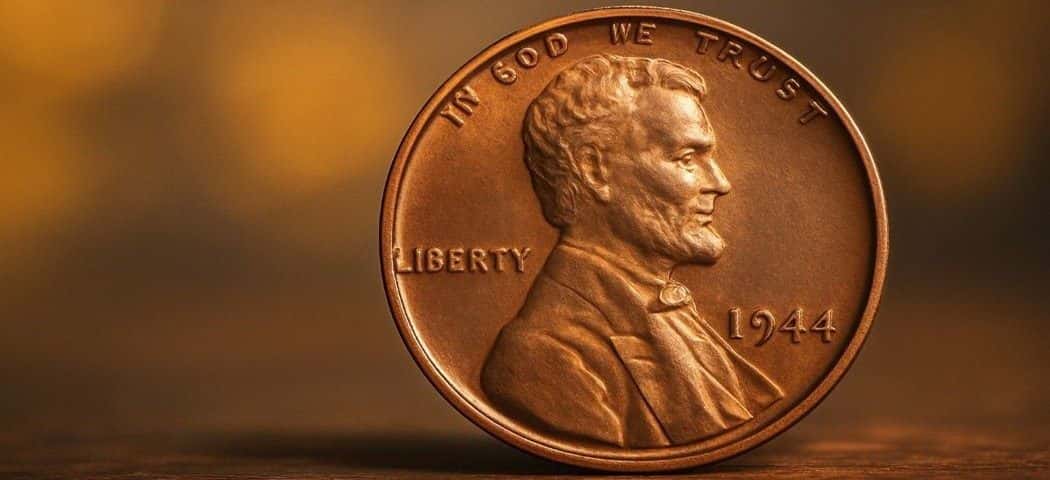
How a Humble Penny Made History - And Became a Coveted Collectible
It may look like just another old penny, but the 1944 Lincoln Wheat Cent tells a story far greater than its face value. Struck in the aftermath of World War II, this copper classic not only marked a return to prewar coinage—it also gave rise to one of the most coveted error coins in U.S. history.
Whether you're just starting your collection or are a seasoned numismatist, this unassuming cent is one you’ll want to keep an eye on. Let’s dig into the history, errors, and collector value behind the 1944 Wheat Penny—and how it became the first U.S. cent ever to exceed one billion coins struck.
From Steel to Shells: The Wartime Story Behind the 1944 Wheat Penny
In 1943, the U.S. Mint made a dramatic shift in cent production—copper was in high demand for military supplies, so pennies were struck from zinc-coated steel. These silvery "steel cents" served their purpose, but their tendency to rust and resemblance to dimes made them less than ideal for circulation.
By 1944, copper returned to the Mint's presses—but with a twist. That year’s cents were struck using recycled ammunition shell casings, resulting in a slightly different alloy known as “shell case bronze” (95% copper, 5% zinc). These new copper cents restored the familiar reddish hue and tactile weight that Americans were used to.
And they didn’t just signal a return to normal—they made history:
-
The 1944 Lincoln Wheat Cent became the first U.S. one-cent coin with a mintage over one billion, with more than 1.4 billion struck at the Philadelphia Mint alone.
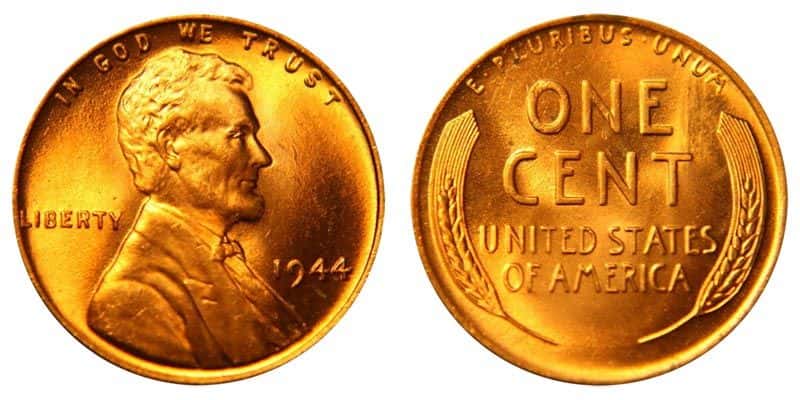
Image source: usacoinbook.com
The Error That Keeps Collectors Talking: 1944 Steel Cents
Here’s where the story gets especially intriguing. Although 1944 cents were intended to be struck in copper, a small number were accidentally minted using leftover steel planchets from the previous year. These error coins are among the most famous—and valuable—mistakes in U.S. coinage.
How to Spot a 1944 Steel Cent:
-
Magnet Test – If it sticks to a magnet, it may be steel.
-
Weight – Steel cents weigh approx. 2.7 grams, versus 3.11 grams for copper.
-
Color – Authentic steel cents have a distinct silver-gray tone.
Only a handful of genuine 1944 steel cents are known to exist. Some have sold for tens of thousands of dollars, making them one of the most prized mint errors in circulation today.
Be Aware: Silvery-Plated Copper Counterfeits
As with any high-value coin, fakes abound. Some counterfeiters attempt to mimic 1944 steel cents by plating standard copper pennies with a silvery coating. These may look convincing at first glance but fail key authenticity tests.
Quick Ways to Check for Fakes:
-
Magnet Test – If it doesn’t stick, it’s not steel.
-
Weight Test – Copper-plated fakes are heavier than real steel cents.
-
Professional Grading – Always the safest route for verification and resale value.
Mint Marks and Estimated Values (as of April 2025)
The 1944 Wheat Cent was minted in Philadelphia (no mint mark), Denver (D), and San Francisco (S). Mintages and general values are as follows:
-
Philadelphia (P) – 1,435,400,000 minted
-
Denver (D) – 430,578,000 minted
-
San Francisco (S) – 282,760,000 minted
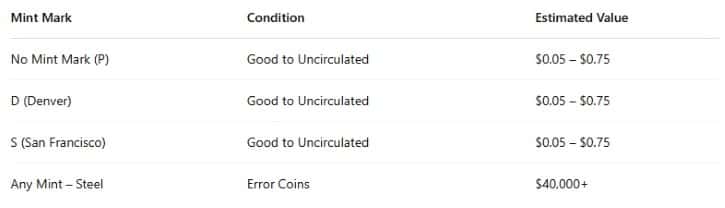
Most circulated copper examples are worth only a few cents, but uncirculated pieces and error coins (especially the 1944 steel cent) can command $40,000 or more at auction depending on condition.
Note: Keep in mind that coin values can vary depending on market trends, condition, and scarcity. For the most accurate assessment, consider consulting a certified coin dealer or professional appraiser.
Why Collect the 1944 Lincoln Wheat Cent?
Whether you collect for history, scarcity, or nostalgia, the 1944 Lincoln Wheat Cent checks all the boxes. It’s a coin born from wartime ingenuity, minted in massive numbers, and wrapped in mystery and value—especially for those lucky enough to discover a steel error.
More than just a piece of change, it serves as a snapshot of America’s resourcefulness and resilience. It's proof that even something as humble as a penny can hold a powerful piece of the past—and potentially a rare treasure for the future.
Explore Vintage Coins at Bullion Exchanges
At Bullion Exchanges, we carry a curated selection of authenticated U.S. coinage, including Lincoln Wheat Cents and other classic collectibles. Whether you’re hunting for key dates or completing your set, our trusted inventory and expert support make it easy to shop with confidence.
Other articles that may interest you:
1943 Steel Lincoln Wheat Cent: History, Errors, and How to Spot Fakes
The Fugio Cent: America’s First Official Coin
20 Comments