View Charts
Gold vs Platinum Today: Why Prices Are Moving in Opposite Directions
 0
0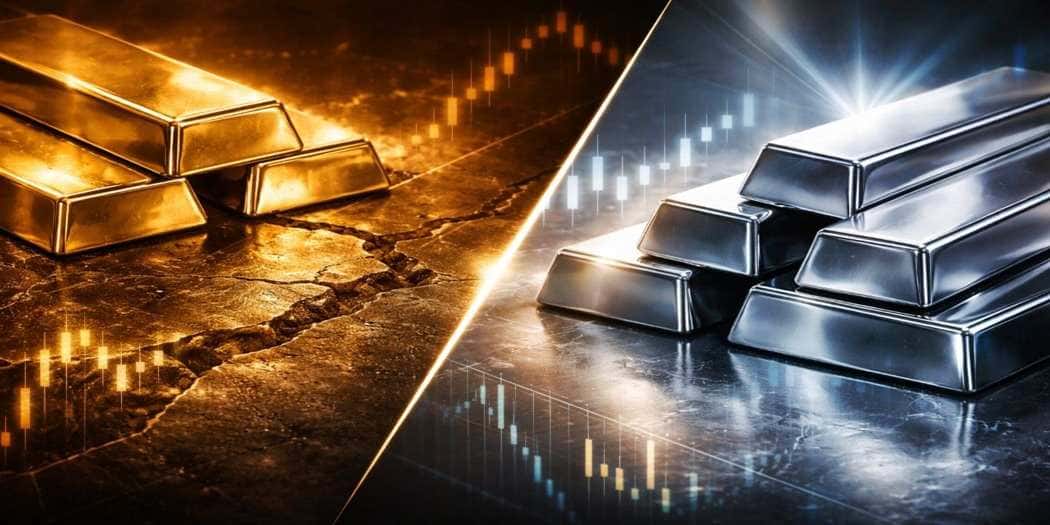
Why Precious Metals Are Mixed Today: Gold vs Platinum Divergence
The precious metals market today is showing a renewed divergence, with gold and palladium trending lower while platinum is moving higher and silver remains relatively flat. This split reflects a shift in market dynamics, where different forces are now influencing each metal independently rather than driving a unified move. While many investors closely track the gold price today as a signal of safe-haven demand, the resilience in platinum highlights the growing importance of industrial demand and supply-side constraints.
This evolving landscape raises an important question: what changed, and why are metals no longer moving together?
From Rally to Rebalancing: A New Phase in the Metals Market
Recent trading sessions have marked a clear transition from a broad rally to a more selective market. Previously, metals moved higher together on the back of geopolitical tension and energy-driven inflation concerns. Today, that synchronized momentum has broken down.
The absence of a new escalation in global risk factors, combined with stabilizing oil prices, has reduced the urgency behind safe-haven buying. As a result, gold has softened as investors take profits, while capital is rotating into areas of the market supported by stronger underlying fundamentals.
This shift represents a classic rebalancing phase, where markets begin to differentiate between monetary metals and industrial metals.
Gold Pullback: Safe-Haven Demand Moderates
Gold’s decline reflects a cooling in short-term safe-haven demand rather than a structural change in its long-term outlook. As geopolitical tensions stabilize and markets digest prior developments, investors are reducing defensive positions.
Currency dynamics are also playing a role. A steadier U.S. dollar environment can apply pressure to gold, limiting upward momentum in the near term. Movements in the current gold price per ounce often reflect this interplay between macro sentiment and currency strength, and today’s action suggests a pause in the previous upside move.
Platinum Strength: Industrial Demand Taking the Lead
In contrast, platinum continues to gain ground, supported by strong industrial demand and persistent supply constraints. Unlike gold, platinum’s price action is less dependent on safe-haven flows and more closely tied to real-world usage.
The platinum price today reflects ongoing demand from sectors such as automotive manufacturing and emerging hydrogen technologies, as well as constrained supply from key mining regions. This combination is helping platinum maintain upward momentum even as gold retraces.
Silver’s Role: Bridging Monetary and Industrial Demand
Silver is showing relatively stable performance, with only modest movement compared to other metals. As a hybrid asset, silver typically responds to both investment demand and industrial trends.
In the current environment, silver’s flat performance suggests a balance between easing inflation-driven momentum and steady industrial demand. This positioning reinforces its role as a middle ground within the metals complex, neither fully participating in the pullback nor matching the strength of platinum.
Palladium Weakness: A Different Industrial Story
While platinum is rising, palladium is moving lower, highlighting that not all industrial metals are benefiting equally. Palladium faces unique pressures, including evolving demand trends in the automotive sector and ongoing uncertainty around supply chains.
This divergence between platinum and palladium underscores the importance of understanding each metal’s specific drivers, rather than viewing them as a single category.
Oil, Inflation, and the Shift in Momentum
Energy markets remain a key influence, but their role has changed. Oil prices are elevated but stabilizing, which means inflation expectations are holding steady rather than accelerating.
This distinction is critical. When inflation expectations rise sharply, gold typically benefits as a hedge. However, when inflation stabilizes, the urgency to accumulate gold diminishes. At the same time, industrial demand remains supported, allowing metals like platinum and silver to outperform.
The result is a market that is no longer driven by a single macro narrative, but by a combination of factors.
Why Precious Metals Are No Longer Moving Together
The current environment highlights the dual nature of the metals market. Gold is primarily influenced by macroeconomic forces such as inflation, interest rates, and geopolitical risk. Platinum and silver, meanwhile, are more responsive to industrial demand and supply dynamics.
When markets are driven by broad macro shocks, metals tend to move in unison. When those shocks stabilize, individual fundamentals take over, leading to divergence. This is precisely what is unfolding in the metals market today.
Implications for Investors
For investors, this divergence creates a more nuanced landscape. Rather than relying on a single directional view, it becomes essential to evaluate each metal independently.
-
Gold remains a core long-term hedge against uncertainty
-
Silver offers a balance between industrial growth and investment demand
-
Platinum provides exposure to industrial demand and supply constraints
-
Palladium reflects more specific sector-driven risks
Understanding these distinctions allows investors to better position themselves in a shifting market environment.
What to Watch Next in the Metals Market
Several key factors will determine whether this divergence continues:
-
New geopolitical developments or policy changes
-
Movements in the U.S. dollar and interest rates
-
Changes in energy prices and inflation expectations
-
Industrial demand trends and supply disruptions
If a new macro catalyst emerges, metals may realign. Until then, divergence is likely to remain a defining feature of the market.
Gold vs Platinum: A Market Defined by Divergence
The current split between gold and platinum reflects a broader transition in the metals market. While gold is adjusting to reduced safe-haven urgency, platinum is benefiting from sustained industrial demand and tighter supply conditions.
As the market continues to evolve, this divergence offers valuable insight into how different forces shape precious metals pricing. For investors and collectors alike, recognizing these shifts is essential to navigating today’s increasingly complex metals landscape.
Related reading you may find interesting:
Why Platinum Price Is Rising: Supply and Demand Explained