View Charts
Gold vs Mining Stocks: Which Performs Better?
 0
0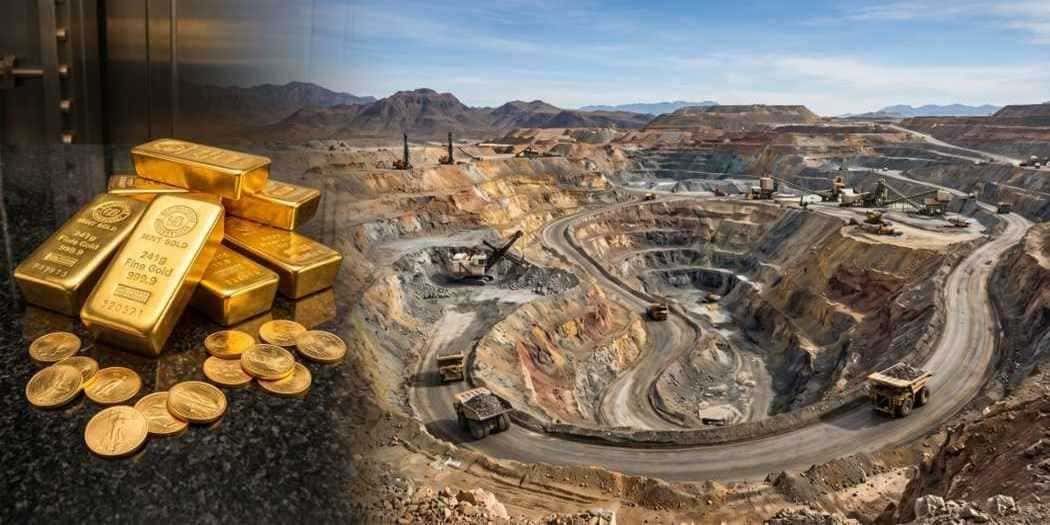
Do Gold or Mining Stocks Deliver Higher Returns in 2026?
The debate around gold vs mining stocks has intensified as markets navigate inflation, rate uncertainty, and shifting investor sentiment. While the gold spot price reflects the direct value of physical bullion, mining stocks—often tracked through ETFs like GDX—introduce leverage, operational risk, and equity market exposure. In 2026, the distinction is more important than ever: investors are no longer just choosing exposure to gold, but deciding how that exposure behaves under different market conditions.
Understanding the Core Difference: Asset vs Business
At a fundamental level, gold and mining stocks represent two entirely different investment profiles.
-
Gold is a physical asset with intrinsic value, driven primarily by macroeconomic forces such as inflation, currency strength, and geopolitical risk.
-
Mining stocks represent companies engaged in gold production, meaning their performance depends on both gold prices and operational factors.
This distinction explains why mining stocks can outperform—or underperform—gold depending on market conditions.
GDX Beta and Leverage to Gold Price Movements
Gold mining stocks are often described as having “beta” to gold, meaning they tend to amplify movements in the gold market. When gold prices rise, mining companies can see disproportionately higher gains due to expanding profit margins.
For example:
-
If gold prices increase, production costs remain relatively stable
-
This widens margins for miners, boosting earnings potential
-
Stock prices may rise faster than gold itself
However, this leverage works both ways. During downturns, mining stocks can decline more sharply than gold, reflecting their higher risk profile.
Cost Structures and Profit Sensitivity
Mining companies operate with fixed and variable costs, including labor, energy, and equipment. These costs introduce a layer of complexity that physical gold does not have.
When gold prices rise above production costs, profitability increases significantly. But when prices fall or costs rise—particularly energy costs—profit margins can compress quickly. This sensitivity makes mining stocks more volatile and less predictable than gold.
Market Correlation: Equity Risk vs Safe-Haven Demand
Another key difference in the gold vs mining stocks comparison is correlation.
Gold tends to behave as a safe-haven asset, often performing well during periods of market stress. Mining stocks, however, are still equities. This means they can:
-
Decline alongside broader stock markets
-
Be affected by investor risk sentiment
-
Respond to interest rate changes and capital flows
As a result, mining stocks may not always provide the same protective qualities as physical gold during downturns.
Dividend Potential vs Non-Yielding Asset
One advantage of mining stocks is their ability to generate income. Some gold mining companies pay dividends, offering investors a return beyond price appreciation.
Gold, by contrast, is a non-yielding asset, valued purely for its price movement and store-of-value characteristics. For income-focused investors, this distinction can be significant, though it comes with added risk.
Performance Across Different Market Cycles
The relative performance of gold and mining stocks often depends on the broader economic environment:
-
Rising gold prices in stable equity markets: Mining stocks tend to outperform
-
Market volatility or recession: Gold often holds value better
-
Rising costs or operational disruptions: Mining stocks may lag
This cyclical relationship highlights why neither asset consistently outperforms in all conditions.
Volatility and Risk Profile Comparison
Mining stocks are inherently more volatile than gold due to their dual exposure to commodity prices and equity markets. Factors that can impact mining stocks include:
-
Company-specific risks
-
Political and regulatory issues in mining regions
-
Environmental and operational challenges
Gold, while not immune to volatility, tends to exhibit more stable price behavior relative to mining equities.
Portfolio Positioning: When to Choose Each
The choice between gold and mining stocks often depends on investor objectives:
Gold is typically favored for:
-
Portfolio stability
Mining stocks may appeal to:
-
Growth-oriented investors
-
Those seeking leveraged exposure to gold prices
-
Investors comfortable with equity risk
Many portfolios incorporate both, using gold as a foundation and mining stocks for potential upside.
Navigating Gold and Mining Exposure
As global markets continue to evolve, the relationship between gold and mining stocks remains dynamic. Interest rate shifts, inflation trends, and geopolitical developments will continue to influence both assets—but not always in the same way.
Understanding the tradeoffs between direct gold ownership and leveraged equity exposure allows investors to make more informed decisions. In a market defined by uncertainty, the question is not simply which outperforms, but which aligns best with your strategy and risk tolerance.
Related reading you may find interesting:
Gold Streamers vs Gold Miners: Franco-Nevada, Wheaton