View Charts
GOLD, SILVER, AND BITCOIN PRICES, DAILY MARKET NEWS. MARCH 2023.
 0
0Brazil and China Forge New Pact to Abandon US Dollar in Trade
Mar. 31, 2023
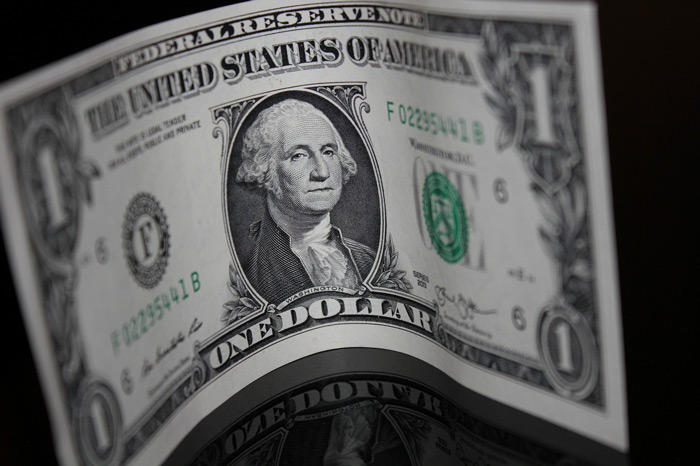
In a significant move, Brazil and China, two prominent BRICS nations, have signed an agreement to trade using their currencies, ditching the US dollar as an intermediary. The decision is expected to boost bilateral cooperation in food and minerals while streamlining their vast trade and financial transactions.
Under the new agreement, Brazil and China will conduct their trade transactions directly, exchanging their respective currencies, the Brazilian real and Chinese renminbi, instead of relying on the US dollar for settlements.
In addition to the currency swap, the countries have announced the creation of a clearinghouse to facilitate settlements without the US dollar and provide lending in their national currencies. This move aims to simplify transactions between the two nations, lower costs, and eliminate dollar dependence in their bilateral relations.
The People's Bank of China (PBOC) has stated that such arrangements will increase the use of the renminbi for cross-border transactions between enterprises and financial institutions in both countries. This is expected to further bolster bilateral trade and investment. China has been Brazil's largest trading partner for over ten years, with their bilateral trade reaching a record $150 billion in the previous year.
Tatiana Rosito, the Secretary for International Affairs at the Ministry of Finance of Brazil, noted that 25 countries are already settling transactions with China in yuan. The agreement between Brazil and China marks a significant step in reshaping global trade dynamics and reducing reliance on the US dollar.
Today in precious metals, gold prices fall 0.04% to $1,988.00 per ounce. Silver rose 0.82% to $24.32 per ounce. Platinum increased by 0.61% to $1012.50 per ounce, while Palladium jumped by 1.00% to $1,516.00 per ounce. Bitcoin dipped 0.01% to $28,473.30.
What potential outcomes could the new Brazil-China policy of trading in their currencies have on global trade dynamics and the future role of the US dollar as a dominant reserve currency?
Digital Ruble Pilot Postponed to May as Russia Awaits Regulatory Framework
Mar. 30, 2023

The Bank of Russia has decided to delay the pilot launch of its central bank digital currency (CBDC), the digital ruble, until after the adoption of a comprehensive regulatory framework. Initially scheduled to start on April 1, the pilot has been pushed to late April or early May, as the legislation related to the CBDC has only passed through the first reading in the State Duma, the Federal Assembly's lower house.
Anatoly Aksakov, the head of the State Duma committee on financial markets, explained that the central bank would be postponing the digital ruble trial due to the absence of a ready legislative framework, opting not to implement it under the experimental legal regime. Aksakov expects the digital ruble law to pass in April and become operational in May.
Contrary to the hesitation exhibited by private banks worldwide in integrating CBDCs, the banks participating in the digital ruble trial have expressed eagerness to begin testing.
Initially, 15 banks were slated to participate in the pilot; however, the number has now decreased to 13. These banks will support real operations with a limited number of customers once the pilot launches. Employees from these banks, as well as Ingosstrakh, one of Russia's largest insurance companies, will serve as test participants for CBDC retail payments. The general public will not have access to the first stage of the pilot.
Vitaly Kopysov, the director of innovations at Sinara Bank, highlighted the benefits of smart contracts, stating that their use should reduce banks' operational load and enhance the transparency of transactions. This, in turn, would minimize the chances of misusing government and banks' funds and ultimately simplify the control over existing contracts.
In anticipation of the trial, Sinara Bank and Delobank officials have integrated the necessary services into their Android mobile applications. These services include opening a digital ruble wallet, replenishing a wallet, checking the wallet balance, and viewing the wallet's transaction history.
Kopysov emphasized that the primary objective of the digital ruble is to create new opportunities for the state and business sectors. Banks will benefit from a new infrastructure for transfers using the digital ruble, including cross-border transactions, leading to increased competition for customers in the financial sector.
Despite the pilot's one-month delay, it remains significantly ahead of its original 2024 launch date. The Bank of Russia accelerated the digital ruble's timeline to expedite the creation of an alternative to the SWIFT payments system in light of Western economic sanctions against Russia.
Today in precious metals, gold prices grew 0.46% to $1,983.70 per ounce. Silver rose 1.54% to $23.91 per ounce. Platinum increased by 1.45% to $1003.40 per ounce, while Palladium jumped by 2.75% to $1,518.50 per ounce. Bitcoin dipped 0.01% to $28,356.13.
What are the expected outcomes and benefits of the digital ruble pilot for Russia's financial system, and how will it impact the state, businesses, and customers in the country?
Gold Prices Dip Amid Stronger Equities and Dollar: Lingering Concerns for the Banking Sector
Mar. 29, 2023
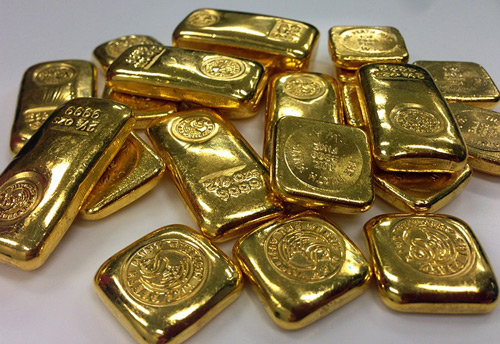
Gold prices experienced a decline on Wednesday as buoyant equities and a robust dollar exerted pressure on the precious metal. Despite these factors, the drop in safe-haven bullion has remained relatively limited, indicating that concerns over the banking sector persist.
Spot gold traded 0.5% lower at $1,964.41 per ounce, while U.S. gold futures slipped 0.4% to $1,965.50.
Bob Haberkorn, Senior Market Strategist at RJO Futures, attributed the slip in gold prices to the risk-on sentiment in the equity markets, with stocks on the rise. He also noted that there has been no significant news regarding the banking issues beyond what is already known.
Wall Street's main indexes advanced as fears surrounding the banking sector subsided, while Treasury yields reversed course and fell. However, uncertainty about the economic outlook continues to linger among bond investors.
The dollar gained approximately 0.3% against most major currencies, temporarily halting its recent declines. A stronger dollar renders bullion more expensive for overseas buyers.
Analysts believe that the marketplace is gradually moving past the banking troubles in the U.S. and Europe as risk appetite returns to the markets. Nevertheless, experienced market observers believe it is too early to sound the 'all clear' signal regarding the issue.
According to the CME FedWatch tool, investors currently anticipate a 40% chance of a 25-basis-point rate hike in May. Higher interest rates typically diminish the appeal of zero-yield gold.
Other Precious Metals:
In the broader precious metals market, spot silver rose 0.4% to $23.34 per ounce, platinum increased 0.6% to $969.35, and palladium climbed 1.1% to $1,435.54.
Botswana's Deal with HB Antwerp Challenges Longstanding Partnership with De Beers
Mar. 28, 2023

Botswana, Africa's top diamond producer, is set to challenge its decades-long partnership with South African diamond giant De Beers, following a deal with Belgian gem trader HB Antwerp.
According to Bloomberg, Botswana's President Mokgweetsi Masisi announced on Monday that the country will take a 24% stake in HB Antwerp.
Masisi stated that Botswana's state gem trader will supply HB Antwerp with precious stones for five years. This move comes amid ongoing negotiations between the Southern African nation and De Beers for a new agreement, under which most of the country's gems would be mined by a joint venture.
Botswana is not only Africa's leading diamond producer but also the second-largest worldwide, following Russia.
Despite the new deal with HB Antwerp, sales of diamonds would still be handled by De Beers. However, Masisi has reportedly praised HB Antwerp's handling of diamonds extracted from Botswana's Karowe Mine, owned by Canadian mining company Lucara Diamond.
The president has previously warned that Botswana would abandon talks over a new sales agreement and the extension of De Beers' mining rights in the country if it were not given a larger share of revenues.
De Beers' mining rights are set to expire in 2029, while the diamond sales agreement is scheduled to end in June 2023. Under the current arrangement, Debswana, a joint venture between De Beers and the Botswana government, sells 75% of its output to De Beers, with the remaining 25% going to the state-owned Okavango Diamond Company.
Established in 1968, Debswana is responsible for supplying over two-thirds of De Beers' diamonds, and revenue from the precious stones accounts for more than 30% of Botswana's GDP.
The deal with HB Antwerp indicates a potential shift in the country's diamond trade landscape, posing a challenge to the longstanding partnership between Botswana and De Beers.
grew 0.50% to $23.41 per ounce. Platinum decreased by 1.23% to $983.50 per ounce, while Palladium sank by 0.88% to $1,449.00 per ounce. Bitcoin dipped 0.59% to $26,981.40.
What potential consequences could arise from Botswana's deal with HB Antwerp, and how might this impact the longstanding partnership between Botswana and De Beers in the diamond trade?
Deutsche Bank Shares Stumble Amid European Banking Sector Concerns
Mar. 24, 2023

Deutsche Bank's shares plunged on Friday as credit default swaps spiked on Thursday night, fueling worries about the stability of European banks. The Frankfurt-listed stock fell by as much as 14% during the trading session but managed to reduce losses to 6% by around 4 p.m. London time (midday ET).
The German bank's Frankfurt-listed shares declined for the third consecutive day, losing over 20% of their value so far this month. Credit default swaps, a type of insurance for bondholders against a company's default, jumped to 173 basis points Thursday night from 142 basis points the previous day.
The emergency rescue of Credit Suisse by UBS following the collapse of U.S.-based Silicon Valley Bank has sparked concerns about contagion among investors. These concerns were exacerbated by the U.S. Federal Reserve's further monetary policy tightening on Wednesday. Regulators and central banks had hoped that the sale of Credit Suisse to its domestic rival would help stabilize markets, but investors remain skeptical that the deal will be sufficient to alleviate the banking sector's stress.
Deutsche Bank's additional tier-one (AT1) bonds also experienced a sharp sell-off. The bank's decline led to widespread losses for major European banking stocks on Friday, with Commerzbank shedding 9%, and Credit Suisse, Societe Generale, and UBS each falling by more than 7%. Barclays and BNP Paribas both dropped by over 6%.
Despite ten consecutive quarters of profit and a successful multibillion-euro restructuring effort, Deutsche Bank is facing investor anxiety. The bank reported a CET1 ratio of 13.4% at the end of 2022, with a liquidity coverage ratio of 142% and a net stable funding ratio of 119% - figures that do not suggest any cause for concern regarding the bank's solvency or liquidity position.
German Chancellor Olaf Scholz reassured the public on Friday, stating that Deutsche Bank had thoroughly reorganized and modernized its business model and is a very profitable institution. He added that there was no reason to speculate about the bank's future.
Market losses were slightly mitigated after European Central Bank President Christine Lagarde assured EU leaders of the euro area banking sector's resilience, thanks to strong capital, liquidity positions, and post-2008 reforms. She also mentioned that the ECB's toolkit could provide liquidity to the financial system if necessary.
Moody's, in a note on Wednesday, said that financial regulators and governments should "broadly succeed" in containing contagion risks from issues exposed at individual lenders. However, the ratings agency warned of the potential for longer-lasting and severe consequences within and beyond the banking sector if policymakers fail to curtail the current turmoil.
Today in precious metals, gold prices fell 0.19% to $1,990.70 per ounce. Silver rose 0.52% to $23.31 per ounce. Platinum decreased by 0.41% to $991.00 per ounce, while Palladium sank by 1.46% to $1,498.00 per ounce. Bitcoin dipped 1.24% to $28,037.30.
What are the potential long-term consequences of the ongoing instability in the European banking sector, and how might they impact financial markets and the global economy?
Russia Reveals Gold Holdings Amid Western Sanctions
Mar. 23, 2023

In its first public report in months, the Bank of Russia has lifted the veil on the nation's gold holdings, revealing an increase in its bullion stockpile over the past year.
As of March 1, Russia's gold reserves stood at 74.9 million ounces, a one-million-ounce increase from the previous year. The central bank had ceased disclosing its gold holdings in the wake of Western sanctions, with the last report published in February 2022, announcing total gold holdings of 73.9 million ounces.
According to the regulator's recent report, gold reserves were valued at $135.6 billion as of March 2023. Russia's total holdings of foreign exchange and gold reportedly fell to $574 billion from $617 billion year-over-year.
An analysis of central bank data by RIA Novosti indicates that gold's share in Russia's international reserves increased to 23.6% over the past year, while the share of foreign currency decreased to 71.5%.
Traditionally, foreign currency forms the basis of reserves, but its volume in assets has decreased by 8.7% to $410.65 billion over the past year. Approximately half of Russia's forex reserves were frozen by Western central banks in early March 2022 as part of sanctions over the Ukraine conflict.
The remaining holdings comprise gold and foreign currency held within the country, as well as Chinese yuan assets.
Russia's forex reserves had reached a historical maximum of $643.2 billion just before the conflict with Ukraine erupted in February of last year. Moscow has consistently denounced the freezing of its assets as "theft" and warned that it violates international law.
The Kremlin asserts that the US dollar's use as a weapon in the sanctions war against Russia has discredited the concept of international reserves.
Today in precious metals, gold prices grew 0.66% to $1,993.70 per ounce. Silver rose 0.39% to $23.32 per ounce. Platinum decreased by 0.10% to $1001.60 per ounce, while Palladium sank by 0.14% to $1,482.50 per ounce. Bitcoin dipped 0.28% to $28,567.13.
What could be the potential implications of Russia's increasing gold reserves on the global economy and international financial markets?
Gold Prices Surge Following U.S. Federal Reserve's Interest Rate Decision

Gold prices experienced a significant jump on Wednesday as traders reacted to the U.S. Federal Reserve's decision on interest rates. With investors digesting the 25 basis point interest rate hike and Fed projections for just one more hike this year, the precious metal saw an upward trajectory. Meanwhile, the dollar's decline made gold more affordable for holders of foreign currencies.
Gold Prices on the Rise
Spot gold increased by 1.2% to $1,953.39 per ounce, recovering from a 2% drop on Tuesday. Concurrently, U.S. gold futures climbed 0.87% to $1,948. Market participants analyzed the Federal Reserve's interest rate decision, which included a 25 basis point hike and projections for only one additional increase later in the year. The Federal Open Market Committee (FOMC) stated in their post-meeting announcement, "The Committee will closely monitor incoming information and assess the implications for monetary policy."
Dollar Weakens, Benefiting Gold
As the dollar weakened in response to the Fed's decision, gold became more affordable for investors holding foreign currencies. A lower dollar typically boosts gold prices, as it reduces the opportunity cost of holding non-yielding bullion and makes it less expensive for buyers using other currencies.
Other Precious Metals React
Silver dipped 1.9% to $22.79 per ounce, while platinum saw an increase of 1.65% to $986.20 per ounce. Palladium experienced the most significant gain, rising 4.3% to $1,444.29 per ounce. The precious metals market continues to react to global economic shifts and the Federal Reserve's monetary policy decisions.
Conclusion
The U.S. Federal Reserve's interest rate decision had a notable impact on gold prices, which surged on Wednesday as traders and investors processed the news. With a weaker dollar making gold more accessible to foreign currency holders and the Fed's cautious approach to future rate hikes, the precious metals market remains sensitive to changes in economic and monetary policy landscapes.
US Banking Sector Faces Potential Crisis, Warns Former Lehman Brothers Executive
Mar. 22, 2023
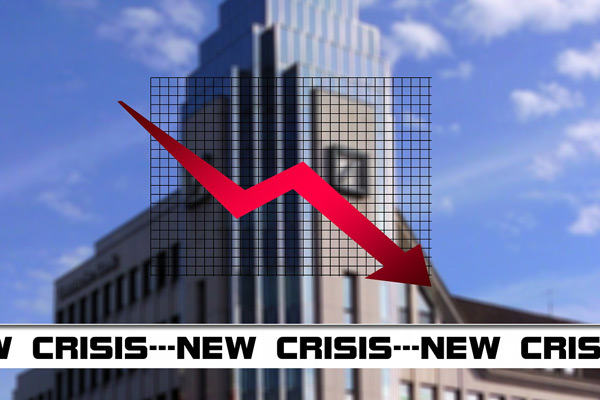
The US banking sector is facing a potential crisis, according to Lawrence McDonald, former vice president at Lehman Brothers. In an interview with RIA Novosti, McDonald warned that as many as 50 regional lenders in the US could collapse if authorities fail to address structural issues.
McDonald likened the current situation to the period preceding the collapse of Lehman Brothers in 2008, which triggered the global financial crisis. He argued that US regional banks are likely to lose "hundreds of billions of dollars" as funds move to larger lenders and then to treasury bonds.
To prevent a widespread collapse, McDonald suggested that the US authorities will need to heavily boost deposit guarantees compared to the existing ones. He also accused Federal Reserve Chairman Jerome Powell of following inadequate policies in tightening monetary policy.
“They seem to be smoking in a dynamite shed. Ten days ago, Powell on Capitol Hill told us that the banking system was OK... He either lied or did not understand what he was doing,” McDonald said.
According to McDonald, the solution will likely involve the Fed cutting rates and implementing a larger deposit guarantee. He described this as a bailout, with the federal government taking on bank-deposit risk.
These concerns come as officials at the US Department of Treasury reportedly discuss increasing deposit insurance in case of a banking sector deterioration. The step would require funds from the Treasury Department's Exchange Stabilization Fund.
It remains to be seen whether the US authorities will take action to address the potential crisis. However, McDonald's warning serves as a reminder of the importance of regulatory oversight and ensuring the stability of the banking sector.
Today in precious metals, gold prices grew 0.46% to $1,959.60 per ounce. Silver spiked 0.94% to $22.83 per ounce. Platinum increased by 1.55% to $1004.90 per ounce, while Palladium jumped by 4.06% to $1,504.00 per ounce. Bitcoin rose 2.56% to $28,700.10.
What could be the possible outcome if the US authorities fail to take appropriate steps to address the structural issues in the banking sector, as warned by the former vice-president at Lehman Brothers, Lawrence McDonald?
China Discovers Massive Gold Deposit in Shandong Province, Bolstering National Reserves
Mar. 21, 2023
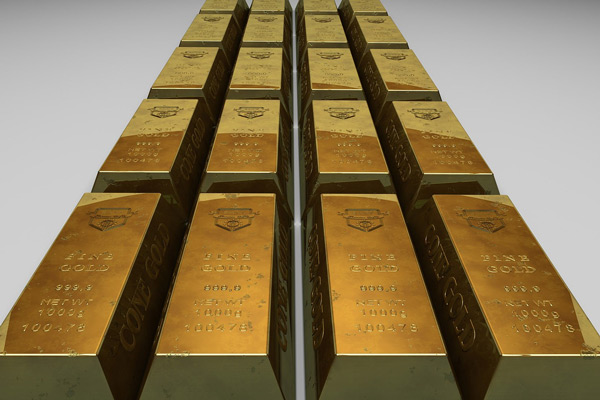
China has announced the discovery of a super-large gold deposit at the Xilaokou gold mine in Rushan, Shandong Province, according to a report by China Media Group. The deposit, estimated to contain 50 tons of gold, has been identified as the largest in the region and the most significant find of 2023 thus far.
The Shandong Provincial Bureau of Geology & Mineral Resources confirmed the discovery after eight years of prospecting efforts.
The Xilaokou gold mine contains high-quality gold ore that can be easily extracted and refined. This significant find will enable China to expand its gold reserves, supporting the nation's drive towards self-sufficiency in critical resources.
Amid regional geopolitical risks and a global economic downturn, China has been increasing its gold reserves and production.
The People's Bank of China reported that the country's gold reserves stood at 65.92 million ounces (1,869 tons) at the end of February, marking an increase of 800,000 ounces month-on-month.
Shandong is the largest gold-producing region in China, boasting the highest reserves of the precious metal. Many major gold mines in the province resumed normal operations in 2022, recovering to pre-pandemic levels while maintaining safety standards.
Last year, the Jiaojia gold mine produced over 10 tons of gold, the highest level of production in the nation, as reported by the China Gold Association (CGA).
According to CGA data in 2022, China's raw gold output reached 372.05 tons, a 13.09% increase year-on-year, including 295.42 tons of mined gold. The World Gold Council identified China as the world's largest gold producer in 2021, accounting for approximately 9% of global volume.
However, CGA also revealed that China's gold consumption experienced a 10.63% decrease year-on-year in 2022, totaling 1,001.74 tons.
Despite this decline in consumption, the discovery of the Xilaokou gold mine represents a significant opportunity for China to strengthen its position in the global gold market and bolster its national reserves.
Today in precious metals, gold prices dipped 1.67% to $1,954.70 per ounce. Silver dropped 1.20% to $22.49 per ounce. Platinum increased by 2.02% to $987.60 per ounce, while Palladium sank by 1.49% to $1,441.00 per ounce. Bitcoin rose 0.54% to $28,101.07.
How might the discovery of the massive gold deposit at the Xilaokou gold mine impact China's economy and the value of its currency in the long term?
Putin and Xi Jinping Hold Informal Talks Amid Ukraine Crisis, Strengthening Russian-Chinese Relations
Mar. 20, 2023
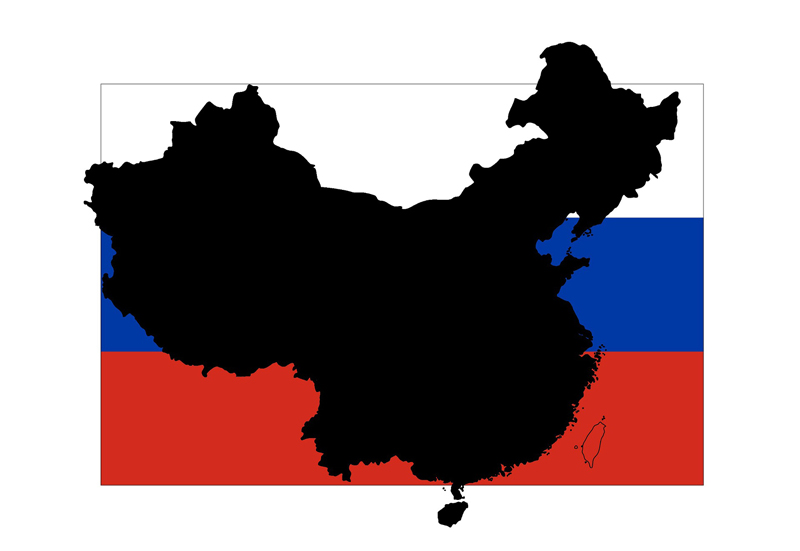
Russian President Vladimir Putin is engaging in informal talks with Chinese President Xi Jinping during a three-day visit to Moscow. The leaders will discuss key global issues, including the ongoing crisis in Ukraine, as well as strengthening Russian-Chinese relations.
The visit marks the first time Xi has traveled to Moscow since Russia initiated its military offensive in Ukraine, though the two presidents have maintained frequent contact.
The meeting is expected to culminate on Tuesday with the signing of a statement on deepening bilateral relations and expanding economic ties between the two nations.
While China has not explicitly supported Russia's actions in Ukraine, it has refrained from joining the West in condemning the military operation and imposing sanctions on Moscow.
Instead, Beijing has called for a peaceful resolution to the conflict and recently unveiled a 12-step peace plan aimed at ending hostilities.
Moscow has expressed a willingness to consider China's proposal, but it has cited several obstacles to a peaceful resolution in Ukraine. These include the insistence of Kiev and its Western allies on achieving a military victory over Russia, their staunch opposition to any form of ceasefire, and a law enacted by Ukrainian President Volodymyr Zelensky that prohibits negotiations with Russia as long as Putin remains in office.
Despite these challenges, the informal talks between Putin and Xi Jinping signal a strengthening of Russian-Chinese relations amid the global crisis. The discussions and the signing of a statement on deepening bilateral ties demonstrate the two nations' commitment to maintaining their partnership, even as tensions between Russia and the West continue to escalate.
As international dynamics shift and the Ukraine crisis unfolds, the strengthening of Russian-Chinese relations may have significant implications for global geopolitics, economic collaborations, and the pursuit of a peaceful resolution to the ongoing conflict.
Today in precious metals, gold prices dipped 1.02% to $1,980.00 per ounce. Silver dropped 0.75% to $22.68 per ounce. Platinum increased by 1.23% to $1005.30 per ounce, while Palladium sank by 1.41% to $1,448.50 per ounce. Bitcoin rose 1.49% to $28,019.56.
China Continues to Cut US Treasury Holdings Amid Economic Sanctions Threat
Mar. 17, 2023
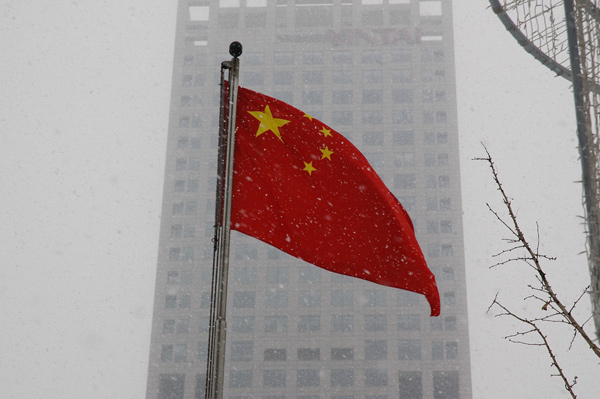
China has been consistently reducing its holdings of US treasury securities in response to the growing threat of economic sanctions from Washington. Data released by the US Treasury on Wednesday revealed that China's holdings declined to $859.4 billion in January from $867.1 billion in December.
This marks a significant decrease compared to the $3.1 billion reduction in December and the $7.8 billion reduction in November.
As the second-largest foreign holder of US government debt, China has been cutting its holdings for six consecutive months, with the figure dropping below the symbolic $1 trillion mark in April 2022.
This trend comes as Beijing aims to diversify its portfolio and lessen its dependence on the US dollar, while simultaneously promoting the broader international use of the Chinese yuan amid the threat of sanctions.
According to the South China Morning Post, China has already reduced its holdings by 34.1% over the past ten years, including a 16.6% cut in 2022 based on US data. Zhang Ming, deputy director of the Department of International Finance at the Institute of Finance and Banking, shared this information with the SCMP.
China's efforts to decrease its investments in US treasury securities highlight the ongoing tensions between the two economic superpowers. As Beijing continues to diversify its portfolio and promote the use of the Chinese yuan globally, it remains to be seen how this shift will impact the economic relationship between China and the United States.
Today in precious metals, gold prices rose 2.21% to $1,972.10 per ounce. Silver grew 2.51% to $22.48 per ounce. Platinum decreased by 1.13% to $978.10 per ounce, while Palladium dropped by 2.50% to $1,446.00 per ounce. Bitcoin fell 6.19% to $26,393.62.
European Central Bank Tightens Monetary Policy Amid Global Banking Crisis
Mar. 16, 2023

Despite the escalating global banking crisis, the European Central Bank (ECB) has decided to proceed with its plan to tighten monetary policies. In a slightly unexpected move on Thursday, the ECB raised interest rates by 50 basis points across the board.
Consequently, interest rates on the main refinancing operations, the marginal lending facility, and the deposit facility have increased to 3.00%, 3.25%, and 2.50%, respectively.
The ECB emphasized in its monetary policy statement that the current high level of uncertainty underscores the need for a data-dependent approach to policy rate decisions.
The Governing Council will base these decisions on their assessment of the inflation outlook, taking into account incoming economic and financial data, underlying inflation dynamics, and the efficacy of monetary policy transmission.
Spot gold against the euro maintained solid gains in response to the ECB's interest rate decision, despite being lower than Wednesday's highs.
The focus of the ECB remains on inflation, which is beginning to decline even as core inflation becomes more entrenched in the broader economy. The central bank's updated staff projections predict an average inflation rate of 5.3% for this year, with consumer prices anticipated to rise by 2.9% in 2024 and 2.1% by 2025.
Core inflation, on the other hand, is expected to average 4.6% this year, increasing by 2.5% in 2024 and 2.2% in 2025. In the meantime, the ECB has revised its economic forecasts upward, with eurozone GDP growth predicted to average 1% this year and 1.6% in both 2024 and 2025.
Today in precious metals, gold prices fell 0.05% to $1,926.80 per ounce. Silver dropped 1.19% to $21.77 per ounce. Platinum increased by 1.25% to $990.20 per ounce, while Palladium dipped by 4.54% to $1,461.00 per ounce. Bitcoin spiked 2.48% to $24,858.91.
What potential outcomes could the European Central Bank's decision to tighten monetary policies have on the eurozone's economic stability and inflation rates amid the ongoing global banking crisis?
Unexpected Decline in Wholesale Prices Signals Encouraging News on Inflation
Mar. 15, 2023
In February, wholesale prices experienced a slight decline, less than expected. The Labor Department reported a 0.1% decrease in the producer price index (PPI) for the month, contrary to the Dow Jones estimate of a 0.3% increase compared to the 0.3% gain in January.
Over a 12-month period, the index increased by 4.6%, which is significantly lower than the downwardly revised 5.7% level from the previous month.
When excluding food, energy, and trade, the index increased by 0.2%, a decline from January's 0.5% gain. On an annual basis, this reading showed an increase of 4.4%, consistent with January's figure.
Excluding food and energy, the PPI remained flat, as opposed to the estimated 0.4% gain.
A 0.2% drop in goods prices contributed to the overall decrease, marking a considerable pullback from January's 1.2% surge. Final demand foods fell by 2.2%, and energy declined by 0.2%.
The majority of the decline in goods prices resulted from a 36.1% plummet in chicken egg prices, which had significantly increased over the past year.
On the same day, the Commerce Department revealed that retail sales dropped by 0.4% in February, based on data not adjusted for inflation. This figure met expectations and was primarily driven by a 1.8% decrease in auto sales.
Food services and drinking establishments, which had experienced strong sales in the past year, fell by 2.2% for the month, although they were still up 15.3% on an annual basis. Furniture and home furnishing stores declined by 2.5%, while miscellaneous retailers saw a 1.8% drop.
Furthermore, the Empire State Manufacturing survey for March, an indicator of activity in the New York region, recorded a -24.6 reading, down 19 points from the previous month. This reading represents the percentage difference between companies reporting expansion and those reporting contractions.
The Dow Jones estimate predicted a -7.8 level. The significant drop resulted from steep declines in new orders, shipments, and inventories. Hiring and the prices index also saw minor reductions.
This news follows the Labor Department's announcement that consumer prices rose by 0.4% in February, bringing the annual inflation rate to 6%. Although this figure is notably higher than the 2% level the Fed considers ideal, the 12-month CPI rate was the lowest since September 2021.
Despite the recent decrease in the annual inflation rate and ongoing banking industry turmoil, financial markets still anticipate the Federal Reserve raising interest rates at its meeting next week.
Market pricing suggests a 0.25 percentage point increase in the federal funds rate, elevating the benchmark borrowing level to a target range of 4.75%-5%.
However, futures contracts on Wednesday morning also implied a peak, or terminal, rate of around 4.77%, indicating that the March increase may be the last before the Fed shifts away from the tightening regime that started a year ago.
Today in precious metals, gold prices rose 1.54% to $1,942.10 per ounce. Silver grew 0.92% to $22.12 per ounce. Platinum decreased by 1.83% to $984.10 per ounce, while Palladium dropped by 3.71% to $1,506.00 per ounce. Bitcoin fell 6.84% to $24,167.88.
What potential outcomes could emerge from the Federal Reserve's upcoming decision on interest rates, considering the recent decline in wholesale prices and its impact on inflation?
Mega Banks Reap Benefits as Smaller Counterparts Struggle
Mar. 14, 2023
Over the weekend, amid populist outrage over the bailout of Silicon Valley Bank (SVB), which some argue promotes moral hazard, smaller banks experienced a surge in deposit outflows. According to Bloomberg, JPMorgan Chase alone received billions of dollars in recent days, and Bank of America, Citigroup, and Wells Fargo are also seeing higher-than-usual volume.
Many small banks nearly failed as depositors, fearing a spreading crisis, opted for the perceived safety of larger institutions. Michael Imerman, an assistant professor at the University of California Irvine’s business school, told Bloomberg, “The top six banks in the US are and have been too big to fail, the financial crisis over 10 years ago demonstrated that. So it’s safer to go with a name with higher degree of certainty.”
Smaller banks' deposits are getting drained, leading to what some executives have called the biggest movement of deposits in more than a decade. JPMorgan, Citigroup, and other large financial institutions are accommodating customers by speeding up the normal account sign-up or “onboarding” process.
Despite the Fed, TSY, and FDIC bailout plan aimed at stabilizing depositor confidence, depositors have continued moving balances into larger banks and money market funds, especially when balances exceed the $250,000 threshold guaranteed by federal insurance. The rush of deposit transfers from SVB and other regional lenders to large banks has not abated.
This has raised questions about the role of large banks in the recent turmoil. JPMorgan, for example, was reported to be actively soliciting clients of SVB, knowing that deposit flight could lead to the collapse of a bank with limited cash to satisfy deposit demands. In the end, JPMorgan emerged as a clear and immediate benefactor of SVB's collapse, with its stock price rising.
The failure of smaller banks has allowed mega banks like JPM and BofA to not only take advantage of the Fed's new bailout facility, the BTFP, but also to strengthen their depositor bases and increase their profits. This has led some to speculate that the events surrounding the smaller banks' struggles may have been planned from the start to benefit their larger counterparts.
Inflation Rises in February but in Line with Expectations
Mar. 14, 2023

Inflation rose in February but was in line with expectations, likely keeping the Federal Reserve on track for another interest rate hike next week despite recent banking industry turmoil.
The consumer price index increased 0.4% for the month, putting the annual inflation rate at 6%, the Labor Department reported Tuesday. Both readings were exactly in line with Dow Jones estimates.
Excluding volatile food and energy prices, core CPI rose 0.5% in February and 5.5% on a 12-month basis. The monthly reading was slightly ahead of the 0.4% estimate, but the annual level was in line.
The recent inflation figures were viewed as somewhat reassuring by the markets, with stocks gaining following the release, and the Dow Jones Industrial Average rising more than 300 points in early trading.
Treasury yields, which plummeted Monday amid fears over the banking industry’s health, rebounded solidly, pushing the policy-sensitive 2-year note up 30 basis points to 4.33%.
Heading into the release, markets had widely expected the Fed to approve another 0.25 percentage point increase to its benchmark federal funds rate. That probability rose following the CPI report, with traders now pricing in about an 85% chance that the Fed will hike the rate by a quarter point, according to a CME Group estimate.
A decrease in energy costs helped keep the headline CPI reading in check. The sector fell 0.6% for the month, bringing the year-over-year increase down to 5.2%. The biggest mover for energy was a 7.9% decline in fuel oil prices.
Food prices rose 0.4% and 9.5%, respectively. Meat, poultry, fish, and egg prices fell 0.1% for the month, the first time that the index has retreated since December 2021. Eggs in particular tumbled 6.7%, though they were still up 55.4% from a year ago.
Shelter costs, which comprise about one-third of the index’s weighting, jumped 0.8%, bringing the annual gain up to 8.1%. Fed officials largely expect housing and related costs such as rent to slow over the course of the year.
Because of the housing expectations, Fed officials have turned to “super-core” inflation as part of their toolkit. That entails core services inflation minus housing, a cohort that increased 0.2% in February and 3.7% from a year ago, according to CNBC calculations. The Fed targets inflation at 2%.
Used vehicle prices, a key component when inflation first began surging in 2021, fell 2.8% in February and are now down 13.6% on a 12-month basis. Apparel rose 0.8%, while medical care services costs decreased 0.7% for the month.
The CPI measures a broad basket of goods and services and is one of several key measures the Fed uses when formulating monetary policy. The report along with Wednesday’s producer price index will be the last inflation-related data points policymakers will see before they meet on March 21-22.
Today in precious metals, gold prices fell 0.39% to $1,915.20 per ounce. Silver grew 0.57% to $22.16 per ounce. Platinum decreased by 1.00% to $1007.80 per ounce, while Palladium jumped by 2.68% to $1,565.00 per ounce. Bitcoin spiked 6.84% to $25,914.69.
What new measures will the Federal Reserve take to address the ongoing inflation problem?
Regional Banks Stock Plummet as Silicon Valley Bank Failure Sparks Deposit Flight Contagion
Mar. 13, 2023
On Monday, bank shares plummeted, led by First Republic Bank, despite regulators’ announcement of backing all depositors in failed Silicon Valley Bank and Signature Bank. The FDIC also offered additional funding to other troubled institutions.
First Republic Bank’s shares dropped by 65%, while PacWest Bancorp and Western Alliance Bancorp declined by 42% and over 70%, respectively. Zions Bancorporation and KeyCorp also saw significant drops in their shares.
Other financial firms also suffered losses, as Bank of America lost 6%, and Charles Schwab was under pressure. The declines occurred despite the Federal Reserve's move to create a new Bank Term Funding Program that would offer loans for up to a year to banks in exchange for high-quality collateral like Treasuries. The SPDR S&P Regional Banking ETF lost more than 7% in pre-market trading on Monday.
The slide for regional bank stocks on Monday follows the rush of withdrawals from SVB Financial that forced the bank to close. The primary issue was SVB’s high percentage of uninsured deposits, with the majority of the bank’s customers not guaranteed to get their money back before the regulatory moves over the weekend.
Although SVB had an unusually high percentage of uninsured deposits, there are other mid-sized banks that could be at risk of large withdrawals. Citi analyst Keith Horowitz noted that regionals with less diversified and large uninsured deposit bases are at risk of deposit flight, but not at the speed of SVB.
While First Republic is not as concentrated in one industry as SVB was with technology, it does tend to cater to businesses and wealthy individuals who tend to have large uninsured deposits.
The bank announced on Sunday that it had received additional liquidity from the Federal Reserve and JPMorgan Chase, raising its unused liquidity to $70 billion, before any funding it could get from the new Fed facility.
Today in precious metals, gold prices rose 2.36% to $1,922.50 per ounce. Silver grew 6.41% to $22.19 per ounce. Platinum increased by 4.47% to $1023.00 per ounce, while Palladium jumped by 8.65% to $1,542.00 per ounce. Bitcoin spiked 8.15% to $24,022.30.
What impact will the collapse of these banks have on the broader financial industry and the economy as a whole?
Silicon Valley Bank Closed by Regulators, FDIC Takes Control to Protect Insured Deposits
Mar. 10, 2023
In a move that has sent shockwaves through the financial world, Silicon Valley Bank has been closed down by regulators, with the Federal Deposit Insurance Corporation (FDIC) named as the receiver. The decision was made by the California Department of Financial Protection and Innovation, which took control of the bank’s deposits.
The FDIC has created the Deposit Insurance National Bank of Santa Clara to hold the insured deposits from SVB. The agency has said that insured depositors will have access to their deposits no later than Monday morning, and the bank’s branch offices will also reopen at that time.
The FDIC’s standard insurance covers up to $250,000 per depositor, per bank. It is unclear how larger accounts or credit lines for companies will be impacted by the closure.
The news of SVB’s closure has caused concern among customers and investors, as the bank has been a well-known and trusted institution in the Silicon Valley area. It has been a key player in the technology industry, providing banking and financial services to tech startups and venture capitalists.
The reasons for the closure of SVB have not yet been disclosed, but it is likely that regulators were concerned about the bank’s financial stability and ability to meet its obligations. The closure comes at a time when the banking industry is under increased scrutiny.
Today in precious metals, gold prices rose 1.70% to $1,870.40 per ounce. Silver grew 2.04% to $20.68 per ounce. Platinum increased by 1.59% to $977.70 per ounce, while Palladium jumped by 0.79% to $1,419.00 per ounce. Bitcoin fell 1.93% to $19,969.40.
What are the potential impacts of the closure of Silicon Valley Bank on its customers, investors, and the broader financial industry?
Idaho State House Approves Bill to Protect State Funds with Gold and Silver Reserves
Mar. 09, 2023
Idaho has taken a bold step in protecting its state funds from the risks of inflation and financial turmoil. The Idaho State House recently passed House Bill 180, the Idaho Sound Money Reserves Act, with a vote of 40-29.
The bill will enable the State Treasurer to hold some portion of state funds in physical gold and silver, which will help to secure state assets against the risks of inflation and financial turmoil or to achieve capital gains as measured in devaluing Federal Reserve Notes.
The bill was introduced by Representative Barbara Ehardt (R-Idaho Falls) and Senator Phil Hart (R-Kellogg) and has received support from Idahoans and groups such as the Sound Money Defense League. The bill permits – but does not require – the State Treasurer to hold physical gold and silver.
The Idaho State Treasurer currently has very few options for holding, managing, and investing Idaho’s “idle moneys.” Due to statutory constraints, Idaho's reserves are primarily invested in low-yield debt papers that pose counterparty risks, and their value is eroded by inflation. This leaves the state vulnerable to the risks of inflation and financial turmoil.
Other states, such as Ohio, Texas, West Virginia, Mississippi, Maine, Tennessee, Montana, and Missouri, are also considering bills with provisions similar to Idaho's HB 180. This demonstrates that states are becoming increasingly concerned about rising government debts and Federal Reserve money printing and are seeking ways to protect their assets.
The bill does not provide permission to purchase financial instruments such as stocks, futures contracts, or other proxies based on gold. There are a minimum of five depositories in the area that are qualified to hold the gold and silver of Idaho.
It is prudent for the State Treasurer to have options to hedge against the accelerating inflation that’s been foisted upon savers, wage-earners, retirees, and the Gem State itself by short-sighted politicians and central bankers in Washington, DC. A failure to pass HB 180 could be costly. Idaho's large pile of debt paper has already been ignited by the spark of inflation.
Ultimately, House Bill 180 is a significant step towards protecting Idaho's state funds from the risks of inflation and financial turmoil. It is