View Charts
Gold Purity Standards Around the World: What Buyers Should Know
 0
0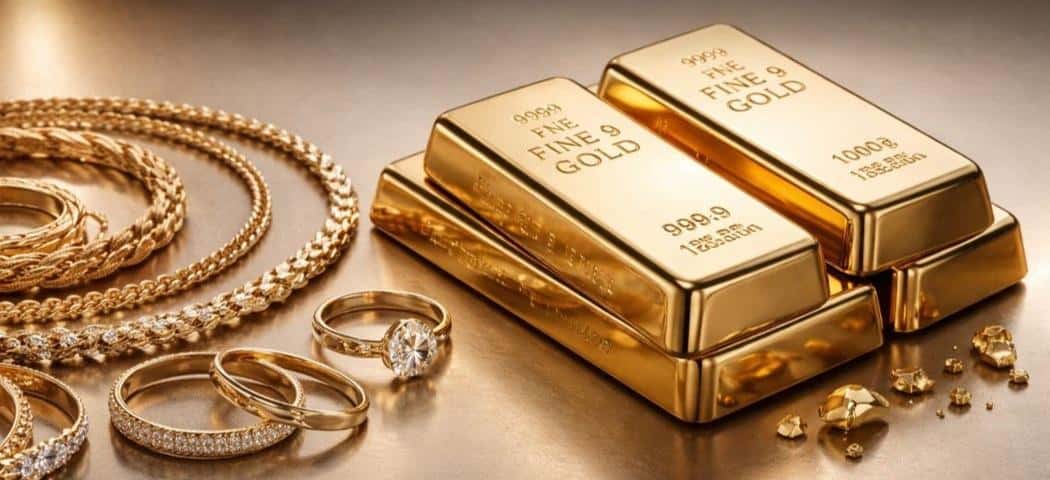
Understanding Global Gold Purity Standards in Jewelry and Investment
Gold has been prized for thousands of years, yet the standards that define gold purity vary widely across cultures and markets. While gold purity is measured universally using karats or fineness, what qualifies as “standard” gold jewelry differs significantly from country to country. For investors, collectors, and jewelry buyers alike, understanding these differences is essential—not only for appreciation and wearability, but also for long-term value and resale considerations.
As global demand for gold continues to rise, knowing how gold purity standards work internationally can help buyers make more informed decisions.
Why Gold Purity Standards Differ Globally
Gold purity standards are shaped by a combination of cultural tradition, durability needs, regulatory frameworks, and historical usage. In some regions, gold jewelry is primarily decorative. In others, it functions as a form of long-term wealth storage.
This divergence explains why 14K gold is common in the United States, while 22K or even 24K gold dominates markets in India, the Middle East, and parts of Asia. Each standard reflects how gold is worn, traded, and valued within that society.
Common Gold Purity Standards by Region
-
United States and Canada
Gold jewelry in North America typically ranges from 10K to 18K, with 14K gold being the most popular. The lower karat content increases durability, making it suitable for everyday wear. U.S. law permits gold jewelry as low as 10K (41.7% gold).
-
Europe
Most European countries favor 14K and 18K gold, with southern European markets such as Italy and France showing a strong preference for 18K. Many countries operate strict hallmarking systems that certify purity and origin.
-
Middle East
In countries such as the UAE, Saudi Arabia, and Turkey, 21K and 22K gold jewelry is common. Jewelry in these regions is often viewed as a portable store of wealth, making higher purity desirable.
-
India and South Asia
India is one of the world’s largest consumers of gold, with 22K gold considered the standard for jewelry. Cultural and religious traditions strongly influence purity preferences, and hallmarking is regulated by the Bureau of Indian Standards (BIS).
-
China
Chinese gold jewelry is often made from 24K gold (99.9% purity). Jewelry here functions primarily as savings rather than daily adornment, which explains the preference for maximum purity despite reduced durability.
How Gold Hallmarks Differ Internationally
Gold hallmarks are official markings that certify purity, manufacturer, and sometimes origin. These marks vary significantly across countries.
-
United States: Hallmarking is largely voluntary, with purity stamps such as “14K” or “18K” applied by manufacturers.
-
Europe: Countries like the UK, France, and Italy require government-regulated hallmarking, often including multiple symbols indicating purity, assay office, and maker.
-
India: BIS hallmarking includes a purity mark, jeweler identification, and year of certification.
-
Middle East: Hallmarks typically display fineness rather than karat and are enforced by local authorities.
For buyers, hallmarks provide reassurance—but understanding regional differences is key when buying internationally.
Jewelry Gold vs. gold bullion: Key Differences
While gold jewelry and bullion both contain precious metal, their purposes—and value structures—are very different.
Gold jewelry includes additional costs such as craftsmanship, design, branding, and retail markup. Even high-purity jewelry often sells above its intrinsic gold value.
Gold bullion, such as gold bars and coins, is produced specifically for investment. It is valued primarily on gold spot price, weight, and purity, with minimal premiums relative to jewelry.
For investors focused on price transparency and liquidity, gold bullion offers a more direct way to gain exposure to gold’s intrinsic value.
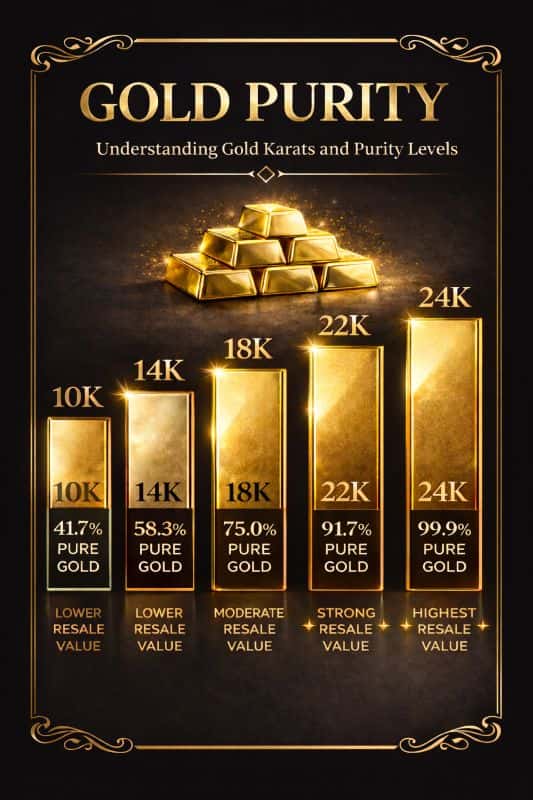
How Karat Affects Gold Resale Value
Gold resale value depends heavily on purity. Higher-karat gold contains more actual gold per gram, which generally results in higher melt value.
-
24K gold: Highest resale value relative to weight
-
22K gold: Strong resale, especially in Asian and Middle Eastern markets
-
18K gold: Moderate resale value
-
14K and 10K gold: Lower melt value due to higher alloy content
Jewelry resale prices are typically based on melt value rather than original retail price, meaning design premiums are often lost. gold bullion, by contrast, tends to retain value more efficiently due to standardized purity and global recognition.
Durability vs. Purity: Choosing the Right Gold
Higher purity gold is softer and more prone to scratching or bending. Lower karat gold includes alloy metals that improve durability, making it more suitable for daily wear.
This trade-off explains why cultures focused on adornment prefer lower karats, while those emphasizing wealth preservation favor higher purity gold.
What Buyers and Investors Should Consider
When choosing gold, buyers should evaluate:
-
Intended use (wear vs. storage)
-
Desired durability
-
Purity and hallmark credibility
-
Resale and liquidity expectations
Understanding global gold purity standards helps ensure that purchases align with long-term goals—whether for investment, collection, or personal enjoyment.
A Global Perspective on Gold Value
There is no universal gold jewelry standard, but there is a universal appreciation for gold’s enduring value. Differences in purity, hallmarking, and cultural preference reflect how societies interact with gold—but the underlying principle remains the same.
Whether purchasing gold jewelry or gold bullion, informed buyers who understand purity standards, hallmarks, and resale dynamics are better positioned to protect and preserve value in an increasingly global marketplace.
Related reading you may find interesting:
Why Chinese New Year Drives Global Gold Demand and Prices