View Charts
Gold in 2011: The Historic Rally Above $1,900
 0
0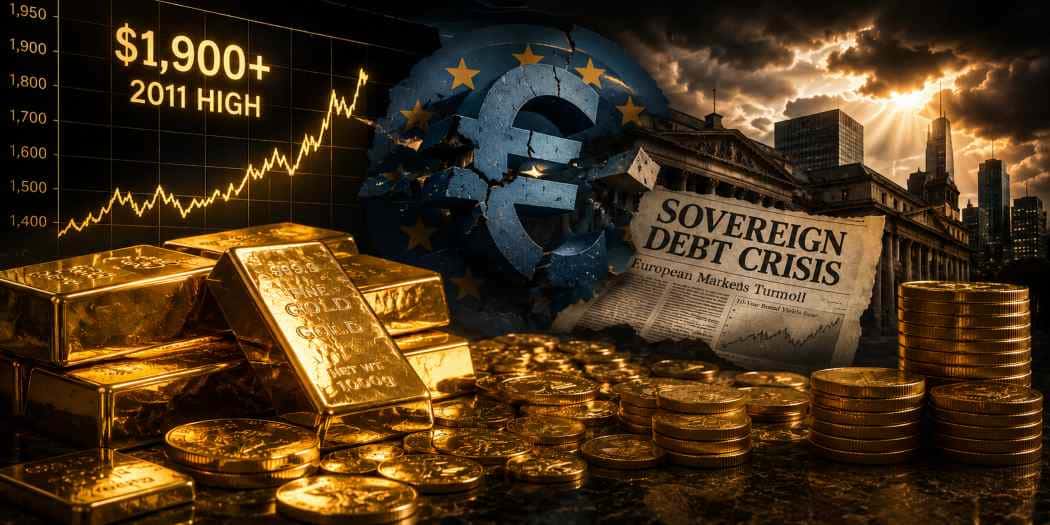
The European Debt Crisis Helped Push Gold Into Financial History
Gold’s explosive rally in 2011 marked one of the most important moments in modern precious metals history. As fears surrounding sovereign debt, banking stability, and currency confidence intensified across Europe and the United States, investors rushed toward safe-haven assets at an unprecedented pace. That surge in defensive positioning ultimately pushed the spot price of gold above $1,900 per ounce for the first time ever, establishing a major psychological and structural milestone for the global bullion market.
More than a decade later, the events that fueled the 2011 rally continue shaping how investors view gold during periods of financial stress. With sovereign debt levels once again climbing globally, inflation concerns returning, and geopolitical instability increasing across multiple regions, the lessons from 2011 remain highly relevant to today’s precious metals environment.
Sovereign Debt Panic Became the Core Catalyst Behind Gold’s Surge
The primary force driving gold higher in 2011 was the rapidly escalating European sovereign debt crisis.
Several eurozone countries—including:
-
Greece
-
Portugal
-
Ireland
-
Spain
-
Italy
faced mounting concerns regarding unsustainable debt burdens and weakening government finances. Investors increasingly questioned whether parts of the eurozone financial system could remain stable without massive intervention from the European Central Bank and international lenders.
As bond yields surged and bailout negotiations dominated headlines, confidence in traditional financial assets weakened significantly.
Gold benefited directly from that uncertainty because investors viewed physical bullion as:
-
politically neutral
-
globally liquid
-
independent of sovereign default risk
-
resistant to currency instability
The deeper the European debt crisis became, the stronger gold demand accelerated.
Gold Crossed $1,900 During a Historic Flight to Safety
In August and September 2011, gold prices experienced one of the fastest major rallies in modern commodities history.
Spot gold briefly surged above:
-
$1,900 per ounce
-
reaching intraday highs near $1,920
at the peak of investor panic.
The rally reflected a broad global shift away from risk-sensitive assets and toward defensive stores of value.
Several major developments intensified the move:
-
fears of Greek default
-
banking-system contagion concerns
-
downgrades of sovereign debt
-
slowing global economic growth
-
instability within European financial institutions
At the same time, investors were also reacting to unprecedented monetary stimulus from central banks following the 2008 financial crisis.
The combination of debt instability and aggressive monetary expansion created a near-perfect environment for gold demand.
The U.S. Credit Downgrade Intensified Bullion Momentum
While Europe remained the center of the debt crisis, the United States also contributed significantly to gold’s breakout rally.
In August 2011, Standard & Poor’s downgraded the U.S. sovereign credit rating from AAA for the first time in history following intense political conflict surrounding the federal debt ceiling.
That downgrade shocked global markets.
Although U.S. Treasuries remained highly liquid, the downgrade amplified fears surrounding:
-
sovereign debt sustainability
-
government deficits
-
currency debasement
-
long-term fiscal stability
Gold immediately benefited from those concerns because many investors viewed bullion as one of the few monetary assets free from direct government liability.
The simultaneous instability in both Europe and the United States helped create extraordinary safe-haven demand.
Central Bank Policy Played a Major Supporting Role
Gold’s rally above $1,900 did not occur solely because of debt fears. Monetary policy conditions were equally important.
Following the 2008 global financial crisis, central banks around the world implemented:
-
near-zero interest rates
-
quantitative easing programs
-
liquidity injections
-
aggressive balance-sheet expansion
Those policies increased concerns about long-term inflation and fiat currency purchasing power.
Real interest rates remained deeply negative in many markets, reducing the opportunity cost of holding non-yielding assets like gold.
As investors searched for monetary protection against:
-
currency dilution
-
debt monetization
-
financial-system fragility
gold increasingly became viewed as a strategic macro hedge rather than simply a commodity.
ETF Demand Exploded During the 2011 Bull Market
Institutional investment demand accelerated sharply during the rally through gold-backed exchange-traded funds.
Major gold ETFs experienced massive inflows as:
-
hedge funds
-
institutional asset managers
-
pension funds
-
retail investors
all increased exposure to bullion simultaneously.
SPDR Gold Shares (GLD), one of the largest gold ETFs globally, saw enormous growth in assets under management during this period as investors sought rapid exposure to physical gold pricing without directly purchasing bullion bars or coins.
The ETF boom dramatically increased gold’s accessibility to mainstream investors and helped amplify momentum during the rally.
This period marked one of the first times gold became fully integrated into large-scale institutional portfolio allocation strategies.
Physical Bullion Demand Also Surged Worldwide
While ETF demand attracted headlines, physical gold buying also expanded significantly during the crisis.
Investors increasingly purchased:
-
gold bars
-
sovereign bullion coins
-
allocated vault holdings
-
private precious metals storage
Safe-haven demand surged globally as concerns surrounding banks and currencies intensified.
Popular bullion products during the period included:
-
Canadian Gold Maple Leafs
-
South African Krugerrands
-
gold bars from major refiners
Retail investors viewed physical gold as tangible financial insurance during a period where trust in traditional financial institutions weakened considerably.
That combination of institutional and retail demand created exceptionally strong market momentum.
The 2011 Rally Changed Gold’s Reputation Permanently
Before 2011, gold was still viewed by many mainstream investors as a niche or speculative asset.
The rally above $1,900 fundamentally changed that perception.
Gold increasingly became recognized as:
-
a macroeconomic hedge
-
a portfolio diversifier
-
a reserve asset
-
an inflation defense tool
-
a geopolitical safe haven
Central banks themselves also began shifting toward net gold purchases during this broader period, helping reinforce bullion’s monetary relevance globally.
The rally demonstrated that gold could respond aggressively during periods of:
-
sovereign instability
-
monetary expansion
-
financial-system stress
-
geopolitical uncertainty
That reputation remains highly influential today.
Why Gold Pulled Back After Reaching Its Peak
After reaching historic highs in 2011, gold prices eventually entered a multiyear correction phase.
Several factors contributed to the pullback:
-
improving market confidence
-
stabilization within Europe
-
reduced immediate crisis fears
-
stronger equity markets
-
expectations for tighter monetary policy
As investor panic faded, safe-haven demand gradually cooled.
At the same time, some speculative positioning unwound after the extraordinary pace of the rally.
Despite the correction, however, gold maintained a substantially higher long-term price floor compared to pre-crisis levels.
Importantly, the 2011 breakout permanently shifted institutional awareness regarding gold’s role within modern financial markets.
The European Debt Crisis Still Offers Lessons for Today
The events surrounding gold’s 2011 rally remain highly relevant because many underlying risks still exist within today’s global economy.
Current market concerns include:
-
elevated sovereign debt levels
-
persistent inflation pressure
-
geopolitical fragmentation
-
central-bank balance-sheet expansion
-
fiscal instability
-
currency volatility
Many of the same structural themes that supported gold in 2011 continue appearing across modern financial markets.
Investors today are once again debating:
-
monetary credibility
-
long-term debt sustainability
-
reserve diversification
-
inflation protection
Gold’s historic rally during the European debt crisis serves as a reminder that bullion often performs strongest when confidence in financial systems weakens simultaneously across multiple regions.
Modern Investors Continue Watching the $1,900 Level
Although gold has since traded well beyond the original 2011 highs, the first breakout above $1,900 remains symbolically important within the precious metals market.
That level represented more than just a price milestone. It marked:
-
a shift in institutional perception
-
the globalization of gold investing
-
the rise of ETF-driven bullion demand
-
growing distrust of sovereign debt systems
For modern investors, the 2011 rally demonstrates how quickly gold can reprice during periods of accelerating macroeconomic instability.
As central banks continue accumulating reserves and global debt levels remain historically elevated, the conditions that once drove gold through $1,900 may continue influencing long-term market behavior for years ahead.