View Charts
Fed Holds Rates Steady: What the First 2026 Decision Signals
 0
0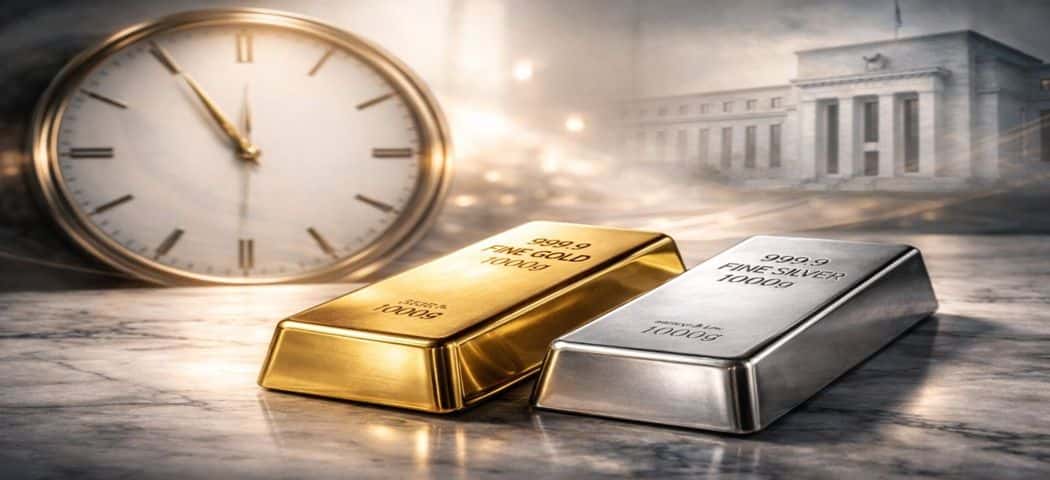
A Critical Starting Point for Monetary Policy in 2026
The Federal Reserve’s January 28, 2026 policy decision marked the first FOMC meeting of the year, setting an important tone for monetary policy in the months ahead. By holding the federal funds rate steady at 3.50%–3.75%, the Fed signaled caution, patience, and continued concern over inflation—even as parts of the economy show signs of cooling.
For investors tracking the spot prices of precious metals and cryptocurrency markets, this decision offers valuable insight into how the Fed views economic risks, inflation persistence, and the policy path for 2026.
Why the Fed Chose to Hold Rates Steady
According to the FOMC statement, economic activity continues to expand at a solid pace, while labor market conditions show signs of stabilization. Job gains have moderated, and unemployment appears to be leveling off—suggesting the Fed’s prior tightening is having an effect without triggering a sharp downturn.
However, inflation remains “somewhat elevated,” a phrase that carries weight in Fed communication. This language indicates that price pressures are still above the central bank’s 2% target, limiting its ability to pivot toward rate cuts.
In short, the Fed sees progress, but not enough certainty to change course.
Was This Decision Expected by Markets?
Yes—financial markets largely anticipated a pause at this meeting. Leading into the decision, futures markets and analyst commentary suggested that the Fed would adopt a wait-and-see approach, allowing more time to evaluate incoming data.
Because the decision aligned with expectations, immediate market reactions were muted. However, the tone of the statement—particularly its emphasis on elevated uncertainty and data dependence—carries longer-term implications for asset prices.
What This Signals About Fed Policy in 2026
The January decision suggests that 2026 is shaping up to be a year of cautious flexibility, rather than aggressive easing or renewed tightening. The Fed emphasized that it remains prepared to adjust policy if risks emerge that threaten its dual mandate of maximum employment and price stability.
This approach implies:
-
No rush to cut rates while inflation remains above target
-
A strong reliance on incoming inflation and labor data
-
A higher tolerance for uncertainty before making policy shifts
For investors, this reinforces the idea that real interest rates may remain constrained, an environment that historically supports hard assets.
Implications for the Price of Gold and Price of Silver
A steady-rate decision paired with lingering inflation concerns is generally constructive for precious metals. Gold and silver tend to benefit when real yields are uncertain and confidence in long-term monetary stability is challenged.
-
The spot price of gold often strengthens as investors seek protection against inflation and currency erosion.
-
The silver spot price can benefit from both monetary demand and industrial usage, particularly when economic growth remains positive but inflation persists.
While short-term volatility is always possible, the broader policy backdrop remains supportive for precious metals as strategic portfolio hedges.
How Crypto Markets May React
Cryptocurrencies such as Bitcoin and Ethereum often respond to shifts in liquidity expectations. A Fed pause removes immediate tightening pressure, which can be supportive for digital assets over time.
However, the absence of a clear signal toward rate cuts may limit explosive upside in the near term. Crypto markets are likely to remain data-sensitive, reacting to inflation prints, employment reports, and broader risk sentiment throughout 2026.
What This Means for Investors
For investors, the Fed’s first decision of 2026 reinforces several key themes:
-
Inflation remains a central risk factor
-
Monetary policy is likely to remain restrictive relative to past cycles
-
Diversification into real assets remains relevant
Gold and silver continue to serve as portfolio stabilizers in an environment where policy uncertainty and inflation pressures coexist. Cryptocurrencies may complement this strategy for investors comfortable with higher volatility.
Looking Ahead: The Fed’s 2026 Outlook
The Fed’s emphasis on flexibility suggests that policy decisions in 2026 will be incremental, not abrupt. Rate cuts remain possible later in the year if inflation meaningfully cools, but the bar appears high.
Until then, markets are likely to operate in a landscape defined by:
-
Persistent inflation uncertainty
-
Moderate economic growth
-
Heightened sensitivity to data and Fed communication
A Measured Start to a Complex Year
The Federal Reserve’s decision to hold rates steady at its first meeting of 2026 reflects a central bank navigating a complex balance between progress and persistence. Inflation is easing, but not yet defeated. Growth is slowing, but not stalling.
For precious metals investors, this environment underscores why gold and silver continue to play a vital role in long-term strategies. As monetary policy remains cautious and data-driven, tangible assets remain a compelling counterweight in an evolving financial landscape.
Related reading you may find interesting:
Gold Tops $5,500 as Silver Soars Beyond $120: What’s Driving the Surge