View Charts
Elon Musk and Senator Rand Paul Call for a Fort Knox Gold Audit
 0
0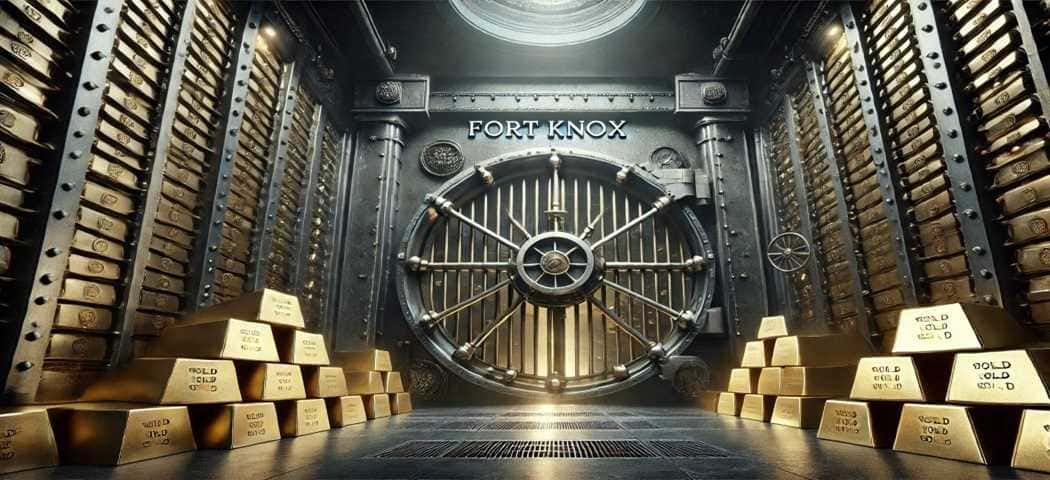
Renewed Calls for Transparency in U.S. Gold Reserves
Fort Knox, home to a substantial portion of the United States' gold reserves, has long been a subject of speculation and secrecy. The idea of a full audit to verify its holdings has been debated for decades, but recent discussions on social media have reignited public interest. Entrepreneur Elon Musk and Senator Rand Paul have added their voices to the growing calls for an official inspection of the bullion depository, arguing that transparency is key to ensuring public trust in the government's financial management.
With billions of dollars' worth of gold stored behind one of the most secure vaults in the world, questions about its authenticity and accessibility persist. A comprehensive audit could provide definitive answers about the nation's gold holdings, reinforcing confidence in the stability of U.S. reserves. But is such an audit possible, and would Musk himself have the authority to lead such an effort? Let’s explore the unfolding discussion.
Social Media Sparks Debate Over a Fort Knox Audit
The latest call for an audit began on X (formerly Twitter) when the financial news account @zerohedge suggested that Elon Musk should personally inspect the 4,580 tons of gold stored at Fort Knox. The post noted that the last public viewing of the vaults was in 1974, leaving nearly five decades without independent verification. Musk responded to the suggestion with “Surely it’s reviewed at least every year?”, implying surprise that such a valuable national asset would go unchecked for so long.
However, it was Senator Rand Paul who truly escalated the conversation by directly replying, “Nope. Let’s do it.” With this brief but firm statement, Paul signaled his support for increased transparency regarding the nation's gold holdings. The exchange quickly gained traction, with thousands of users joining the debate and questioning why an audit had not been conducted in recent years.
As public interest surges, the discussion raises the bigger question: What do we actually know about Fort Knox’s auditing history?
Historical Context of Fort Knox Audits
The United States Bullion Depository, commonly referred to as Fort Knox, is one of the most heavily guarded facilities in the world. Built in 1936 during the Great Depression, it was designed to securely store a significant portion of the nation's gold reserves at a time when the U.S. was still on the gold standard.
However, despite being one of the most secure locations globally, the last widely publicized inspection of Fort Knox occurred in 1974. A group of journalists and congressmen were granted limited access to the facility to confirm the presence of gold. But critics argue this event was little more than a publicity stunt, as it failed to provide any formal, independent verification of the full reserves. Since then, comprehensive audits have been scarce, leading to decades of speculation and conspiracy theories about what truly lies behind the vault doors.
While the U.S. Department of the Treasury claims that periodic internal audits occur, these reports lack the transparency and external oversight necessary to silence skeptics. The absence of recent third-party audits fuels speculation that some, or all, of the gold reserves may have been relocated, leased out, or even depleted.
With inflation concerns rising and government trust declining, renewed demands for transparency are growing stronger. But what authority would Elon Musk have in such a review?
Does Elon Musk have the Authority to Initiate an Audit?
Musk’s involvement in discussions about government transparency and financial efficiency is not coincidental. As the head of the Department of Government Efficiency (DOGE)—a task force created by President Donald Trump—he has been granted the authority to identify inefficiencies, reduce wasteful spending, and ensure government assets are properly accounted for.
Given this role, Musk theoretically could initiate or push for an audit of Fort Knox as part of his mission to enhance transparency within federal agencies. His direct oversight of government spending and assets makes him a strong advocate for ensuring that the nation’s gold reserves are properly accounted for.
While Musk does not hold direct power over the U.S. Mint or Department of the Treasury, his influence could place additional pressure on lawmakers and government officials to conduct a formal, third-party audit of Fort Knox. His involvement—paired with growing public support—may create momentum for the first independent review of Fort Knox’s gold in over 50 years.
The Case for Auditing Fort Knox
The renewed debate over whether the U.S. gold reserves are properly accounted for raises several key arguments in favor of an audit:
-
Transparency and Public Trust – The American people deserve to know whether their gold reserves are fully intact and properly safeguarded.
-
National Financial Security – If the gold is indeed present, an audit could reinforce confidence in the U.S. economy and prevent speculation that weakens trust in government stability.
-
Accountability and Efficiency – As part of broader financial oversight, ensuring accurate documentation of gold reserves would align with responsible fiscal management.
-
Addressing Conspiracy Theories – For decades, rumors have circulated that the gold at Fort Knox is partially missing, secretly sold, or otherwise unaccounted for. A third-party audit could definitively prove or disprove these claims.
At a time when gold demand is surging and inflation remains a concern, the confirmation of the 4,580 tons of gold stored at Fort Knox could be a crucial reassurance for both U.S. citizens and global markets.
The Future of a Fort Knox Audit
The exchange between Elon Musk and Senator Rand Paul has reignited one of the most enduring financial debates in American history. While the U.S. government insists that gold audits are conducted internally, the lack of transparency continues to raise doubts among investors, economists, and lawmakers.
If Musk and Paul push forward, they could set in motion the first full-scale, independently verified audit of Fort Knox in more than 50 years. With growing public demand for government accountability, an audit may not only confirm the presence of the nation’s gold reserves but also strengthen confidence in the financial system.
For now, the question remains: Will the U.S. government allow one of its most secretive institutions to undergo an independent review? Or will the mystery of Fort Knox’s gold remain locked away, both literally and figuratively, for another generation?