View Charts

Coin Restrike vs. Reproduction: What Does COPY Mean?
 0
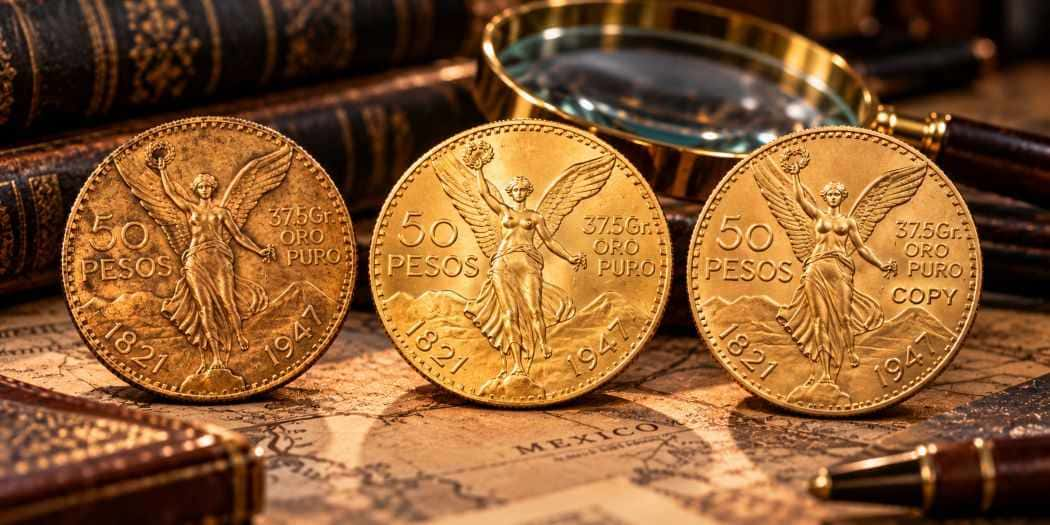
Why Identical-Looking Coins Can Have Different Values
Two coins can display the same historic design and date yet have very different origins, values and legal classifications. One might be an original issue, another an authorized restrike, and a third a modern reproduction marked COPY. For collectors, understanding those distinctions is essential before paying a premium for what appears to be a rare coin.
The terms restrike, reproduction, replica and copy are sometimes used loosely in listings, but they are not interchangeable. Who produced the piece, when it was made and how it is represented to buyers can matter more than its appearance.
What Makes a Coin a Restrike?
A restrike is produced after a coin's original issue, using its historic design. Under the traditional numismatic definition, restrikes are struck from original dies at a later date. The United States Mint's glossary uses that narrower definition, although bullion dealers also commonly apply the term to authorized later issues made with replacement dies. This distinction is important because a restrike can be a genuine mint product without being an original-period coin. Its authenticity as an official issue does not establish that it was manufactured in the year appearing on its surface.
The Austrian 1915 gold ducat illustrates the point. The Austrian Mint has produced later restrikes retaining the historic date, making the design available to modern bullion buyers. Similarly, Mexico issued additional 1947-dated 50 pesos gold coins after the original production period. Neither date alone establishes when an individual specimen was struck, and buyers seeking an original-period example must examine the relevant production history.
Collectors should also distinguish widely available bullion restrikes from historically significant later strikes. The famous 1804 U.S. silver dollars, for example, were produced after their inscribed date and occupy a very different numismatic market. Their extraordinary value reflects documented history and rarity, not simply the fact that they were made later. Some restrikes trade primarily according to precious-metal content, while others attract substantial collector premiums because of their scarcity or historical importance.
How Reproductions and Replicas Differ
A reproduction is a newly manufactured piece designed to resemble an existing or historic coin. Replica is often used in much the same way, particularly for educational displays, souvenirs and collector products. Unlike an authorized government restrike, a privately manufactured replica does not become an official coin simply because its design is accurate. Reproductions may be intentionally oversized or made from inexpensive materials, while others closely match an original's dimensions, artwork and inscriptions.
Some replicas even contain genuine gold or silver, but precious-metal content alone does not establish numismatic authenticity. A privately manufactured imitation of an early American silver dollar, for instance, might reproduce the correct date, portrait and reverse design while remaining a modern collectible rather than a historic coin. The distinction should be clear in its description and, where required, on the item itself. A listing that merely calls such a piece a historic silver dollar could give buyers a misleading impression of its origin and value.
Why Is COPY Stamped on Some Coins?
The word COPY is intended to distinguish an imitation from the original numismatic item it resembles. Under the federal Hobby Protection Act, qualifying imitation numismatic items sold in U.S. commerce must carry a plain, permanent COPY marking. The Federal Trade Commission's implementing regulations establish requirements for that identification. The rules cover qualifying imitations of coins and other numismatic items, including certain tokens and commemorative medals.
An important exception concerns official government issues. The regulations exclude reissues or restrikes produced by the United States or foreign governments from their definition of imitation numismatic items. This helps explain why a legitimate government restrike may reproduce an earlier design and date without bearing COPY, while a privately manufactured imitation of the same historic coin may require the marking.
A COPY inscription does not necessarily mean the piece is worthless or fraudulently manufactured. Properly identified replicas can be legitimate collectibles, and some may contain precious metals. The marking addresses identification rather than purity, rarity or investment quality. Conversely, its absence should never be treated as proof of authenticity, since an imitation may be improperly marked or fall outside the applicable definition.
When Does a Reproduction Become a Counterfeit?
The difference between a legitimate replica and a counterfeit centers on deception. A clearly labeled reproduction sold as a modern display piece is fundamentally different from an imitation represented as a genuine rare coin. Imagine two sellers offering the same privately manufactured copy of an early U.S. dollar. One discloses its modern origin and replica status, while the other advertises it as an original coin from the historic period. Although the physical item may be identical, the second representation misleads buyers about what they are purchasing.
Counterfeiters also imitate official restrikes, particularly those containing substantial precious-metal value. A familiar design is not inherently trustworthy simply because genuine examples are widely traded. Weight, composition, inscriptions and manufacturing details still need to be checked, especially when a seller claims an item is an authentic government issue. The word authentic needs context: an authentic restrike is not an original-period coin, and an accurately described reproduction is not an authentic example of the historic issue it copies.
How to Identify What You're Buying
The most useful starting point is the coin's production history. Research whether the issuing authority made later versions and whether the original date was retained across multiple production periods. For some coins, distinguishing an original from a restrike requires specialist knowledge rather than a quick visual comparison. Physical specifications provide another layer of evidence, including weight, diameter, metal composition, edge treatment and known design varieties. A visible COPY inscription identifies an imitation, but a correct weight or convincing surface does not establish authenticity on its own.
Seller documentation becomes particularly important when an original commands a substantial premium over a restrike. Look for a precise description, credible provenance and clear disclosure of the production category. An expensive early coin may justify independent authentication through an established grading service, especially when small differences determine substantial changes in value.
For certified examples, resources such as the NGC Security Center can help buyers check certification information and recognize suspicious holders. Certification details should agree with the actual coin, and available images should be compared carefully. A plausible-looking label or valid certification number alone cannot guarantee that the item being offered is genuine.
Why the Distinction Changes a Coin's Price
Originals, restrikes and reproductions appeal to different buyers. An original may carry a premium because relatively few examples survive from its production period, while an official restrike can offer genuine precious-metal content and historic artwork at a more accessible price. A reproduction may be purchased primarily for display or educational purposes. These categories are not fixed price rankings, however: some restrikes are scarce and highly collectible, while certain original issues are common enough to trade close to their metal value.
The essential safeguard is to compare like with like. Before paying an original-issue premium, confirm that the coin is not a later restrike. Before purchasing a replica, verify its composition and understand what its COPY marking signifies. Whenever a seller makes an authenticity claim, look for evidence beyond the date stamped on the coin.
A convincing historic design is only the beginning of identification. Knowing the difference between an original, an official restrike and a reproduction allows collectors to evaluate what they are buying, understand the premium being charged and avoid mistaking a modern imitation for a rare historic issue.
Related reading you may find interesting:
What Is the Oldest U.S. Coin You Can Own?