View Charts
Canada’s 50% Tariff Could Reshape the U.S. Silver Market
 0
0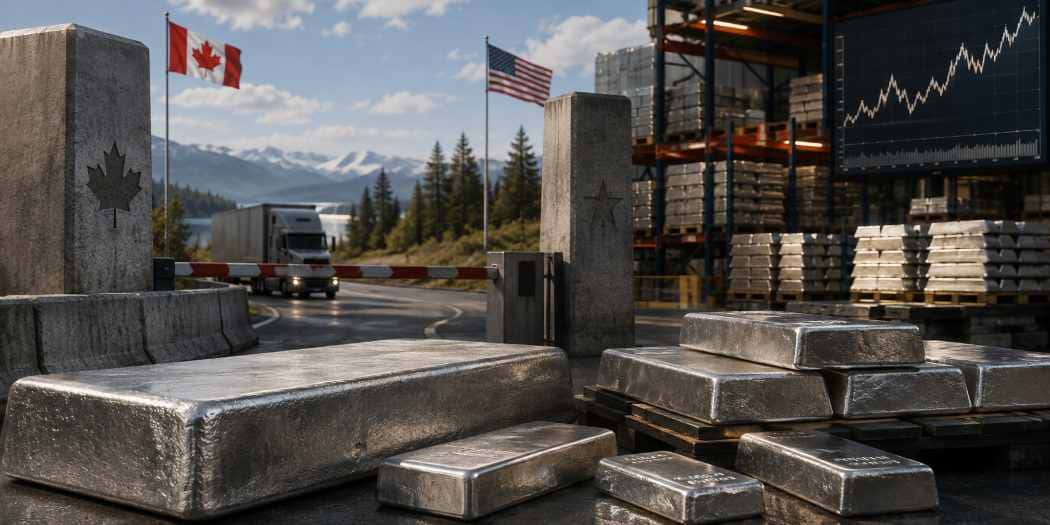
A Trade Dispute Has Put Canadian Silver in the Crosshairs
A trade dispute centered on automobiles could soon reach an unexpected corner of the precious metals market. Beginning August 19, selected Canadian imports entering the United States will face an additional 50% tariff. Among the products covered is the customs category used for certain high-purity rectangular silver bars, potentially placing a major new cost on Canadian bullion moving south across the border.
That matters because Canada is more than a source of retail bullion. The Royal Canadian Mint produces investment bars as well as approximately 1,000-ounce silver bars approved for the professional London and COMEX markets. Asahi Refining Canada is another recognized source of silver eligible for COMEX delivery.
The tariff does not remove silver from global supply. It could, however, make established flows of Canadian metal into the United States economically unattractive. In a market where location, bar specifications, refinery approval, and delivery status all matter, that distinction could have consequences well beyond Canadian bullion products.
Why a 50% Tariff Changes the Economics of Silver
The new duties stem from U.S. retaliation against Canadian trade practices, but the products targeted extend beyond the industries at the center of the dispute. The White House tariff schedule includes the category under which U.S. Customs and Border Protection has classified qualifying high-purity rectangular investment silver bars.
A January 2026 Customs ruling offers important context. It examined .999-fine rectangular silver bars carrying standard identifying information such as the refiner, purity, weight, and serial number. Customs placed those bars within the same general category now included among Canadian goods subject to the additional duty.
For bullion importers, the economics become striking when actual numbers are applied. As a simple example, if silver were trading at $65 per ounce, a 1,000-ounce bar would contain approximately $65,000 worth of silver. A 50% tariff applied to that value would add roughly $32,500 in duty, pushing the effective cost to about $97,500 before other expenses. In that example, the tariff alone adds the equivalent of $32.50 per ounce to the imported cost. That is far beyond a normal refining charge, wholesale spread, or bullion premium.
Economics like these could quickly change established trade flows. Rather than absorbing such a substantial additional cost, U.S. importers could reduce purchases of affected Canadian silver and seek alternative sources. Canadian refiners could likewise have a strong incentive to redirect eligible production toward London or other international markets where the U.S. tariff does not apply.
One qualification remains important: the tariff should not be described as automatically covering every Canadian silver bar. Customs treatment depends on the specific merchandise, origin, classification, valuation, and circumstances of entry. Still, the published tariff schedule provides strong reason to believe qualifying high-purity rectangular Canadian bars can fall within its scope.
The Royal Canadian Mint Connection Goes Beyond Bullion Shelves
The Royal Canadian Mint is familiar to investors for Silver Maple Leafs and investment bars, but its refinery also plays an important role in the institutional precious metals market.
RCM produces 1-kilogram and 100-ounce investment bars along with approximately 1,000-ounce silver exchange bars meeting London and COMEX Good Delivery standards. The larger format matters because physical delivery against COMEX Silver futures requires approved metal meeting specific standards for weight, purity, and brand.
Asahi Refining Canada provides another established Canadian link to that system through silver approved for COMEX delivery. This does not prove Canadian refiners supply most COMEX silver, nor does it mean a shortage will automatically follow on August 19. It establishes the more relevant point: Canada produces silver in the institutional form that can enter the U.S. futures-delivery system.
That raises the question at the center of the tariff story: what happens when COMEX-deliverable silver remains available in Canada, but bringing newly refined bars across the U.S. border becomes dramatically more expensive?
Could the Tariff Tighten COMEX Silver Supply?
The immediate effect of the tariff would likely be on trade flows rather than mine supply. Canadian silver would still exist, and refiners could continue producing Good Delivery bars. The problem is getting affected material into the United States at a commercially sensible cost.
COMEX does not accept just any silver for physical delivery. Bars must meet exchange requirements and come from approved refiners. If newly produced Canadian bars become uneconomic to import, buyers seeking deliverable metal would have to rely more heavily on existing U.S. inventories and eligible supplies arriving from other countries.
That does not automatically create a COMEX shortage. Existing warehouse stocks could provide a substantial buffer, while higher U.S. prices could attract qualifying silver from elsewhere. Refiners and traders are also likely to adjust quickly when economics change.
The more interesting risk is a location-driven squeeze. Silver could remain readily available internationally while becoming relatively more expensive or difficult to place into the U.S. delivery system. In that scenario, the issue would not be a global shortage of silver but a reduced pool of economically attractive metal in the right form, from the right refiner, in the right location.
If that pressure became significant, it could widen the price incentive needed to draw additional eligible silver into the United States.
Canadian Silver Could Find Other Buyers
The tariff may also change where newly refined Canadian silver goes. RCM produces metal accepted in both London and New York, giving it access to major international bullion channels. If sending an eligible bar to the United States carries a prohibitive additional cost while shipping it elsewhere does not, the economics naturally favor alternative destinations.
That possibility is particularly relevant for approximately 1,000-ounce bars. These are not primarily retail products; they are the building blocks of institutional silver trading. Redirecting even part of that flow would not necessarily be visible to someone shopping for a one-ounce coin, but over time it could influence wholesale availability in the United States.
Retail consequences would be less direct. Kilo and 100-ounce Canadian bars subject to the tariff could become less competitive against comparable products sourced elsewhere, encouraging dealers to shift purchasing toward unaffected refiners. Any effect on premiums would depend on how easily the market replaces that supply.
August 19 Could Become an Important Test for Silver
Much can still change before or after the tariff takes effect. Trade negotiations could produce modifications, Customs could issue additional implementation guidance, and importers may seek clarification on how particular bullion products should be treated. Those uncertainties make it premature to predict a COMEX shortage or a broad surge in retail silver premiums.
What is already clear is that an unusually large trade barrier is being placed in the path of a recognized source of U.S.-deliverable silver. That deserves attention at a time when physical availability, exchange inventories, and movements between London and New York are closely watched by the bullion market.
The most revealing signals after August 19 may therefore be found beyond the silver spot price. COMEX warehouse movements, U.S. premiums, import patterns, and any widening price differences between American and international silver markets could show whether the tariff is materially changing where physical metal flows.
A policy created from a dispute over Canadian automobiles may ultimately become an unexpected experiment in the plumbing of the global silver market. If Canadian Good Delivery bars begin flowing elsewhere rather than into the United States, investors could discover just how important geography is to a market that usually treats an ounce of silver as interchangeable with any other.
Related reading you may find interesting:
Why Silver Remains Essential to Modern Medicine