View Charts
Best of the Mint Debut: 1916 Mercury Dime Gold & Silver Set
 0
0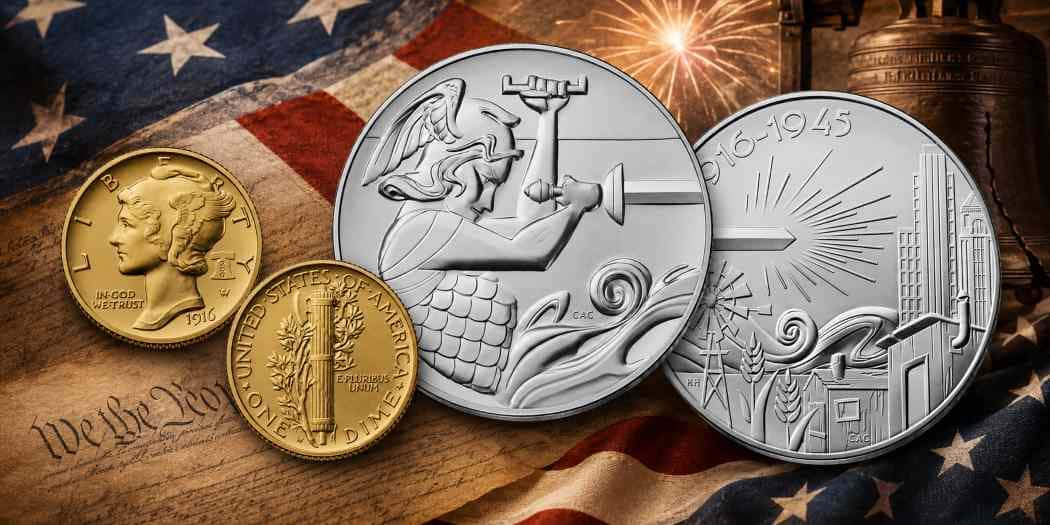
A Historic Dime Returns for America’s 250th Anniversary
The 1916 Mercury Dime Gold Coin and Silver Medal Set opens the U.S. Mint’s Best of the Mint series with one of the most beloved designs in American coinage. Released for the Semiquincentennial, the set pairs a 24-karat gold reissue of the 1916 Mercury dime with a one-ounce silver companion medal inspired by the era in which the original dime circulated. For collectors, this is not simply a nostalgic reissue. It is the first release in a limited series built around five landmark U.S. coin designs.
The set arrives at a moment when gold and silver remain central to both investment demand and modern numismatics. Gold continues to attract attention as a store of value, while silver combines collectible appeal with industrial and bullion demand. By combining a 0.100 troy ounce gold coin, a one-ounce silver medal, a 30,000 mintage limit, and a Liberty Bell “250” privy mark, this release gives collectors multiple reasons to watch demand closely.
Best of the Mint Begins With the Mercury Dime
The Best of the Mint series was created to honor America’s 250th anniversary through modern gold reissues and companion silver medals. The U.S. Mint curated 21 historic coins spanning the nation’s coinage history, then selected five designs after public input and expert recommendations. The chosen coins include the 1916 Mercury Dime, the 1916 Standing Liberty Quarter Dollar, the 1916 Walking Liberty Half Dollar, the 1804 Silver Dollar, and the 1907 Saint Gaudens High Relief $20 Gold Coin.
That lineup gives the Mercury dime set extra importance. As the first Best of the Mint release, it introduces the format collectors can expect from the broader program: a historic coin revived in 24-karat gold and a silver medal that interprets the legacy of the original design in a modern way. First releases can matter in a collectible series because they establish the design language, market expectations, and early collector momentum for the products that follow.
The 1916 Mercury Dime Design Still Carries Power
The original Mercury dime, also known as the Winged Liberty Head dime, remains one of the most admired small-denomination coins in U.S. history. Its obverse depicts Liberty in profile facing left while wearing a winged cap, a symbol of freedom of thought. Although the coin is popularly called the Mercury dime, the image is not the Roman god Mercury. It is Liberty presented through a classical design vocabulary that gave the coin its enduring nickname.
The gold reissue preserves that historic identity. Inscriptions include “LIBERTY,” “IN GOD WE TRUST,” and “1916,” anchoring the coin to the original issue year. For the Semiquincentennial, the coin also includes a Liberty Bell “250” privy mark. That small addition gives the design a distinctly 2026 identity without replacing the classic Mercury dime artwork collectors already recognize.
The reverse continues the original symbolism with a fasces, representing strength through unity, paired with a battle ax and olive branch. Together, those elements express military readiness and the desire for peace. Inscriptions include “UNITED STATES OF AMERICA,” “E PLURIBUS UNUM,” and “ONE DIME.”
Gold Content Gives the Coin a Bullion Foundation
The gold coin is struck in 99.99% gold and contains 0.100 troy ounce of fine gold. That makes it a fractional gold collectible rather than a full one-ounce bullion coin. Fractional gold often appeals to buyers who want exposure to physical gold in a more accessible size, while collectors may value the smaller format because it honors the dime denomination.
Its bullion value will move with the gold market, but the set’s full market value will likely depend on more than metal content alone. Mintage, packaging, collector demand, condition, grading results, series importance, and Semiquincentennial appeal can all influence premiums. This is especially true because the product is not just a gold coin; it is a paired coin-and-medal set with a defined place in a larger U.S. Mint anniversary program.
The coin is struck at the West Point Mint with an Uncirculated finish, reinforcing its position as a premium collector issue. West Point production is familiar to modern U.S. Mint collectors, particularly for precious metals products and limited releases.
The Silver Medal Adds a Modern Storyline
The silver companion medal is not a duplicate of the gold coin. Instead, it expands the Mercury dime’s legacy by reflecting the years when the original dime circulated, from 1916 through 1945. That period included major changes in American life, including two world wars, the Great Depression, and the Dust Bowl. The medal’s design uses Liberty in both defensive and offensive positions, connecting the coin’s original symbolism to a period marked by conflict, hardship, and national transformation.
The design continues from obverse to reverse, with rays extending from the sword to represent hope after conflict. Hooverville shacks symbolize the Great Depression, while swirling waves refer to the Dust Bowl. The inscription “1916 – 1945” clearly ties the medal to the Mercury dime’s circulation era.
This companion medal is struck in 99.9% silver, weighs 1.000 troy ounce, and has an Uncirculated finish. It was produced at the Philadelphia Mint and has a plain edge. For collectors, the medal adds historical depth and gives the set a larger visual canvas than the dime-sized gold coin alone could provide.
A 30,000 Mintage Limit Shapes the Collector Outlook
The set has a mintage limit of 30,000, which places supply at the center of the collector conversation. Limited mintage does not guarantee long-term appreciation, but it does establish scarcity from the start. When a product combines a popular historic design, precious metal content, a national anniversary, and a defined production cap, demand can be stronger than for ordinary annual releases.
This is especially relevant because the set launches the Best of the Mint series. Collectors who plan to complete the five-set program may want the first release to anchor the run. Mercury dime specialists may want it because of the 24-karat gold reissue. Semiquincentennial collectors may view it as part of the broader America 250 product landscape. Precious metals buyers may see it as a fractional gold and silver set with added collector potential.
The mintage limit also raises the importance of early availability, original packaging, and condition. If demand is strong, secondary-market premiums may depend heavily on sellout speed, certified populations, and collector interest in complete Best of the Mint sets.
Specifications That Define the Release
The gold coin carries a dime denomination, an Uncirculated finish, and 99.99% gold composition. It contains 0.100 troy ounce of fine gold, measures 0.650 inch, or 16.50 mm, in diameter, and has a reeded edge. It was struck at the West Point Mint and includes the Liberty Bell “250” privy mark.
The silver medal has no denomination, an Uncirculated finish, and 99.9% silver composition. It weighs 1.000 troy ounce, measures 1.598 inches, or 40.60 mm, in diameter, and has a plain edge. It was struck at the Philadelphia Mint.
Together, the specifications create a compact but metal-rich set: fractional 24-karat gold paired with a full-ounce silver medal. That combination may appeal to buyers who want both precious metal exposure and commemorative design value in one official U.S. Mint release.
How Collectors May Approach This Set
Collectors may evaluate this release through several lenses. Mercury dime collectors may focus on the return of the 1916 design in gold. Modern U.S. Mint collectors may focus on the Best of the Mint series debut. Gold buyers may focus on the 0.100 troy ounce gold content, while silver collectors may be drawn to the one-ounce companion medal and its narrative design.
The set may also appeal to buyers who enjoy anniversary coinage. The Liberty Bell “250” privy mark gives the gold coin a direct Semiquincentennial connection, while the silver medal broadens the story by connecting the Mercury dime to the period of American history in which it circulated.
Buyers should still separate bullion value from numismatic premium. The gold and silver content provide a metal foundation, but the collectible value depends on demand, scarcity, condition, and the importance of the set within the broader 2026 U.S. Mint program.
A Strong Opening Chapter for Best of the Mint
The 1916 Mercury Dime Gold Coin and Silver Medal Set has the qualities collectors often watch closely: a classic design, a first-in-series role, a national anniversary, limited mintage, precious metal content, and a modern companion piece with fresh artistic interpretation. It brings the Mercury dime into the Semiquincentennial year without losing the character that made the original design famous.
Its long-term market performance will depend on demand after release, grading outcomes, precious metals prices, and interest in completing the Best of the Mint series. But as a concept, the set is already compelling. It revives a beloved American coin in 24-karat gold, pairs it with a historically themed silver medal, and opens a series designed to celebrate the best of U.S. coinage across more than two centuries.
Image source: U.S. Mint
Related reading you may find interesting:
Best of the Mint Continues With the 1916 Standing Liberty Quarter Set