View Charts
Best of the Mint Continues With the 1916 Walking Liberty Set
 0
0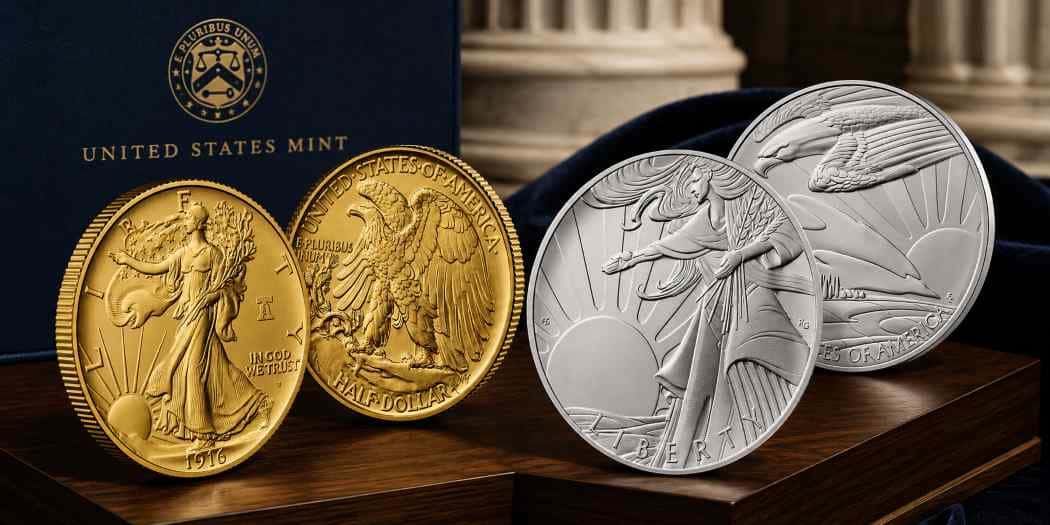
Why the Walking Liberty Half Dollar Became an American Icon
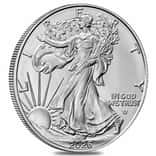
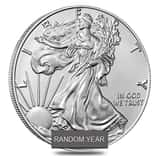
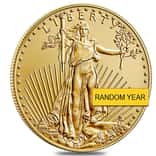
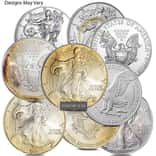
Few American coins have enjoyed a second life as remarkable as the Walking Liberty Half Dollar. Although it disappeared from circulation nearly eighty years ago, its central figure remains instantly recognizable to millions of Americans through the Silver American Eagle bullion coin, which has carried Adolph A. Weinman's celebrated obverse since 1986. Long after the original half dollar ceased circulating, the design continued to define how many collectors—and investors—picture Liberty on a United States coin.
That enduring influence helps explain why the U.S. Mint selected the Walking Liberty Half Dollar as the third release in its Best of the Mint series celebrating America's 250th anniversary. Rather than creating entirely new commemorative designs, the Mint chose five historic coins that reshaped American numismatic art and reintroduced them as 24-karat gold coins paired with newly designed silver companion medals. Following the Mercury Dime and Standing Liberty Quarter, the Walking Liberty Half Dollar occupies what many collectors would consider the emotional center of the series.
The release is more than another anniversary product. It is a modern tribute to one of the most admired coin designs ever struck by the United States Mint, presented in precious metals while preserving the artistry that has made Weinman's work endure for more than a century. With production limited to 30,000 sets, the Walking Liberty release also represents one of only five opportunities to own a complete chapter in what is quickly becoming one of the Mint's most ambitious semiquincentennial programs.
A Design That Outlived the Coin It First Appeared On
When the Walking Liberty Half Dollar debuted in 1916, American coinage was undergoing an artistic renaissance. Treasury officials had encouraged leading sculptors to replace aging nineteenth-century designs with coinage that reflected the nation's growing cultural confidence. Alongside Hermon MacNeil's Standing Liberty Quarter and Weinman's Mercury Dime, the Walking Liberty Half Dollar became part of a remarkable generation of circulating coins that transformed everyday money into miniature works of sculpture.
Weinman's interpretation of Liberty was unlike earlier depictions that emphasized permanence through formal portraiture. His Liberty moves confidently toward the rising sun, wrapped in the American flag while carrying branches of laurel and oak that symbolize both civil and military strength. The composition feels optimistic without becoming sentimental, combining motion, balance, and symbolism in a way that has rarely been equaled on American coinage.
The reverse is equally memorable. Rather than presenting an eagle in rigid heraldic form, Weinman depicted the bird perched naturally on a mountain outcrop, its wings partially raised as though preparing for flight. A young pine sapling emerging from the rock reinforces themes of endurance and renewal, quietly complementing the hopeful energy of Liberty on the obverse. Together, the two sides created a coin whose artistic reputation has only grown with time.
The Best of the Mint gold coin preserves those historic designs while introducing a single contemporary element: a Liberty Bell privy mark bearing the numeral "250." Unlike many commemorative additions that compete for attention, the privy mark serves as a restrained reminder that this release connects one of America's greatest coin designs with the nation's semiquincentennial rather than attempting to modernize the original artwork.
A Companion Medal That Extends Weinman's Vision
One of the defining characteristics of the Best of the Mint program is that the accompanying silver medal does not simply duplicate the historic coin. Instead, each medal asks modern Mint artists to interpret the original design through a contemporary artistic language while remaining faithful to its underlying themes.
The Walking Liberty companion medal follows that philosophy with unusual confidence. Rather than separating Liberty and the eagle onto opposite sides as Weinman's original coin did, the medal creates a continuous landscape that flows across both faces. Executed in the Art Deco style that succeeded Weinman's own neoclassical aesthetic, the composition acknowledges that American medallic art continued evolving long after the Walking Liberty Half Dollar entered circulation.
On the obverse, Liberty still reaches toward the horizon while carrying the familiar branches, preserving the movement that has always defined Weinman's work. The reverse completes the visual narrative as an eagle glides across the same landscape beneath the rising sun, creating a unified scene rather than two independent designs. It is less a recreation than a respectful continuation of an artistic conversation begun in 1916.
Gold and Silver Give the Series More Than Historical Appeal
The artistic pedigree of the Walking Liberty design would have been enough to attract many collectors, but the Best of the Mint program deliberately pairs that history with meaningful precious metal content. Rather than producing a traditional commemorative clad coin, the Mint chose to strike the Walking Liberty in half a troy ounce of .9999 fine gold at West Point, while the companion medal is produced in one full troy ounce of .999 fine silver at Philadelphia.
That combination gives the set an identity distinct from either bullion products or classic commemoratives. The gold coin carries intrinsic value tied to the precious metals market, yet its appeal extends well beyond bullion because it forms part of a five-coin series celebrating what the Mint itself considers the defining designs of American coinage. Collectors will inevitably evaluate the piece through several lenses at once: its gold content, its connection to Weinman's original artwork, its role within the semiquincentennial program, and the long-term popularity of the series itself.
The companion medal performs a different function. Its larger 40.60-millimeter canvas allows Mint artists to reinterpret the Walking Liberty motif with a level of detail that would have been impossible on the original circulating half dollar. Rather than competing with the gold coin, it broadens the artistic story, encouraging collectors to view both pieces together as a unified presentation. That balance between historical fidelity and contemporary medallic design has become one of the defining strengths of the Best of the Mint program.
Why the 30,000-Set Mintage Carries Extra Weight
A mintage limit means little without context. Modern collectors have seen products with identical production numbers experience very different levels of demand depending on the importance of the design, the strength of the series, and the number of buyers pursuing complete collections.
The Walking Liberty release benefits from several factors that extend beyond its stated limit of 30,000 sets. It represents the third installment in a five-coin program, placing it squarely in the middle of a collection many buyers are likely to complete from beginning to end. Collectors who secured the Mercury Dime and Standing Liberty Quarter may view the Walking Liberty as an essential continuation rather than an optional purchase, while those discovering the series later could find themselves searching for earlier releases to assemble a complete set.
The design itself also attracts audiences that extend beyond the semiquincentennial program. Walking Liberty specialists, Silver Eagle collectors, admirers of Adolph A. Weinman's sculpture, precious metals buyers, and students of early twentieth-century American coinage all have reasons to follow the release. When several collecting communities converge around the same product, demand often proves broader than production figures alone might suggest.
None of that guarantees future premiums, nor should a limited mintage ever be viewed as a promise of appreciation. Secondary-market performance will ultimately depend on collector interest, certified populations, precious metals prices, and the long-term reputation of the Best of the Mint series. Even so, few modern Mint products combine historic significance, precious metal content, and such a carefully curated place within a larger program.
A Fitting Choice for America's 250th Anniversary
The Walking Liberty Half Dollar has survived changes in artistic taste, monetary policy, and even the disappearance of the denomination that first carried it. Great coin designs rarely remain influential for more than a century, yet Weinman's Liberty continues to symbolize optimism, freedom, and national aspiration with a freshness that feels remarkably contemporary.
That lasting relevance explains why the Mint chose the Walking Liberty as one of only five designs to represent two and a half centuries of American coinage. The selection was not simply an acknowledgment of the coin's popularity but of its enduring artistic achievement. By pairing a faithful 24-karat gold recreation with a thoughtfully reimagined silver medal, the Best of the Mint program—and the 2026 Best of the Mint 1916 Walking Liberty Half Dollar Set—celebrate one of the nation's greatest numismatic designs, recognizing that truly exceptional works deserve more than reproduction; they deserve interpretation.
As the series moves toward the 1804 Silver Dollar and the 1907 Saint-Gaudens High Relief Double Eagle, the Walking Liberty release is likely to be remembered as one of its defining entries. It bridges the artistic renaissance of 1916 with the nation's 250th anniversary, reminding collectors that the finest American coins have always represented more than commerce. They reflect the ideals, craftsmanship, and creative ambition of the generations that produced them—and, in the best cases, continue speaking to those that follow.
Image source: U.S. Mint
Related reading you may find interesting:
Best of the Mint Revives the Legendary 1804 Silver Dollar
The Role of Fineness in Precious Metals: A Buyer's Guide