View Charts
American Silver Eagle Value: 1986 vs 2026 Price Growth
 0
0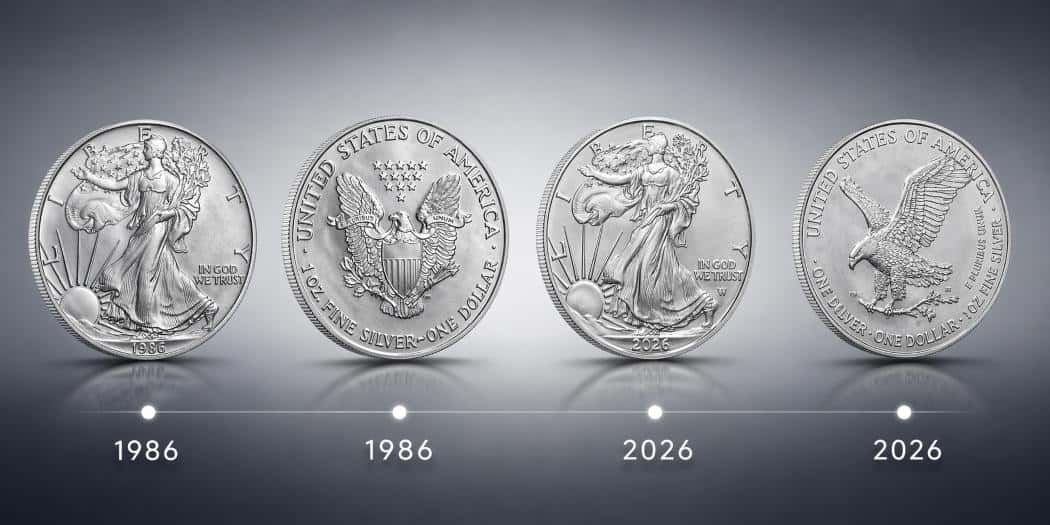
How Much Have Silver Eagles Increased in 40 Years?
The American Silver Eagle, produced by the United States Mint, has become one of the most recognizable and trusted bullion coins in the world. First introduced in 1986 under the Liberty Coin Act, the Silver Eagle was designed to offer investors a government-backed silver bullion coin with guaranteed weight, purity, and authenticity.
Over the past four decades, the coin has grown from a relatively new offering into the official silver bullion coin of the United States, widely traded across global markets and favored by both investors and collectors. Beyond its intrinsic value, the Silver Eagle reflects broader economic shifts, including inflation trends, industrial demand for silver, and changing investor sentiment.
Examining the price of a roll of 20 American Silver Eagles from the first year of issue in 1986 to four decades later in 2026 provides a powerful lens into how precious metals, purchasing power, and global markets have evolved over time. More than just a price comparison, it offers insight into how the role of silver—and the world around it—has transformed over the past 40 years.
What Did a Roll of Silver Eagles Cost in 1986?
When the American Silver Eagle was first released in 1986, the silver spot price averaged around $5.25 per ounce. At the time, premiums on newly issued bullion coins were relatively modest compared to today’s standards.
A typical breakdown in 1986:
-
Spot price: ~$5.25 per ounce (~$105 per roll of 20)
-
Estimated premium: ~$1.00–$1.50 per coin
→ Estimated price per coin: ~$6.25–$6.75
→ Estimated price per roll of 20: ~$125–$135
At the time, silver was still recovering from the dramatic spike and collapse of the early 1980s. Investor sentiment toward precious metals remained cautious, and demand for bullion products was still developing.
What Does a Roll of Silver Eagles Cost in 2026?
Fast forward 40 years, and the market has changed dramatically. As of 2026, silver has already experienced a historic surge above $120 earlier in the year before stabilizing in the ~$80 range.
A modern breakdown:
-
Silver spot price: ~$79 per ounce (~$1,580 per roll of 20)
-
Typical premium: ~$8–$15 per coin depending on demand
→ Estimated price per coin: ~$87–$94
→ Estimated price per roll of 20: ~$1,740–$1,880
This represents a more than 10x increase in value compared to 1986, not including periods where prices were significantly higher during peak market conditions.
Silver Eagle Price Growth: More Than Just Inflation
At first glance, this increase may appear to be driven purely by inflation. However, the reality is more complex.
Several key factors have contributed to long-term growth:
-
Rising global demand for physical silver
-
Expansion of retail and institutional investing
-
Increased industrial use of silver in modern technology
-
Growing distrust in fiat currencies during economic uncertainty
Unlike many consumer goods, silver bullion has maintained intrinsic value while also benefiting from structural demand growth.
What Has Changed About the Silver Eagle Coin Itself?
While the core identity of the American Silver Eagle has remained consistent, the coin has evolved in both design detail and production quality over the past 40 years.
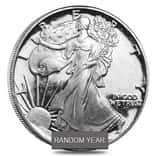
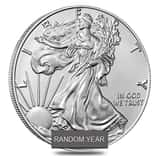
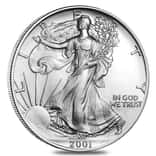
The obverse has remained largely unchanged since 1986, featuring Adolph A. Weinman’s iconic Walking Liberty design, originally introduced on the Half Dollar in 1916. The image depicts Lady Liberty striding confidently toward the rising sun, draped in the American flag, with her arm extended in a gesture of hope and progress. The design is widely regarded as one of the most beautiful in U.S. coinage and has remained a defining element of the Silver Eagle’s appeal.
The most significant change came in 2021 with the introduction of a new reverse design, marking the transition from the original “heraldic eagle” (Type 1) to the modern Type 2 design.
-
Type 1 Reverse (1986–2021): Featured a heraldic eagle behind a shield, clutching arrows and an olive branch, symbolizing strength and peace. Above the eagle were 13 stars representing the original colonies.
-
Type 2 Reverse (2021–present): Designed by Emily Damstra, this updated image shows a more naturalistic bald eagle in flight, carrying an oak branch to its nest. The design emphasizes realism and motion, reflecting a modern artistic direction while maintaining patriotic symbolism.
Additional updates over time include:
-
Enhanced security features to combat counterfeiting
-
Improved minting precision and sharper strike quality
-
Subtle design refinements that enhance detail and consistency
Despite these changes, each coin continues to contain one troy ounce of .999 fine silver, preserving its status as a globally recognized and trusted bullion standard.
The evolution of the Silver Eagle reflects a balance between tradition and innovation, maintaining its historic roots while adapting to modern expectations in both security and design.
1986 vs 2026: What Was Happening in the World?
Understanding the broader economic backdrop adds important context to silver’s price evolution.
1986:
-
Cold War tensions still shaping global markets
-
Oil prices collapsing after the early 1980s energy crisis
-
Inflation declining after the Federal Reserve’s aggressive tightening
-
Limited retail access to bullion investing
2026:
-
Ongoing geopolitical instability across multiple regions
-
Rapid expansion of renewable energy and electrification
-
Rising global debt levels and persistent inflation concerns
-
Widespread access to precious metals markets and digital trading platforms
The contrast is stark. In 1986, silver was largely viewed as a niche investment. In 2026, it is a critical industrial metal and globally traded financial asset.
Silver vs Everyday Costs: A Powerful Comparison
Comparing the price of Silver Eagles to everyday goods highlights how purchasing power has changed over time.
In 1986, a roll of Silver Eagles (~$130):
-
Could cover a month’s rent in some areas
-
Could buy a used car down payment
-
Was a meaningful but accessible investment
In 2026, a roll (~$1,800+):
-
Reflects rising costs across housing, energy, and goods
-
Demonstrates how hard assets have kept pace with inflation
-
Shows silver’s role as a long-term store of value
These comparisons reinforce why many investors continue to turn to precious metals during uncertain economic periods.
Premium Expansion: Then vs Now
One of the most significant changes is not just the price of silver today, but the premium investors pay for physical coins.
In 1986:
-
Premiums were low and stable
-
Demand was moderate
In 2026:
-
Premiums are significantly higher
-
Supply chain constraints and demand spikes impact pricing
-
Physical silver carries added value beyond melt price
This shift reflects growing demand for physical ownership, not just exposure to price movements.
The Role of Demand: From Investment to Industry
In 1986, silver demand was driven primarily by:
-
Investment demand
-
Jewelry and decorative use
-
Limited industrial applications
Today, silver has become one of the most critical industrial metals in the modern economy, with applications spanning multiple high-growth sectors.
Silver is now essential for:
-
Solar panels and renewable energy systems
-
Electric vehicles and battery technologies
-
Consumer electronics and advanced computing systems
-
Semiconductors and artificial intelligence hardware
-
Medical applications, including antimicrobial coatings, surgical tools, and hospital equipment
-
Military and defense technologies, including advanced communications and precision systems
-
Aerospace engineering, including satellites, spacecraft components, and astronaut equipment
-
Water purification systems and environmental technologies
What sets silver apart is its unique combination of properties—it is the most conductive metal for electricity and heat, highly reflective, and naturally antimicrobial. These characteristics make it irreplaceable in many advanced technologies.
This transformation from a primarily investment-driven metal to a strategic industrial resource has fundamentally changed silver’s long-term value proposition. Unlike in 1986, demand today is not only driven by market sentiment but by global technological and infrastructure needs, creating a powerful and sustained foundation for future price growth.
What the 40-Year Comparison Really Tells Us
Comparing the price of Silver Eagles over four decades reveals more than just a price increase—it highlights a shift in how the world views tangible assets.
Silver has evolved from:
-
A volatile commodity tied to speculation
→ into -
A dual-purpose asset combining industrial necessity and financial security
This evolution is one of the key reasons prices have expanded so significantly over time.
A Coin That Reflects Economic Change
The American Silver Eagle is more than a bullion coin—it is a reflection of economic evolution. From its introduction in 1986 to its significantly higher valuation in 2026, it tells a story shaped by inflation, innovation, and global transformation.
Over the past 40 years, the world has undergone dramatic changes—from technological revolutions to shifts in monetary policy and global trade. Through it all, silver has remained relevant, adapting from a primarily investment-driven asset into a critical component of modern industry.
While price volatility is inevitable, the long-term trajectory of silver reflects deeper structural forces that continue to evolve. The Silver Eagle, in this sense, is not just a measure of price—it is a measure of economic progress.
For investors and collectors alike, this 40-year comparison offers more than perspective—it provides insight into why physical silver continues to play a meaningful role in both wealth preservation and the future of global technology.