View Charts
2026 Metals Supercycle: Are Banks Ready for $5,000 Gold & $100+ Silver?
 0
0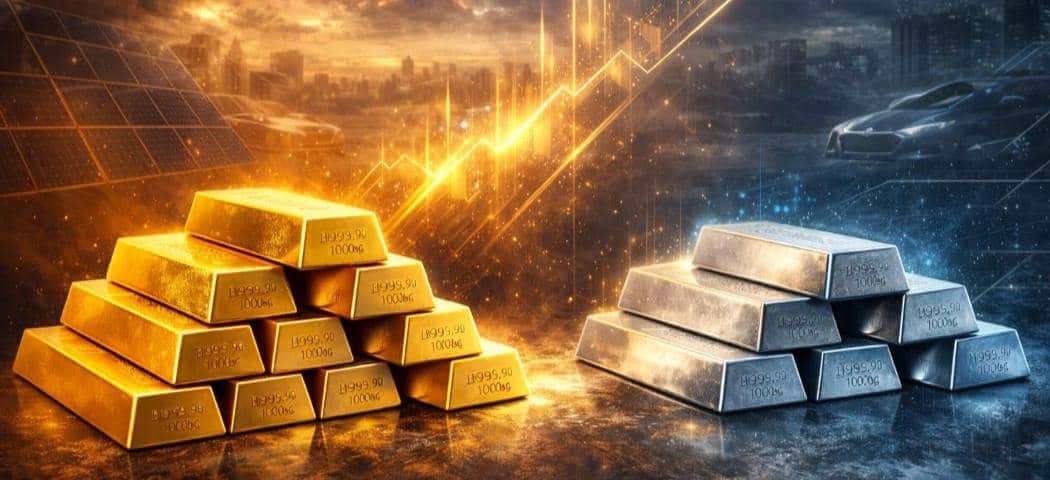
A New Phase in the Global Metals Market
As 2026 unfolds, precious metals are entering what many analysts now describe as a full-scale supercycle—a prolonged period of rising valuations driven by monetary expansion, geopolitical fragmentation, and structural supply constraints. Gold’s advance toward unprecedented territory and silver’s acceleration alongside it are no longer fringe projections. Instead, these outcomes are increasingly discussed by global banks, institutional strategists, and macro-focused investors.
What makes this cycle distinct is not just price appreciation, but the breadth of participation. Central banks continue to accumulate gold at record levels, while silver demand is expanding rapidly due to solar power, electric vehicles, artificial intelligence infrastructure, and electrification. Together, these forces are reshaping how metals are valued—and raising questions about whether financial institutions are fully prepared for what may come next.
Major Banks Are Raising Their Gold Outlooks
Several major banks have recently revised their long-term gold outlooks higher, citing persistent inflation pressures, rising sovereign debt, and growing concerns over currency stability. Institutions such as Bank of America, UBS, and HSBC have emphasized gold’s role as a strategic monetary hedge rather than a tactical trade.
Unlike previous cycles driven primarily by retail enthusiasm, today’s demand is increasingly institutional. Central banks—particularly in emerging markets—are steadily increasing reserves to reduce exposure to fiat risk. This sustained accumulation has created a durable foundation beneath the price of gold, reinforcing its role as a cornerstone asset during periods of economic uncertainty.
The Gold-to-Silver Ratio: A Critical Supercycle Indicator
One of the most closely watched metrics in the precious metals market is the gold-to-silver ratio, which measures how many ounces of silver it takes to equal one ounce of gold. Historically, this ratio has averaged between 55 and 60, but it often rises sharply during periods of financial stress as investors favor gold’s relative stability.
A higher ratio generally suggests silver is undervalued relative to gold. During prior precious metals bull markets—most notably in the 1970s and again from 2009 to 2011—the ratio compressed significantly as silver prices accelerated faster than gold. In 2011, the ratio briefly approached 30 as silver surged to cycle highs.
With the ratio currently hovering near its long-term average, silver may no longer appear deeply undervalued—but history suggests that in strong metals supercycles, the ratio often moves well below average, indicating potential for further silver outperformance if bullish conditions persist.
Why Silver Could Outperform Gold This Cycle
Silver occupies a unique position as both a monetary asset and a critical industrial metal. While gold’s demand is driven largely by investment and central bank accumulation, silver faces growing structural pressure from real-world consumption.
Solar panels, electric vehicles, data centers, and AI hardware all require silver’s unmatched conductivity. At the same time, global mine supply growth has struggled to keep pace after years of underinvestment. When investment demand converges with industrial scarcity, the price of silver has historically responded with amplified moves—often outpacing gold on a percentage basis.
This dynamic is why many analysts believe silver could outperform gold by two to three times during the latter stages of the supercycle.
Lessons From Past Precious Metals Supercycles
History offers valuable perspective. During the inflationary 1970s, gold rose roughly twentyfold, while silver delivered even larger percentage gains. Following the 2008 financial crisis, gold established new highs before silver accelerated sharply in the later phase of the cycle.
In both cases, silver lagged initially, then surged as investor participation broadened. This pattern reinforces a recurring theme: gold often leads, but silver tends to make its most dramatic moves once momentum is firmly established.
Volatility, Risk, and Market Reality
While the long-term outlook for precious metals remains compelling, silver’s path is rarely linear. Sharp pullbacks, futures market volatility, and temporary dislocations are inherent features of the silver market.
These fluctuations do not invalidate the supercycle thesis, but they do underscore the importance of disciplined allocation and long-term perspective. Understanding structural demand trends is more important than reacting to short-term price noise.
Are Banks and Financial Systems Prepared?
Sustained increases in precious metals prices place growing pressure on financial institutions involved in trading, financing, and hedging. Higher prices raise capital requirements, increase balance-sheet exposure, and strain derivatives markets.
While risk controls have improved since previous crises, the scale and duration of the current cycle may test those systems in new ways. The question is not whether safeguards exist—but whether they are sufficient for a prolonged period of elevated metals prices.
What This Supercycle Means for Investors
The emerging precious metals supercycle is not about speculation—it is about positioning for a changing monetary landscape. Gold continues to function as the foundation of monetary defense, while silver offers asymmetric upside tied to both investment demand and industrial necessity.
By understanding indicators like the gold-to-silver ratio, recognizing historical patterns, and appreciating silver’s expanding role in the global economy, investors can navigate this environment with clarity rather than emotion.
The Supercycle Endgame: $5,000 Gold and $100+ Silver?
As projections continue to evolve, targets once considered extreme are now part of mainstream discussion. Gold moving toward $5,000 per ounce and silver reaching triple-digit territory reflect not just speculative enthusiasm, but deep structural shifts in money, energy, and geopolitics.
Whether these levels are reached quickly or over several years, the direction of travel is increasingly clear. For banks, institutions, and investors alike, the real question is no longer if the precious metals supercycle is underway—but whether they are positioned for its full impact.
Related reading you may find interesting:
From $29 to $74 in 2025: Can Silver Prices Reach $135–$309 in 2026?