Banner slider
logo
Miscellaneous

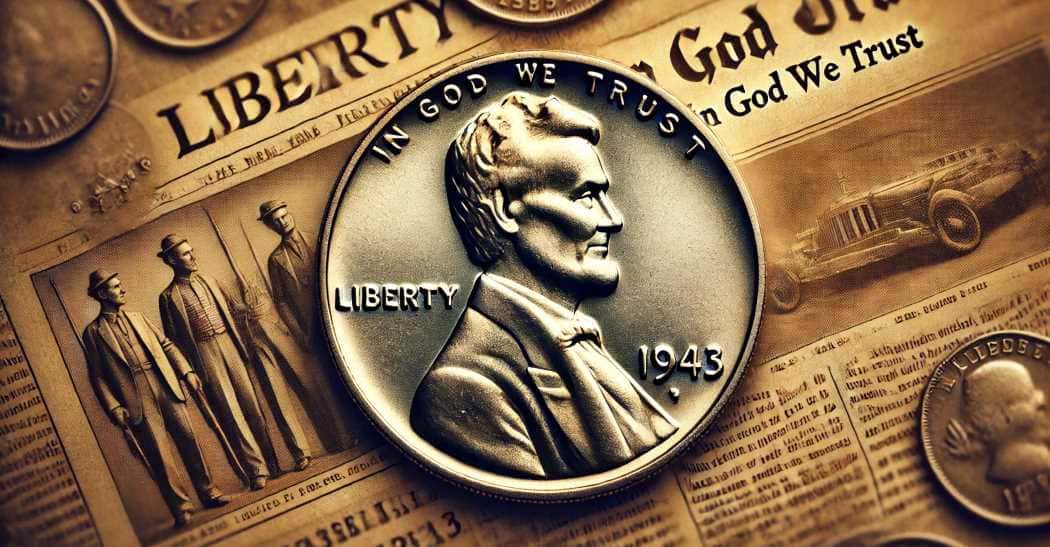
1943 Steel Lincoln Wheat Cent: History, Errors, and How to Spot Fakes

Explore 1943 steel penny history rare errors and how to spot fakes with simple tests and expert tips for collectors today.
March 25, 2026comment48

1943 Steel Lincoln cent

A Wartime Coin Born from Necessity and Innovation

The 1943 Steel Lincoln Wheat Cent stands as one of the most distinctive issues ever produced by the United States Mint. Created during the height of World War II, this one-year-only coin reflects a period when economic priorities were reshaped by global conflict. With copper urgently needed for military equipment and ammunition, the Mint made a historic decision to temporarily alter the composition of the cent. Instead of its traditional bronze alloy, the coin was struck from steel and coated with zinc. This unusual composition, combined with its limited production window, has made the 1943 steel cent a fascinating subject for collectors—especially given the emergence of rare error varieties and the widespread existence of counterfeits.

Why the U.S. Mint Switched to Steel in 1943

As wartime demand surged, copper became a critical resource for the U.S. military, prompting the government to redirect supplies away from civilian coinage. In response, the Mint adopted a zinc-coated steel planchet to continue producing one-cent coins without interrupting circulation. The resulting coins featured a bright, silvery appearance that set them apart immediately from earlier issues. However, this change introduced practical challenges. Over time, the protective zinc layer could wear down, leaving the steel beneath vulnerable to corrosion. Additionally, the coin’s color led to frequent confusion with dimes in everyday transactions.

While these drawbacks limited long-term viability, the steel cent fulfilled its intended role during a critical moment in U.S. history. By 1944, copper-based cents returned to production, marking the end of this brief but memorable experiment in American coinage.

Two Error Varieties: The Copper 1943 Cent and the 1944 Steel Cent

Two notable error varieties have emerged from the circumstances surrounding the 1943 steel cent, both of which are highly valued by collectors:

1943 Copper Cent Error

  • Some 1943 cents were mistakenly struck on leftover copper planchets from 1942. These extremely rare coins were unintentionally produced and quickly became one of the most famous error coins in U.S. history. Authentic 1943 copper cents are incredibly valuable, with some examples fetching six-figure sums at auction.

  • To check for authenticity, a real 1943 copper cent will not be magnetic, as copper is a non-magnetic metal, while steel is magnetic. Testing with a magnet is a quick way to determine if a suspected 1943 copper cent might be the real deal.

1944 Steel Cent Error

  • In 1944, the Mint resumed using copper planchets but inadvertently struck some cents on leftover steel planchets from 1943. Like the 1943 copper cent, the 1944 steel cent is also highly collectible due to its rarity. Collectors prize both errors as they represent anomalies from these unusual years in U.S. minting.

  • Authentic 1944 steel cents are magnetic, unlike standard copper cents of that year. Checking with a magnet can help determine if a 1944 cent is a rare steel error.

Warning: Copper-Plated 1943 Steel Cents

Unfortunately, counterfeit 1943 copper cents are common. Many ordinary 1943 steel cents have been copper-plated to resemble the rare copper errors. These copper-plated coins can fool the untrained eye but lack the characteristics of authentic 1943 copper cents.

To check if a 1943 cent is copper-plated steel:

  • Magnet Test: An authentic copper 1943 cent will not be magnetic, while a steel (even if copper-plated) cent will stick to a magnet.

  • Weight Check: Copper cents from this period should weigh approximately 3.11 grams, whereas steel cents weigh closer to 2.7 grams. A simple weight test can help reveal if a 1943 copper cent is real or plated steel.

Collecting the 1943 Steel Lincoln Wheat Cent

The 1943 Steel Lincoln Wheat Cent remains a fascinating piece of U.S. history and a unique addition to any coin collection. Its distinct appearance, limited production year, and intriguing errors make it a popular choice for collectors. However, the widespread counterfeits mean that buyers must be vigilant when purchasing a 1943 copper cent or a 1944 steel cent. Ensuring authenticity through proper testing and buying from reputable dealers are key steps in safeguarding your collection.

For those interested in World War II-era collectibles, the 1943 Steel Lincoln Wheat Cent offers a tangible link to a time when the U.S. Mint adapted to support the country’s needs. Whether you’re after the common steel version or hoping to find a rare error coin, this penny is a small but fascinating piece of U.S. numismatic history.


Other articles that may interest you:
Hidden in Plain Sight: The 1944 Lincoln Wheat Cent and Its Wartime Secrets
Valuable U.S. Mint Error Coins: Could One be in Your Coin Jar Waiting to Be Discovered?
The Lasting Legacy of the Lincoln Wheat Penny

48 Comments

Avatar
Salvatore cutaia November 25, 2024
I have 1941. And. 1944. Wheat penny
Avatar
Debby MerchantDecember 16, 2024
I have an 1986 Washington Quarter that is twice as thick as other quarters and weighs less than normal quarters. No rim on it.
Avatar
Tom Riggi December 19, 2024
I have the 43, and 44 steel pennies. For sale
Avatar
THOMAS B SHYVERSApril 20, 2025
HOW MUCH A 1944 steel?
Avatar
jeanDecember 24, 2024
have 1943 pennies but they stick to a magnet is this the valuable one
Avatar
Matt reyesJanuary 10, 2025
I have one 1943 penny and does stick to a magnet
Avatar
Juan cabaJanuary 22, 2025
I have one penny of 1943 steel
Avatar
Forrest BeamsJanuary 23, 2025
Have 4 1943 steel pennys for sale. I got tons that need grading. For sale also ..
Avatar
Chuck Riefler February 28, 2025
I have a 1943 penny and it is magnetized. Also it is made in two pieces one side with Lincolns face, and the other side is wheat. Interesting, please let me know if anyone else has this type. Thanks
Avatar
Barbara JacksonDecember 05, 2025
I have 2 no mint 1943 steel wheat pennies. 1 of them has lots of black markings on it the other has turned grey in color. I also have 2 1943D coins, 1 that has major black markings on it, while the other has black around the trim and some on the other side.
Avatar
Bullion ExchangesDecember 05, 2025
Thank you for reaching out! The color changes you’re seeing on your 1943 steel cents are very common — these coins were zinc-coated when struck, and over time the surface can darken, spot, or turn gray depending on how they were stored and what they were exposed to. These effects are typically the result of age and environmental conditions rather than a mint error.
Avatar
Mary EllenJanuary 03, 2026
I own a 1943 steel, wheat penny
Avatar
BillJanuary 03, 2026
I have the same coin 1943 with no mint mark
Avatar
Delores RiversFebruary 28, 2025
I have a 1952 wheat penny
Avatar
LISAMARIE BEAUMONTMarch 16, 2025
I HAVE THREE 1943 STEEL WHEAT PENNYS ONE MINTED S
Avatar
Nicole Skeoch March 18, 2025
I have a 1943 zinc steel about 30% the silvering L merges off rim very noticeable. 4 is ghost and S is filled in and debris is embedded. Very interesting coin
Avatar
Pamela KnowlesApril 12, 2025
I have a silver wheat pennies 1943 with Lincoln on the other side is it worth something
Avatar
Sabrina GreenApril 14, 2025
I have 3 steel 1943 wheat penny’s who do take to see what it’s worth
Avatar
Stephanie May 10, 2025
I have a 1943 wheat penny no mint mark that’s copper fully on the outside and sticks to a magnet. It’s worth?
Avatar
Daniel TannerMay 24, 2025
I have a 1943 wheat penny that weighs 3.1 1 g and it does not stick to the magnet, it does not have any mint mark as far as I can see, cuz it's possibly be the copper penny that everyone is looking for or wanting to get their hands on perhaps
Avatar
Matt July 24, 2025
I found a 1943 steel Lincoln wheat penny, it sticks to a magnet
Avatar
KeithSeptember 20, 2025
I have 2 rolls of 1943 steel pennies that my wife’s grandfather had. The have been rolled for at least 50 years, should I open and check each penny?
Avatar
Ronnie vigil October 09, 2025
I have a steel 1943 lincoln penny with no mint mark it is for sale
Avatar
Claudia jonesOctober 27, 2025
I have a 1943 wheat steel penny that stuck to a magnet , is it rare and could it be sold for a good amount?
Avatar
Bullion ExchangesOctober 27, 2025
Thank you for your question! Your 1943 wheat penny is made of steel coated with zinc, which is why it sticks to a magnet — that’s completely normal for this year. These coins were issued during World War II to conserve copper and are quite common, typically worth only a few cents in circulated condition. However, if you ever come across a 1943 bronze (non-magnetic) cent, that’s the one that would be extremely rare and valuable!
Avatar
MorganDecember 07, 2025
I have a 1943 penny that does not stick to a magnet and has a reddish cast to it.
Avatar
Bullion ExchangesDecember 08, 2025
Thank you for reaching out! A 1943 cent that does not stick to a magnet and shows a reddish or copper-like appearance is certainly interesting, and potentially a rare numismatic treasure. While most 1943 pennies were made of steel, a small number of copper planchets were mistakenly used, making them extremely rare. We recommend having the coin professionally authenticated to determine its composition and value. If you're local to NYC, feel free to bring the coin to the Bullion Exchanges store in the Diamond District — our numismatic experts would be happy to assess it in person and offer guidance.
Avatar
Barbara JacksonDecember 05, 2025
Is a 1943D with black markings on most of Lincoln’s side of coin from wear? I doubt it or is it from the mint
Avatar
Bullion ExchangesDecember 05, 2025
Thank you for your question! A 1943-D Lincoln cent can develop dark or blackened areas over time from environmental exposure, oxidation, or residue — all of which are far more common than a mint-related issue. While true mint errors do exist for 1943 steel cents, discoloration alone is usually the result of age or surface wear.
Avatar
Charles LuceJanuary 02, 2026
I have steel 43 S in great condition with little to no scratches on front & back on magnifying.
Avatar
celshaugJanuary 04, 2026
My son just found a 1943 Steel penny in a Coin Star machine. I was skeptical but near as I can tell its genuine. It's in very good shape.
Avatar
Bullion ExchangesJanuary 05, 2026
Thank you for sharing—that’s an exciting find! A 1943 steel penny is a genuine U.S. coin, and both its condition and mint mark can significantly influence its value. To better understand its authenticity and potential worth, we recommend having it examined by a reputable dealer such as Bullion Exchanges. Thank you for your interest, and congratulations on the discovery!
Avatar
JohnnyJanuary 18, 2026
My penny is 1943, steel, weighs 2.7 grams and no mint mark and the error on the penny is the Word LIBERTY spells IBERTY with no (L). How much is that worth?
Avatar
Bullion ExchangesJanuary 19, 2026
Thank you for your question! A 1943 steel cent missing the “L” in LIBERTY sounds like an interesting variety, but attributing value to any coin error depends on authentication, rarity, and condition. We recommend having the coin professionally examined by a reputable dealer or numismatic expert—misprints and die errors can vary widely in value, and some apparent errors may be post-mint damage rather than true mint errors. If you’re local to the NYC area, feel free to bring the penny by Bullion Exchanges for an in-person review and more accurate assessment. Thanks again for reaching out!
Avatar
Nathan FrazerJanuary 20, 2026
How much will a 1943 copper penny go for?
Avatar
Bullion ExchangesJanuary 20, 2026
Thank you for your question! A genuine 1943 copper Lincoln Wheat penny is one of the rarest and most valuable U.S. coins ever produced. When properly authenticated by a major grading service, confirmed examples have sold for hundreds of thousands of dollars and, in some cases, over $1 million, depending on condition and mint mark. Because this coin is frequently counterfeited, professional authentication is absolutely essential before any value can be determined.
Avatar
Willie Walter BaileyFebruary 09, 2026
I have a steel penny (1943), in pretty good condition. would like to sell it. please let me know asap! thank you
Avatar
Bullion ExchangesFebruary 09, 2026
Thank you for reaching out to Bullion Exchanges—we appreciate your message! The 1943 steel cent is a well-known wartime issue, but most examples are relatively common and typically carry modest value unless they are in exceptional condition or certified by a reputable grading service. We recommend contacting a trusted local coin shop or a specialized numismatic dealer, who can evaluate its condition, estimate its value, and advise whether it may be a good candidate for third-party grading.
Avatar
Jeromy February 12, 2026
How much is your cost for grading coins
Avatar
Bullion ExchangesFebruary 12, 2026
Thank you for reaching out! Bullion Exchanges does not offer coin grading services. For professional authentication and grading, we recommend submitting your coins to a respected third-party grading service such as NGC (Numismatic Guaranty Company) or PCGS (Professional Coin Grading Service). Their fees vary depending on the coin’s value, service level, and turnaround time, so you may want to review their websites for current pricing and submission details.
Avatar
Robert ChilelliMarch 05, 2026
My son has a 1943 penny does not stick to a magnet
Avatar
Bullion ExchangesMarch 05, 2026
Thank you for reaching out! In 1943, most U.S. pennies were made from steel coated with zinc, which means they should stick to a magnet. If your son’s 1943 penny does not stick to a magnet, it could potentially be a rare 1943 copper cent, which is one of the most famous error coins in U.S. history. One quick way to check is by weighing the coin: a genuine copper error should weigh about 3.11 grams, while a standard steel cent weighs around 2.7 grams. Because altered coins and counterfeits do exist, we recommend having the coin evaluated by a reputable coin dealer or professional grading service such as NGC or PCGS. Thanks again for sharing—what an exciting coin to investigate!
Avatar
JoanieMarch 20, 2026
I have 5 1943 wheat pennies that do stick to magnets but also appear to have many errors as well. I also have a 1942 quarter that weighs 5.11 grams, wondering if it is on the wrong planchet. Where should I send it for verification? I am new at this, I will take a any advice you may have. Most of these coins were my dads. Thank you for just reading this
Avatar
Bullion ExchangesMarch 20, 2026
Thank you for reaching out, and we appreciate you sharing a part of your collection with us! For your 1943 wheat pennies, if they stick to a magnet, they are most likely the common steel cents rather than the rare copper error—though it’s always worth a closer look for any unusual characteristics. As for your 1942 quarter, the standard weight should be approximately 6.25 grams, so a weight of 5.11 grams is unusual and could warrant further evaluation. We recommend first visiting a trusted local coin dealer or attending a regional coin show for an initial in-person assessment. They can help determine if any of your coins are strong candidates for professional grading. If so, you may then consider submitting them to reputable services like PCGS or NGC for authentication and grading. It’s great that you’re taking the time to explore your collection—especially with coins passed down from family.
Avatar
Tracy R. SmithApril 09, 2026
I have a 1943 silver colored penny with a D mark. AND also the 3 doesn't look right. How many Penny's is it worth? Lol
Avatar
Bullion ExchangesApril 10, 2026
Thank you for reaching out—great question (and we appreciate the humor)! A 1943 “silver-colored” penny with a D mint mark is most likely a steel cent, which was produced that year due to wartime metal shortages. While most are common and typically worth a small premium depending on condition, any unusual features—like a different-looking “3”—could be worth a closer look. A great first step is to have your coin evaluated in person by a reputable coin dealer such as Bullion Exchanges, or a numismatic expert at a regional coin show. They can help determine authenticity and whether your coin may benefit from professional grading by trusted third-party services like PCGS or NGC. We also recommend avoiding any cleaning or alterations, as this can significantly impact value.
Avatar
WaymonMay 26, 2026
I have a 1943 steel penny that has the s mint mark above liberty. Would that be considered an error and worth getting looked at
Avatar
Bullion ExchangesMay 27, 2026
Thank you for your question! An “S” mint mark stamped above the word LIBERTY is not a known or recognized error for a 1943 steel cent. On genuine 1943-S Lincoln cents, the mint mark should appear below the date, so a misplaced “S” above LIBERTY could indicate a post-mint alteration, counterfeit/fantasy piece, or damage rather than an official Mint error. That said, it may still be worth showing the coin to a reputable coin dealer or numismatic expert for an in-person evaluation.

Leave a comment

FAQs
The 1943 penny was made from zinc-coated steel because copper was needed for World War II ammunition and military supplies.
Most 1943 steel pennies are worth a few cents to a few dollars depending on condition, while rare high-grade examples can be more valuable.
A steel penny is silver-colored and magnetic, while a genuine copper 1943 penny is brownish and will not stick to a magnet.
Yes, the 1943 copper penny is extremely rare and can be worth tens of thousands to over $100,000 depending on condition.
The rarest error is the 1943 copper cent, which was mistakenly struck on leftover copper planchets instead of steel.
Many fakes are copper-plated steel cents; if the coin sticks to a magnet, it is not a genuine copper error.
A 1944 steel penny is a rare error struck on leftover steel planchets, making it highly collectible and valuable.
A genuine 1944 steel penny can sell for tens of thousands of dollars or more depending on condition and authentication.
The steel core can rust if the protective zinc coating wears off, exposing the underlying metal to moisture and air.
If you suspect your coin is rare or valuable, professional grading by PCGS or NGC can confirm authenticity and increase resale value.